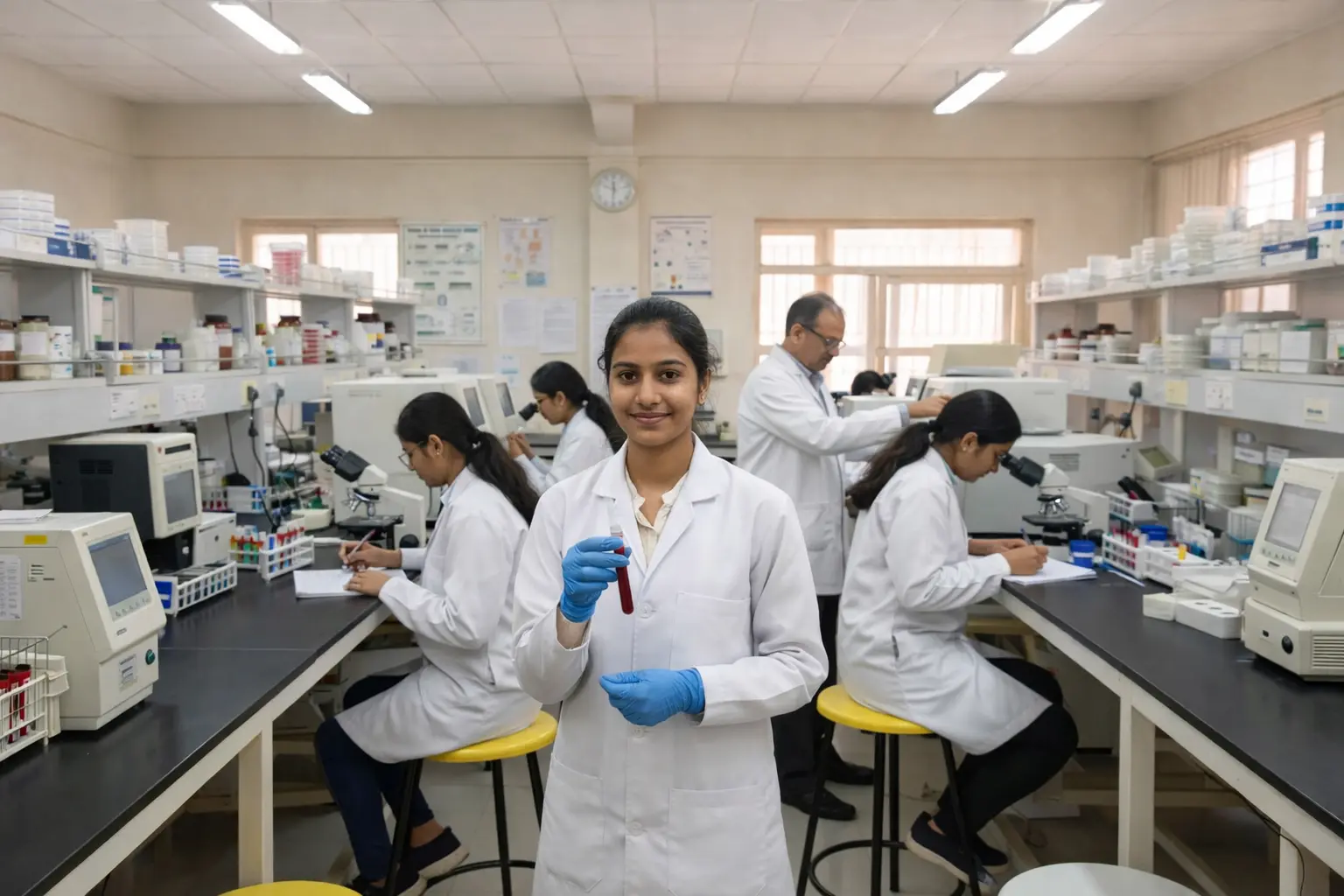
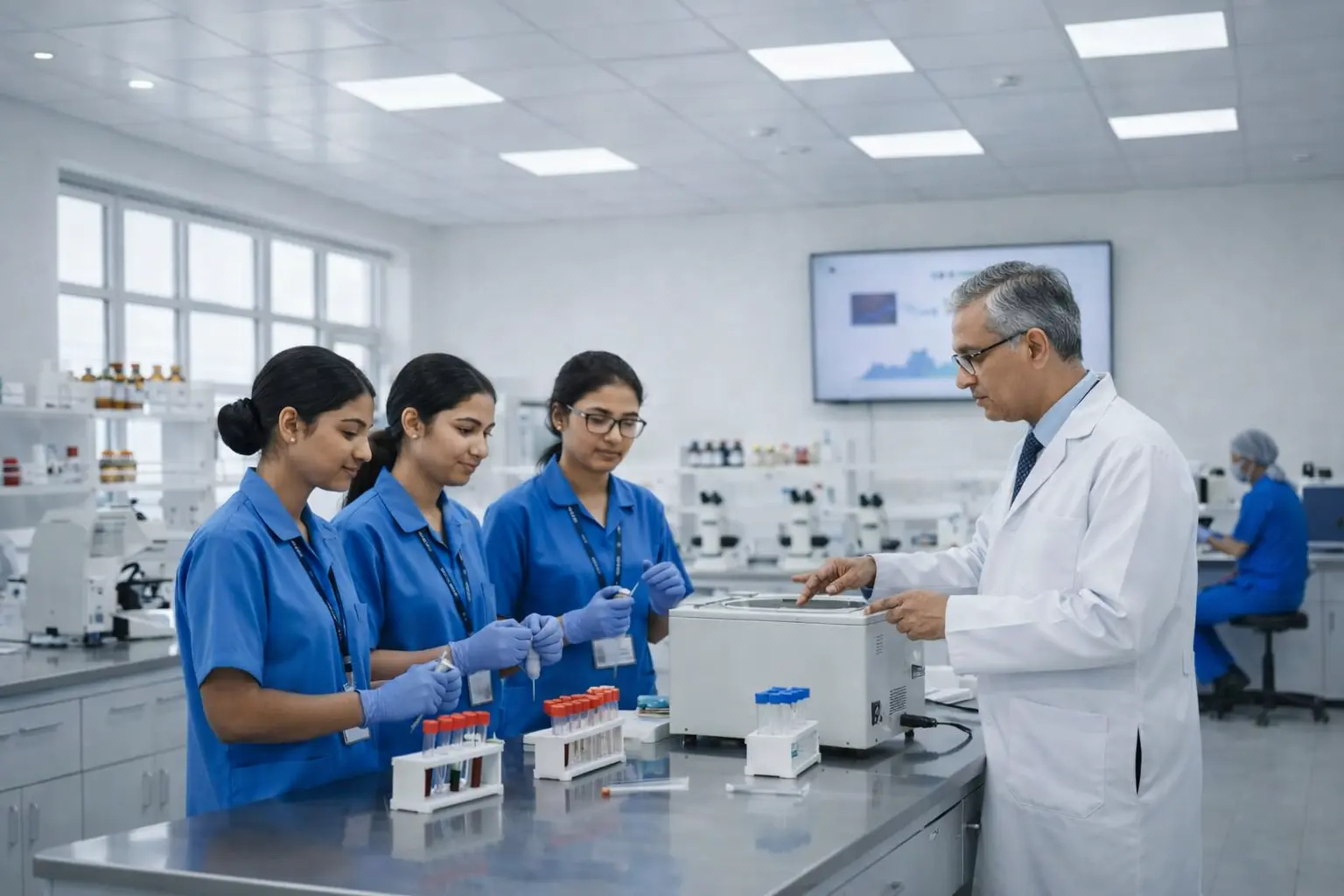

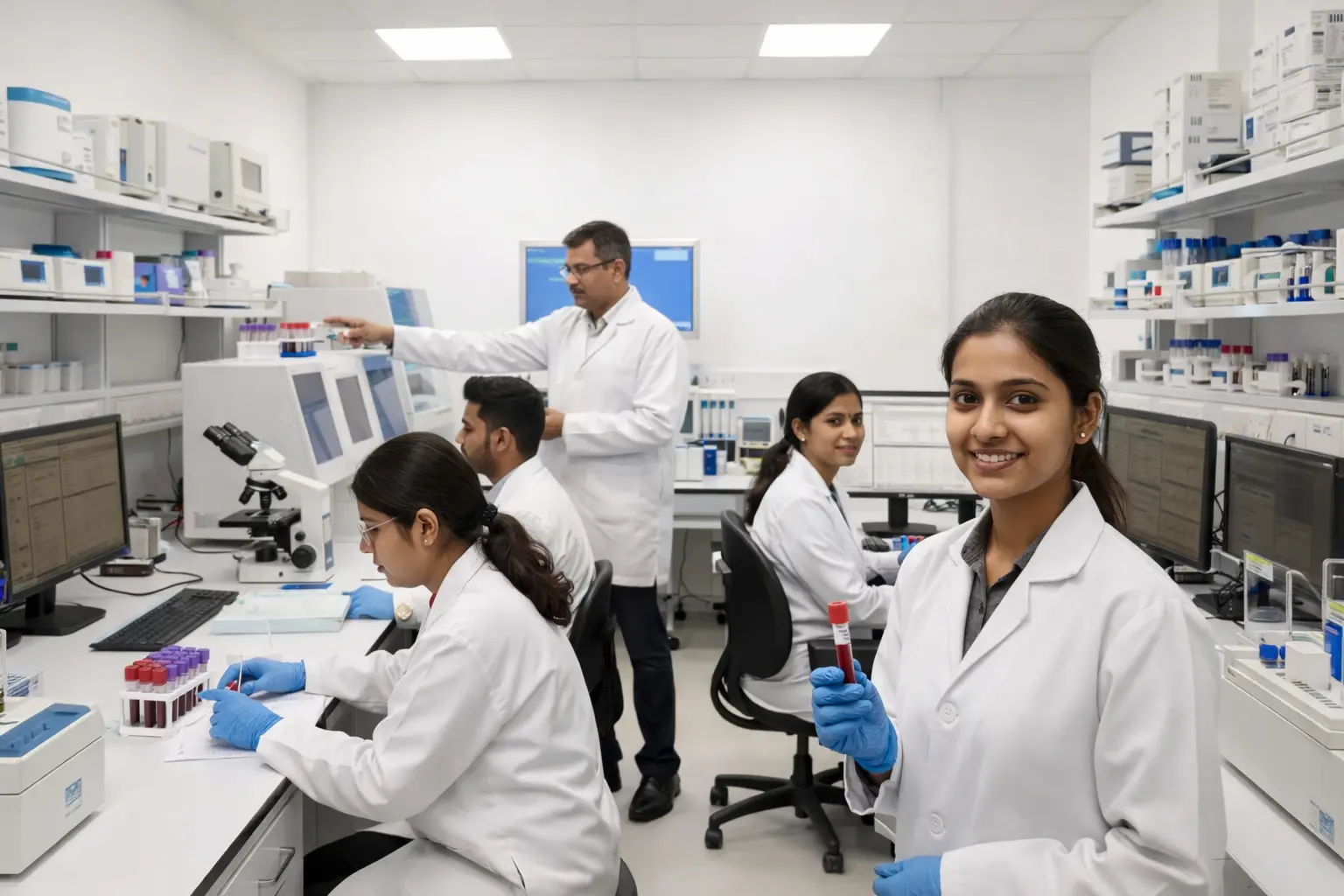
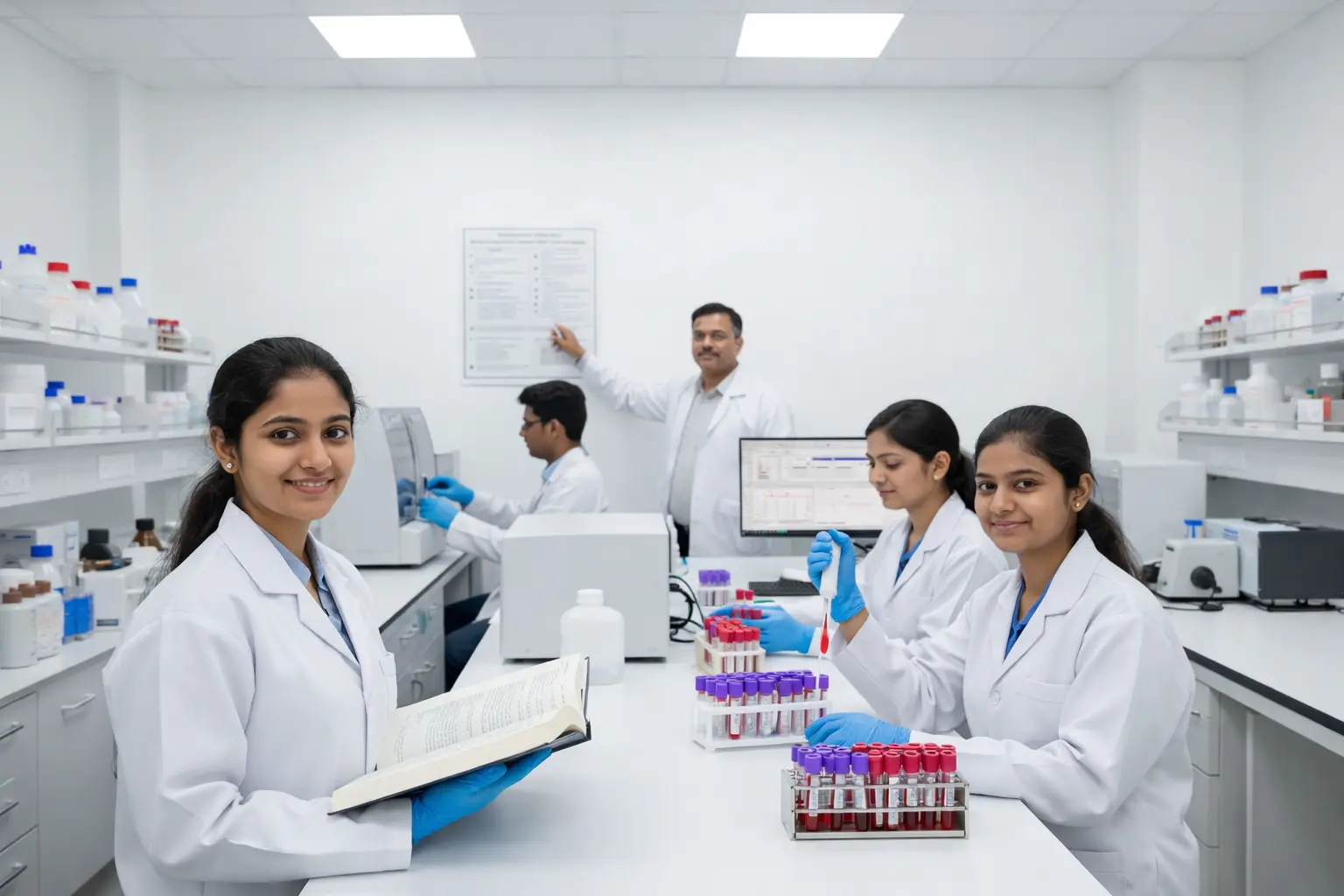
A Medical Laboratory Technologist performs diagnostic tests on blood, urine, tissue, and other body samples using specialised laboratory equipment. They ensure accurate test results that help doctors diagnose diseases, monitor treatment, and make informed clinical decisions.
Admissions Open for September 2026 Intake - Limited Seats
Paramedical
Medical Laboratory Technologist: Role, Salary & Jobs in India
Jul 24th , 2026
Every accurate diagnosis begins with a test that most patients never see. Before a doctor can treat you, someone has to test your blood, tissue, or body fluid sample and turn the results into something the doctor can act on.
That professional is a medical laboratory technologist, a career built on precision, purpose, and the kind of work that quietly saves lives every single day. In India, this role supports nearly every diagnosis made in a hospital, yet few students know what the job actually involves, what it pays, or how to build a career in it.
This guide covers exactly that: the real role of a medical laboratory technologist, the required skills, eligibility, and current salary trends for medical laboratory technologists across India.
Who Is a Medical Laboratory Technologist?
A medical laboratory technologist job description covers examining blood, urine, tissue, and other body samples to detect diseases and support accurate medical diagnosis. Using advanced laboratory equipment and scientific testing methods, they generate reliable test results that help doctors diagnose illnesses, monitor treatment progress, and make informed clinical decisions. Although they rarely interact directly with patients, their work plays a vital role in almost every stage of healthcare.
Start Your Medical Career with Bachelor’s Degree in MLT from Top Universities - 100% Placement Support - Admissions are Open for 2026 Batch


Role and Responsibilities of Medical Lab Technologist
Medical laboratory technologist duties involve performing diagnostic tests, maintaining laboratory standards, and ensuring accurate test reporting. A typical medical laboratory technologist job description includes the following responsibilities:
- Receiving, labelling, processing, and, where applicable, collecting patient samples such as blood, urine, tissue, and other body fluids.
- Operating, calibrating, and maintaining laboratory equipment such as analyzers, microscopes, and centrifuges.
- Performing laboratory tests in haematology, clinical biochemistry, microbiology, immunology, and histopathology, depending on the laboratory department.
- Verifying test results for accuracy before they are shared with the treating doctor or pathologist.
- Maintaining quality control standards and following infection control and laboratory safety protocols.
- Recording, reviewing, and reporting test results using laboratory information systems.
- Assisting in training or supervising laboratory staff and trainees, depending on experience and workplace responsibilities.
- Ensuring laboratory equipment, instruments, and work areas are properly maintained, sterilised, and stocked with essential supplies.
Laboratory test results directly influence diagnosis and treatment decisions, so precision, accuracy, and consistency are essential in the role of a medical laboratory technologist.
A Day in the Life of a Medical Laboratory Technologist
No two days are exactly the same in a medical lab technologist day, but every shift is centered on delivering accurate test results that support patient care. The pace of work varies by laboratory, with hospitals often handling urgent cases throughout the day.
Starting the Shift
A typical shift begins by assessing the day's testing schedule, ensuring laboratory instruments are ready for use, and completing routine quality checks before processing patient samples.
A Busy and Fast-Paced Morning
Mornings are often the busiest, as samples from hospital wards, outpatient departments (OPDs), emergency units, and diagnostic centres arrive together. Technologists organise the workflow to ensure urgent samples are prioritised without affecting the accuracy of routine testing.
Working Across Different Laboratory Departments
Depending on their assigned department, technologists may spend the day analysing blood samples in haematology, identifying microorganisms in microbiology, examining tissue samples in histopathology, or performing biochemical and immunological tests using specialised laboratory equipment.
Supporting Patient Care Behind the Scenes
Although they rarely interact directly with patients, medical laboratory technologists work closely with pathologists and other healthcare professionals. Their timely and accurate test results help doctors diagnose diseases, monitor treatment progress, and make informed clinical decisions.
Ending the Shift
That's how a typical medical lab technologist day wraps up, updating laboratory records, performing routine quality checks, organising workstations, and preparing the lab for the next team. In hospitals that operate 24 hours a day, emergency samples may need to be processed at any time, making flexibility an important part of the role.
Although daily responsibilities may vary, every task is guided by a commitment to accuracy, quality, and dependable diagnostic testing that supports informed medical decisions.
Medical Laboratory Technologist Requirements & Eligibility
To work as a medical laboratory technologist in India, you must meet certain educational and professional requirements before entering the workforce. While eligibility helps you qualify for the role, your career growth depends on the knowledge and practical skills you develop over time.
The basic Medical Laboratory Technologist requirements include:
- Completion of Class 12 (10+2) with Physics, Chemistry, and Biology (PCB) from a recognised board.
- A BSc in Medical Laboratory Technology (BSc MLT), which is the preferred qualification for most hospitals and diagnostic laboratories, or a Diploma in Medical Laboratory Technology (DMLT) for entry-level roles.
- Completion of the mandatory clinical internship or practical laboratory training included in the course curriculum.
- Registration with the relevant state paramedical council, where required by state regulations or employer policies.
- Additional certifications in specialised areas such as haematology, microbiology, molecular diagnostics, or quality management, which can improve career prospects and open opportunities for specialised roles.
To explore all available options, from diplomas to degrees to specialised certifications, see our detailed guide on Medical Laboratory Technology Courses available in India.
Start Your Medical Career with Bachelor’s Degree in MLT from Top Universities - 100% Placement Support - Admissions are Open for 2026 Batch
How to Become a Medical Laboratory Technologist
Becoming a medical laboratory technologist begins with choosing the right educational pathway. While both diploma and degree programs can lead to careers in medical laboratories, most hospitals and diagnostic laboratories prefer candidates with a BSc in Medical Laboratory Technology (BSc MLT) for technologist-level positions.
Step 1: Complete Class 12 with Science
Complete 10+2 from a recognised board with Physics, Chemistry, and Biology (PCB), as this is the standard eligibility requirement for most Medical Laboratory Technology courses in India.
Step 2: Choose the Right Medical Laboratory Technology Course
You can begin with a Diploma in Medical Laboratory Technology (DMLT) if you want a shorter, job-focused route into the field, or pursue a Bachelor of Science in Medical Laboratory Technology (BSc MLT) for broader career opportunities, technologist-level roles, and eligibility for postgraduate studies.
If you want to compare both in detail before deciding, explore our guide on BSc in Medical Laboratory Technology course details, duration, eligibility, fees, and syllabus, or read our Diploma in Medical Laboratory Technology (DMLT) course details guide to understand the pathways.
Step 3: Complete Clinical Training or Internship
Most BSc MLT programs include mandatory clinical training or a supervised hospital internship. This practical experience helps students develop hands-on skills in laboratory procedures, diagnostic equipment, quality control, and patient sample handling before entering the workforce.
Step 4: Apply for Entry-Level Roles
After completing your course, you can apply for entry-level positions such as Medical Laboratory Technologist, Junior Medical Laboratory Technologist, Laboratory Technician (depending on your qualification), or Trainee Medical Laboratory Technologist. These roles provide valuable experience and help build the practical expertise needed for career growth.
Step 5: Continue Learning and Specialise
As you gain experience, you can pursue specialised certifications or postgraduate programs in areas such as haematology, microbiology, clinical biochemistry, immunology, or molecular diagnostics. Specialisation can improve your career prospects, increase earning potential, and prepare you for senior laboratory and supervisory roles.
Medical Laboratory Technologist Salary in India
A Medical Laboratory Technologist's salary in India grows with experience, technical expertise, and career progression. Professionals working in corporate hospitals, NABL-accredited laboratories, and specialised diagnostic centres often earn higher salaries than those in smaller healthcare facilities.
| Experience Level | Average Annual Salary |
|---|---|
| 0 - 1 Year | ₹2.5 - ₹3.5 LPA |
| 1 - 3 Years | ₹3.5 - ₹5 LPA |
| 3 - 5 Years | ₹5 - ₹6.5 LPA |
| 5+ Years | ₹6.5 - ₹10 LPA |
As medical laboratory technologists gain experience and specialise in areas such as molecular diagnostics, microbiology, haematology, or histopathology, they can move into senior technical, supervisory, or laboratory management roles with higher earning potential.
Medical Laboratory Technologist Jobs in India
Medical laboratory technologists are in demand across the healthcare sector, with opportunities available in both clinical and non-clinical settings. Depending on their qualification and experience, they can work in:
- Government and private hospitals
- Multi-speciality hospitals and corporate healthcare chains
- Diagnostic centres and pathology laboratories
- Blood banks and transfusion medicine centres
- Public health laboratories
- Research laboratories and academic institutions
- Pharmaceutical and biotechnology companies
- Medical colleges and teaching hospitals
Medical laboratory technologist jobs in India continue to grow as hospitals, diagnostic networks, and preventive healthcare services expand across both metropolitan and tier 2 cities. Professionals with specialised skills in molecular diagnostics, microbiology, or clinical biochemistry often have access to a wider range of career opportunities.
Medical Laboratory Technologist Career Growth
A career as a medical laboratory technologist offers clear opportunities for professional growth through experience, specialised training, and higher education. A typical career progression includes:
| Career Stage | Role |
|---|---|
| Trainee Medical Laboratory Technologist | Assists with routine laboratory procedures under supervision while gaining practical experience. |
| Medical Laboratory Technologist | Performs diagnostic tests, maintains quality standards, and operates laboratory equipment independently. |
| Senior Medical Laboratory Technologist | Handles specialised testing, mentors junior staff, and supports laboratory quality assurance. |
| Laboratory Supervisor / Section In Charge | Oversees a laboratory department, manages workflows, and ensures compliance with quality and safety standards. |
| Laboratory Manager / Quality Manager | Leads laboratory operations, staff management, accreditation, and regulatory compliance. |
Professionals can further advance their careers by pursuing an MSc in Medical Laboratory Technology or specialising in areas such as haematology, microbiology, molecular diagnostics, clinical biochemistry, immunology, or histopathology. These qualifications can open opportunities in laboratory management, research, teaching, and advanced diagnostic services.
Why a BSc in Medical Laboratory Technology Is the Best Pathway
If you aspire to become a Medical Laboratory Technologist, a BSc in Medical Laboratory Technology (BSc MLT) is the preferred qualification. It combines in-depth academic learning with clinical training, preparing you for technologist-level roles, career advancement, and higher studies.
A BSc MLT program helps you:
- Build a strong foundation in laboratory sciences and diagnostic techniques.
- Gain hands-on clinical training through hospital internships.
- Learn to operate modern laboratory equipment and follow quality standards.
- Become eligible for technologist-level roles and postgraduate studies.
- Develop the technical and professional skills needed for long-term career growth.
To learn more about what you can expect after completing the degree, explore our BSc in Medical Laboratory Technology Scope, Salary & Job Opportunities guide.
Start Your Medical Laboratory Technologist Career with Emversity
Choosing the right platform is just as important as choosing the right degree. Along with academic knowledge, aspiring medical laboratory technologists need practical training, clinical exposure, and industry-relevant skills to succeed in today's healthcare sector.
Emversity's BSc in Medical Laboratory Technology, offered in collaboration with partner universities, is designed to help students develop both the theoretical foundation and hands-on experience required for a successful career.
Whether you aspire to work in hospitals, diagnostic laboratories, blood banks, research facilities, or other healthcare organisations, Emversity's BSc Medical Laboratory Technology program equips you with the knowledge, practical exposure, and career support to confidently begin your journey as a medical laboratory technologist.
Emversity Partner Universities for BSc Medical Lab Technology
Emversity has partnered with top universities across India, giving students the flexibility to choose a location that is convenient for them. The table below provides the list of partner universities and their respective locations.
| University Name | Location | Fees | Eligibility | Duration |
|---|---|---|---|---|
| MediCaps University | Indore, Madhya Pradesh | ₹7.8 Lakhs | 10+2 with 50% in PCB/PCMB | 4 Years |
| Arka Jain University | Jamshedpur, Jharkhand | ₹6.4 Lakhs | 10+2 with 50% in PCB/PCMB | 4 Years |
| Ajeenkya DY Patil University | Pune, Maharashtra | ₹8 Lakhs | 10+2 with 50% in PCB/PCMB | 4 Years |
| St. Mary's Rehabilitation University | Hyderabad, Telangana | ₹7.2 Lakhs | 10+2 with 50% in PCB/PCMB | 4 Years |
| Universal SkillTech University | Mumbai, Maharashtra | ₹8 Lakhs | 10+2 with 50% in PCB/PCMB | 4 Years |
| HCG Hospitals Global Healthcare Academics | Bengaluru, Karnataka | ₹7.2 Lakhs | 10+2 with 50% in PCB/PCMB | 4 Years |
| Medhavi Skill University | Sikkim | ₹7.2 Lakhs | 10+2 with 50% in PCB/PCMB | 4 Years |
| St. Peter's Institute - Chennai | Chennai, Tamil Nadu | ₹7.2 Lakhs | 10+2 with 50% in PCB/PCMB | 4 Years |
| St. Peter's Institute - Bengaluru | Bengaluru, Karnataka | ₹7.2 Lakhs | 10+2 with 50% in PCB/PCMB | 4 Years |
| AMET University | Chennai, Tamil Nadu | ₹7.2 Lakhs | 10+2 with 50% in PCB/PCMB | 4 Years |
| Maya Devi University | Dehradun, Uttarakhand | ₹7.2 Lakhs | 10+2 with 45% in PCB/PCMB | 4 Years |
| Saraswati Group of Colleges | Mohali, Punjab | ₹6.6 Lakhs | 10+2 with 50% in PCB/PCMB | 4 Years |
| Yenepoya University | Bengaluru, Karnataka | ₹6.8 Lakhs | 10+2 with 55% in PCB/PCMB | 4 Years |
| Alard University | Pune, Maharashtra | ₹8 Lakhs | 10+2 with 50% in PCB/PCMB | 4 Years |
Emversity Healthcare Partner for Internship & Placement





















Start Your Medical Career with Bachelor’s Degree in MLT from Top Universities - 100% Placement Support - Admissions are Open for 2026 Batch
Final Thoughts
Medical Laboratory Technology is a profession where knowledge, precision, and continuous learning come together to support modern healthcare. As you gain experience, you will have opportunities to work with advanced diagnostic technologies, develop specialised expertise, and take on greater responsibilities throughout your career. It is a field that rewards both technical competence and a commitment to maintaining high standards of accuracy.
The journey to becoming a successful Medical Laboratory Technologist begins with choosing the right educational pathway and gaining practical clinical experience. A strong foundation today can prepare you for diverse career opportunities and help you build a confident and successful future in the healthcare sector.
Ready to Build Your Future in Healthcare?
Book a free career counselling session with an Emversity expert to explore Medical Laboratory Technology programs, understand your career options, and take the first step towards a successful career as a Medical Laboratory Technologist.
Get Free Consultation
Talk to our experts today
Related Blogs
Frequently Asked Questions (FAQs)
Common Questions About Medical Laboratory Technologists