
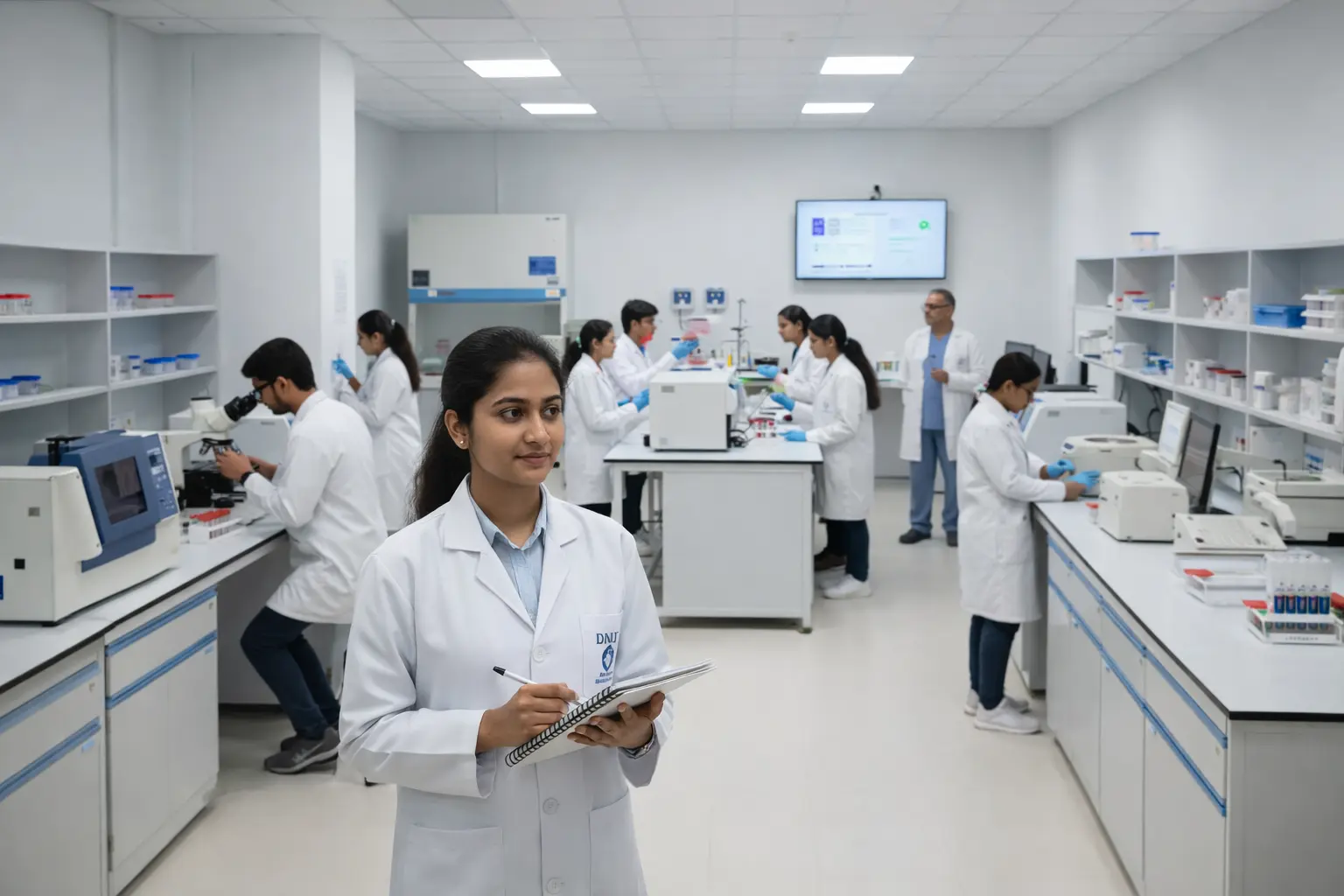

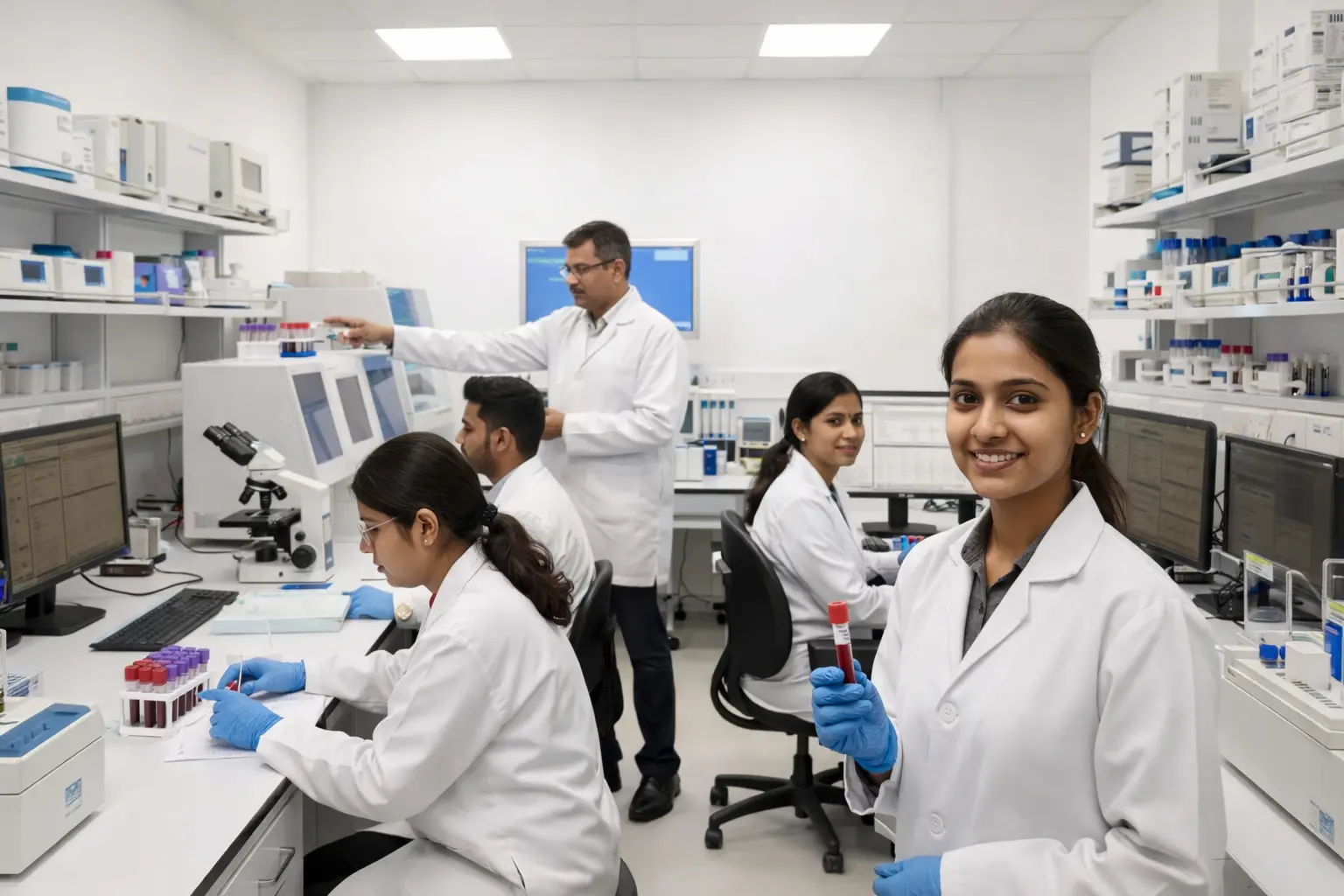
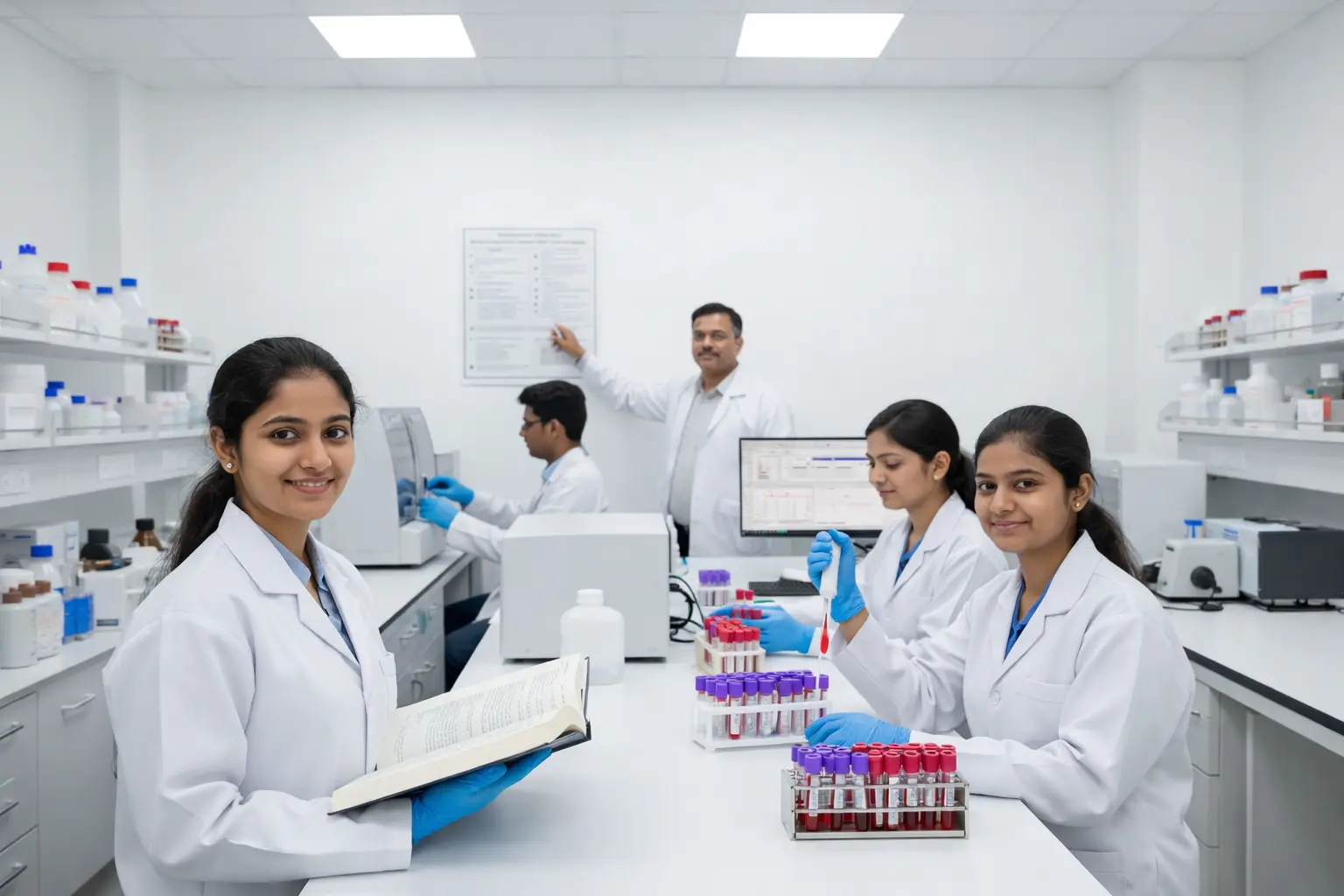
DMLT stands for Diploma in Medical Lab Technology. DMLT professionals collect, process, and analyse biological samples such as blood, urine, and tissue to support disease diagnosis. They work in hospitals, diagnostic laboratories, blood banks, and research facilities.
Admissions Open for September 2026 Intake - Limited Seats
Paramedical
Diploma in Medical Lab Technology ( DMLT) : Scope, Salary and Job Opportunities
Jun 15th , 2026
If you are searching for a meaningful career in healthcare without spending years in medical school, the DMLT course could be an ideal starting point. As one of the fastest growing paramedical programs in India, the Diploma in Medical Lab Technology opens the door to a stable and rewarding career at the heart of modern diagnostics and patient care.
Every time a doctor prescribes a blood test, urine analysis, or tissue biopsy, a trained DMLT professional plays a crucial role behind the scenes, performing and analysing the tests. With India's healthcare sector expanding rapidly, the demand for skilled laboratory technicians continues to grow across government hospitals, private diagnostic centres, research institutions, and pharmaceutical companies.
In this guide, we will explore the DMLT scope, DMLT salary, and the wide range of DMLT jobs available in India, helping you make a confident and informed career decision.
What is DMLT?
DMLT stands for Diploma in Medical Lab Technology. It is a paramedical diploma program that trains students to perform clinical laboratory tests, analyse biological specimens, and operate diagnostic equipment. After completing the DMLT course, graduates can work as laboratory technicians in hospitals, diagnostic laboratories, research facilities, blood banks, and other healthcare organisations.
The Diploma in Medical Lab Technology covers important areas of laboratory science, including pathology, microbiology, biochemistry, haematology, and blood banking. The program is designed to develop skilled laboratory professionals who support doctors and pathologists by conducting accurate diagnostic tests. As a result, DMLT professionals play a vital role in disease detection, treatment planning, and patient care, making them an essential part of the healthcare system.
Want to know the complete course structure, fees, and eligibility before you decide? Read our detailed guide on DMLT Course: Details, Fees and Eligibility to understand exactly what the program covers.
Start Your Medical Career with Bachelor’s Degree in MLT from Top Universities - 100% Placement Support - Admissions are Open for 2026 Batch


DMLT Scope: What Does the Future Look Like for DMLT Graduates?
The scope of DMLT in India continues to grow as healthcare facilities increasingly rely on diagnostic testing for accurate patient care. A Diploma in Medical Lab Technology can open career opportunities in hospitals, diagnostic laboratories, research centres, pharmaceutical companies, and public health organisations. With the rising demand for skilled laboratory professionals, the DMLT scope remains strong, offering stable career growth and diverse employment opportunities across the healthcare sector.
Why is the Scope of DMLT Growing?
Several factors are contributing to the expanding scope of DMLT in India:
- Rising demand for diagnostic and pathology services
- Increased awareness of preventive healthcare and routine health screenings
- Growth of hospitals, diagnostic centres, and healthcare networks
- Expansion of public healthcare infrastructure
- Greater use of advanced laboratory technologies and specialised testing
- Growing demand for skilled laboratory professionals in both urban and rural areas
These developments have created a strong need for qualified technicians, strengthening the long term DMLT scope and salary outlook.
Where Can DMLT Graduates Work?
One of the biggest advantages of the DMLT course is the variety of career opportunities available.
- Hospitals : Government hospitals, private hospitals, speciality hospitals, and community healthcare centres require laboratory technicians to support diagnosis and patient care.
- Diagnostic Centres and Pathology Laboratories : Independent laboratories and large diagnostic chains regularly recruit DMLT professionals to handle sample processing, testing, and reporting.
- Blood Banks and Transfusion Services : Blood collection, blood grouping, cross matching, and transfusion support require trained laboratory personnel.
- Pharmaceutical and Biotechnology Companies : DMLT graduates can contribute to laboratory operations, quality control, and clinical research activities.
- Research Institutions : Research laboratories and healthcare organisations employ laboratory professionals to support scientific studies and medical investigations.
- Public Health Laboratories : Government health programs and disease surveillance laboratories rely on skilled technicians for testing and reporting.
- Forensic Laboratories : Forensic and toxicology laboratories offer opportunities for professionals interested in evidence analysis and laboratory investigation.
How High Can You Grow After DMLT?
The scope of DMLT offers strong career growth opportunities. Most graduates start as Laboratory Technicians, Lab Assistants, or Sample Collection Technicians and gradually progress to roles such as Senior Laboratory Technician, Laboratory Analyst, or Quality Control Technician. With experience and additional qualifications, professionals can advance to positions like Laboratory Supervisor, Lab In Charge, or Quality Assurance Officer. Higher education and specialised training can further open pathways to laboratory management, research, healthcare administration, and academic careers.
Can DMLT Graduates Work Abroad?
Yes. The international scope of DMLT is growing as healthcare systems across various countries continue to require trained laboratory professionals. Indian laboratory technicians are valued for their practical skills and experience in handling diverse diagnostic procedures.
Many professionals pursue international opportunities after gaining work experience and meeting country specific licensing requirements.
How Can You Expand Your Career Scope After DMLT?
While the DMLT course provides a strong foundation, pursuing higher education can significantly improve career prospects and salary potential.
Popular options include:
- Bachelor of Medical Lab Technology (BMLT)
- BSc in Medical Lab Technology
- Specialised laboratory certifications
- MSc in Microbiology
- MSc in Biochemistry
- MSc in Pathology
Among these options, a BSc in Medical Lab Technology is one of the most popular pathways for students seeking advanced laboratory roles, leadership opportunities, and higher earning potential.
Looking to Advance Beyond DMLT?
A diploma can help you enter the healthcare workforce, but higher education can open the door to broader career opportunities and faster professional growth. Pursuing a bachelor's degree in medical lab technology or a specialised certification can enhance your technical expertise, improve your eligibility for senior positions, and increase your earning potential.
Start Your Medical Career with Bachelor’s Degree in MLT from Top Universities - 100% Placement Support - Admissions are Open for 2026 Batch
DMLT Salary in India
The DMLT salary in India varies based on experience, employer, location, and skill level. While the DMLT salary per month for freshers starts at an entry level range, professionals can achieve higher earnings as they gain experience and specialise in laboratory sciences. The overall DMLT course salary outlook remains promising, with opportunities available across hospitals, diagnostic centres, blood banks, research laboratories, and healthcare organisations.
DMLT Salary Overview by Experience
| Experience Level | Annual Salary Range | DMLT Salary Per Month |
|---|---|---|
| Fresher (0-2 Years) | ₹1.8 - ₹3.0 LPA | ₹15,000 - ₹25,000 |
| Early Career (2-5 Years) | ₹3.0 - ₹5.0 LPA | ₹25,000 - ₹42,000 |
| Experienced Professional (5-10 Years) | ₹5.0 - ₹8.0 LPA | ₹42,000 - ₹67,000 |
| Senior Specialist / Lab Manager | ₹8.0 - ₹12.0 LPA+ | ₹67,000 - ₹1 Lakh+ |
The DMLT course salary generally increases with experience, technical expertise, and additional qualifications. Professionals who specialise in advanced laboratory procedures or move into supervisory positions often earn higher salary packages.
DMLT Salary Per Month in Government and Private Hospitals
The DMLT salary per month in government and private healthcare sectors varies by employer, location, experience, and job role. Government positions generally offer stable pay and additional benefits, while private hospitals may provide faster salary growth and career advancement opportunities.
| Job Role | Government Sector Salary | Private Sector Salary |
|---|---|---|
| Lab Assistant | ₹15,000 - ₹25,000 | ₹20,000 - ₹30,000 |
| Laboratory Technician | ₹25,000 - ₹45,000 | ₹30,000 - ₹50,000 |
| Blood Bank Technician | ₹25,000 - ₹45,000 | ₹30,000 - ₹50,000 |
| Medical Lab Technologist | ₹30,000 - ₹50,000+ | ₹35,000 - ₹60,000+ |
Along with salary, a DMLT government job may include allowances, healthcare benefits, paid leave, and retirement benefits. In contrast, the DMLT salary per month in private hospital organisations often increases with experience, specialisation, and leadership responsibilities.
DMLT Scope and Salary Abroad
The DMLT scope and salary extend beyond India, with skilled laboratory professionals in demand across hospitals and diagnostic laboratories worldwide. After gaining experience and meeting licensing requirements, DMLT graduates can explore opportunities in countries such as the UAE, Saudi Arabia, Canada, Australia, and the United Kingdom. International careers often offer advanced work environments, specialised training, and higher earning potential.
Can Higher Education Improve Your Salary?
Yes. Pursuing a bachelor's degree in medical lab technology or specialised certifications can help professionals qualify for advanced laboratory roles, supervisory positions, and management opportunities. As skills and responsibilities increase, the DMLT course salary and long term career prospects can improve significantly.
DMLT Jobs: Career Roles and Opportunities in India
The variety of DMLT jobs available in India is one of the biggest advantages of pursuing a Diploma in Medical Lab Technology. From hospitals and diagnostic laboratories to research centres and pharmaceutical companies, jobs after DMLT are available across multiple healthcare sectors.
Top Job Roles After DMLT
The DMLT course prepares graduates for a variety of laboratory and healthcare support roles. Some of the most popular DMLT jobs include:
| Job Role | Description |
|---|---|
| Medical Lab Technician | Performs diagnostic tests on blood, urine, tissue, and other patient samples. |
| Laboratory Analyst | Analyses test results and assists in maintaining laboratory accuracy and quality standards. |
| Phlebotomist | Collects blood samples from patients for diagnostic testing and medical investigations. |
| Blood Bank Technician | Manages blood collection, testing, storage, and transfusion support activities. |
| Microbiology Technician | Assists in identifying microorganisms and supports infection diagnosis and research. |
| Histopathology Technician | Prepares tissue samples for microscopic examination and disease diagnosis. |
| Quality Control Technician | Monitors laboratory procedures and ensures compliance with quality standards. |
| Research Laboratory Assistant | Supports medical research projects, laboratory studies, and data collection activities. |
| Diagnostic Laboratory Technician | Conducts routine laboratory investigations and maintains diagnostic equipment. |
These jobs after DMLT offer opportunities across hospitals, diagnostic centres, blood banks, research organisations, and healthcare laboratories.
DMLT Government Job Opportunities
A DMLT government job is a popular career choice because of its stability, structured career progression, and employee benefits. Opportunities are available through:
- Government Hospitals
- AIIMS and Government Medical Colleges
- State Health Departments
- Railway Hospitals
- Employees' State Insurance Corporation (ESIC)
- Defence Healthcare Services
- Public Health Laboratories
- National Health Mission (NHM) Projects
Many government organisations recruit laboratory professionals through state and central level recruitment examinations.
Private Sector Opportunities After DMLT
The private healthcare sector is one of the largest employers of DMLT graduates. Career opportunities are available in:
- Multi speciality Hospitals
- Diagnostic Centres
- Pathology Laboratories
- Blood Banks
- Pharmaceutical Companies
- Biotechnology Organisations
- Clinical Research Centres
- Healthcare Startups
With experience and specialised skills, professionals can progress into supervisory and management roles within these organisations.
DMLT Jobs in India: Where is the Demand Highest?
DMLT jobs in India are available across both metropolitan and emerging healthcare markets. Major cities such as Delhi, Mumbai, Bengaluru, Chennai, Hyderabad, and Kolkata offer a high concentration of opportunities, driven by large hospitals, diagnostic chains, and research institutions.
At the same time, expanding healthcare infrastructure in Tier 2 and Tier 3 cities has created greater demand for laboratory professionals, making employment opportunities more accessible across different regions of the country.
What Skills Help You Succeed in DMLT Jobs?
To build a successful career after DMLT, professionals should focus on developing:
- Laboratory testing and diagnostic skills
- Attention to detail
- Sample collection and handling techniques
- Knowledge of laboratory equipment
- Communication and teamwork skills
- Quality control and safety practices
These skills can improve employability and support long term career growth in the healthcare industry.
Ready to Go Beyond DMLT? Explore BSc in Medical Lab Technology with Emversity
While a DMLT course provides a strong foundation for entering the healthcare industry, many students choose to pursue a bachelor's degree to access broader career opportunities, higher earning potential, and advanced laboratory roles. A BSc in Medical Lab Technology builds on the knowledge gained through DMLT and can open the door to leadership, research, and specialised diagnostic careers.
DMLT vs BSc in Medical Lab Technology
| Parameter | DMLT | BSc in Medical Lab Technology |
|---|---|---|
| Qualification Level | Diploma | Bachelor's Degree |
| Duration | 2 Years | 4 Years (including clinical training) |
| Entry Level Salary | ₹1.8 - ₹3.0 LPA | ₹2.5 - ₹4.5 LPA |
| Government Job Opportunities | Limited | Wider Eligibility |
| Higher Education Pathways | BMLT, BSc | MSc, MBA Healthcare, PhD |
| Leadership Roles | Limited | Strong Career Growth Potential |
For students who want to build a long term career in diagnostics and laboratory sciences, a bachelor's degree can provide greater career flexibility, stronger progression opportunities, and access to a wider range of healthcare roles.
Why Consider Emversity for BSc in Medical Lab Technology?
Emversity BSc in Medical Lab Technology program is designed to combine academic learning with practical clinical exposure. Students benefit from hands on training, industry integrated learning, expert mentorship, and dedicated placement support, helping them develop the skills required for successful careers in modern laboratory sciences.
Explore More
- BSc in Medical Lab Technology: Scope, Salary and Job Opportunities
- BSc in Medical Lab Technology: Course Details, Fees and Eligibility
Emversity Healthcare Partner for Internship & Placement















Start Your Medical Career with Bachelor’s Degree in MLT from Top Universities - 100% Placement Support - Admissions are Open for 2026 Batch
Final Thoughts
A DMLT course can be an excellent starting point for students who want to build a career in healthcare and diagnostics. With a growing DMLT scope, competitive DMLT salary potential, and a wide range of DMLT jobs available across hospitals, diagnostic centres, research laboratories, and public healthcare organisations, the field offers strong long term career prospects.
As healthcare continues to depend on accurate laboratory testing for disease diagnosis and treatment, the demand for skilled laboratory professionals is expected to remain strong. For students who aspire to higher qualifications, broader career opportunities, and greater earning potential, pursuing a bachelor's degree can be the next step toward long term professional growth.
Not Sure Which Path is Right for You?
Book a free career counselling session with an Emversity expert today and discover the best route toward your future in healthcare and laboratory sciences.
Get Free Consultation
Talk to our experts today
Related Blogs
Frequently Asked Questions (FAQs)
Find answers to some of the most common questions about DMLT