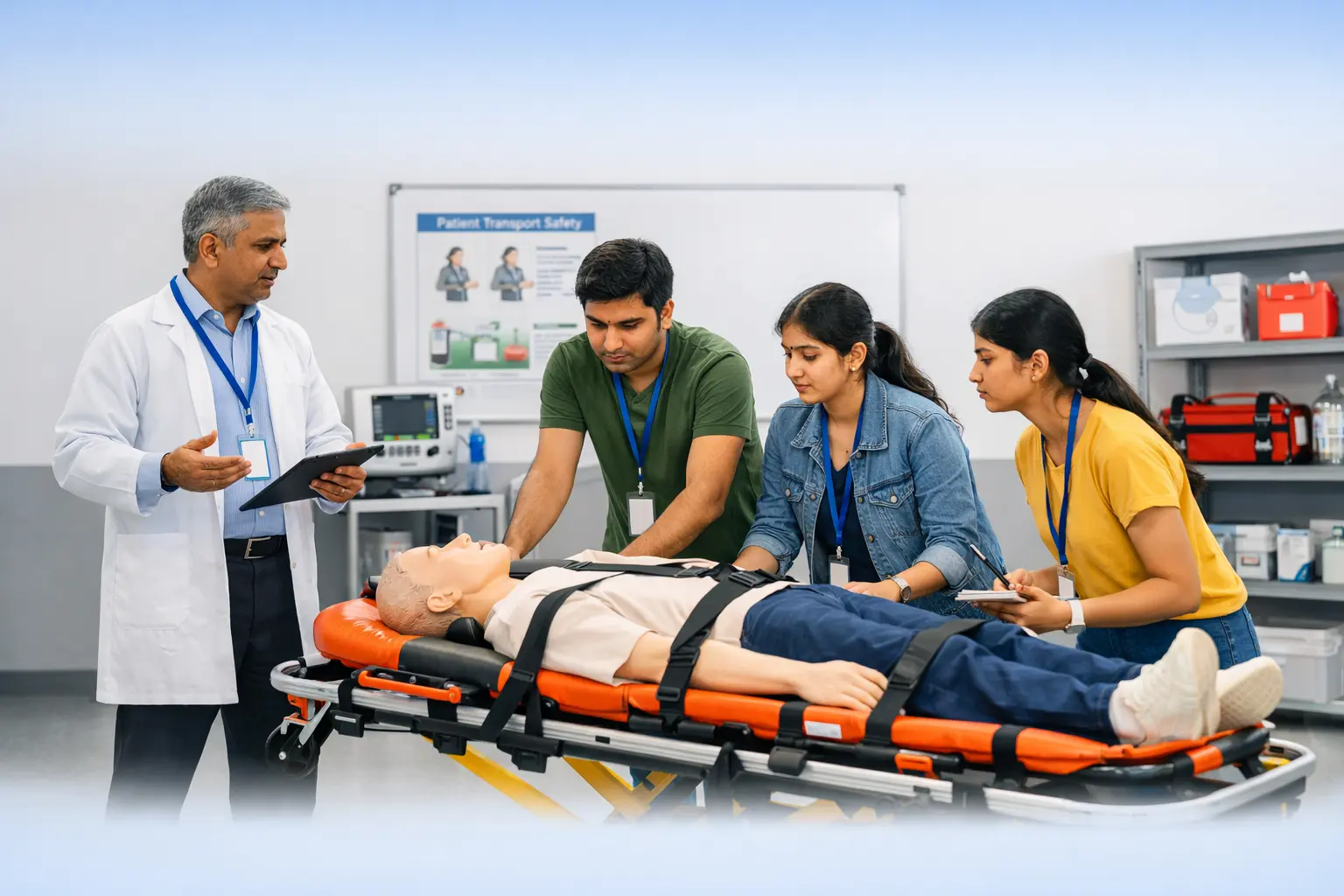
The minimum qualification for most emergency medical technician courses is completion of Class 10+2 from a recognised board. Science students, particularly those with Physics, Chemistry, and Biology (PCB or PCMB), are generally preferred. Eligibility requirements may vary by institution and course level.
Admissions Open for September 2026 Intake - Limited Seats
Paramedical
Emergency Medical Technician Courses: Fees, Eligibility and Course Details
Jun 04th , 2026
If you are looking for a healthcare career that places you at the forefront of life-saving care, emergency medical technician courses are among the most rewarding options available. EMT courses prepare students to respond to medical emergencies, stabilise patients, and provide critical pre-hospital care.
These essential skills are in high demand across India's rapidly expanding healthcare sector. Whether you are interested in a short-term certificate program or a full degree course, there are various EMT courses available to suit different career goals and educational backgrounds.
In this blog, we will cover everything you need to know about emergency medical technician courses, including eligibility, fees, syllabus, duration, career opportunities, and top universities, helping you make an informed decision about your future.
What Is an Emergency Medical Technician (EMT)?
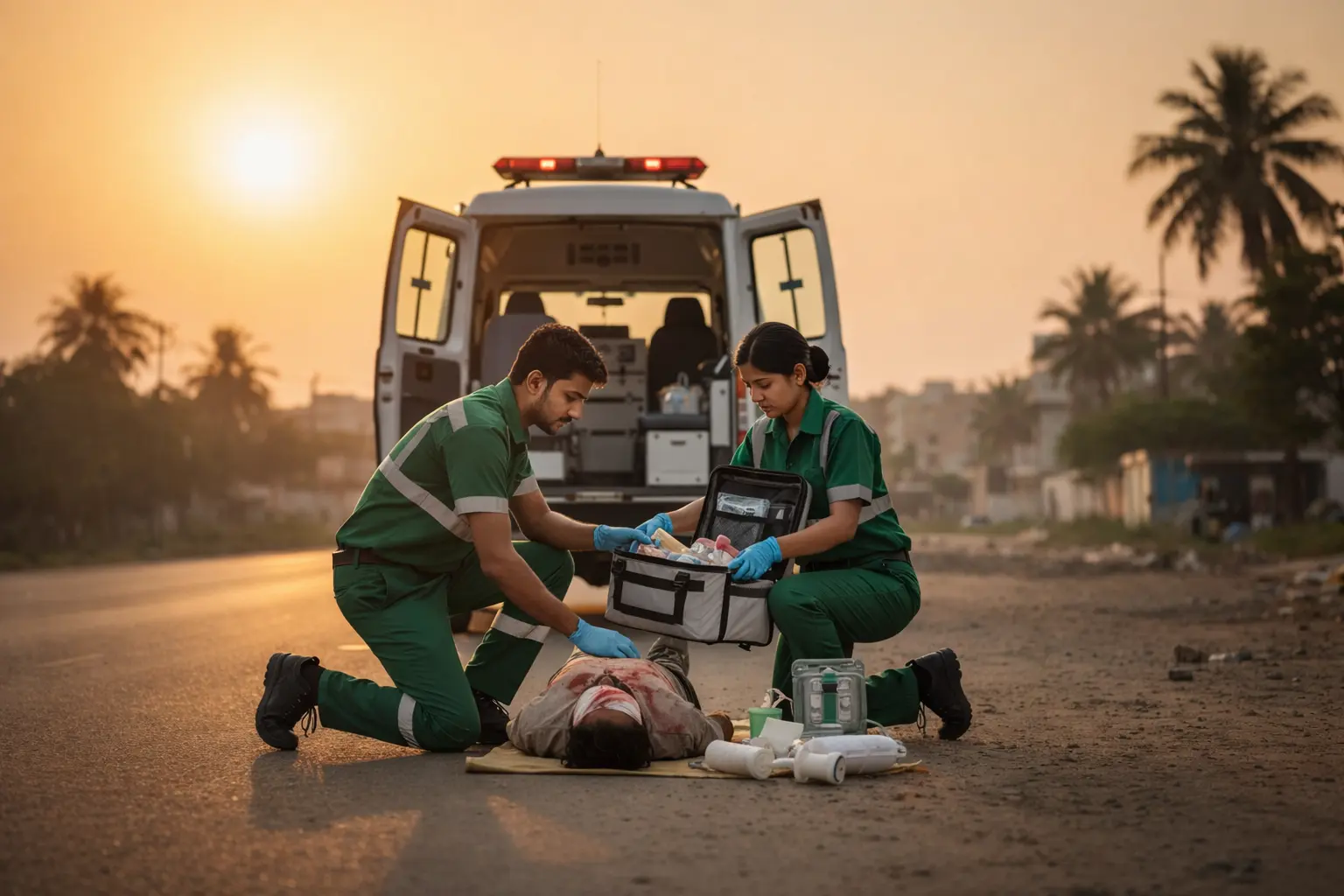
An Emergency Medical Technician (EMT) is a healthcare professional trained to provide immediate medical assistance during emergencies. EMTs are often the first healthcare providers to reach patients in critical situations, such as accidents, medical emergencies, natural disasters, or patient transfers.
Their primary role is to assess a patient's condition, provide essential emergency care, and help ensure the patient receives timely treatment. EMTs work in fast-paced environments where quick thinking, clinical skills, and effective communication are essential.
They are trained to manage a wide range of emergency situations, including trauma injuries, cardiac emergencies, respiratory distress, and other life-threatening conditions. By delivering pre-hospital care and supporting patients during transport, EMTs play an important role in healthcare and contribute significantly to patient safety and outcomes.
Start Your Medical Career with Bachelor’s Degree in EMT from Top Universities - 100% Placement Support - Admissions are Open for 2026 Batch

Types of EMT Courses in India
Emergency Medical Technician courses are available at different academic levels, allowing students to choose a program based on their career goals, educational background, and preferred study duration.
1. Certificate in Emergency Medical Technology
- Duration: 6 months to 1 year
- Focus: Basic life support, first aid, patient assessment, emergency response, and essential patient care skills.
- Best for: Students who want to gain foundational knowledge of emergency healthcare and enter the workforce quickly.
Certificate programs introduce students to the fundamentals of emergency medical services and help develop practical skills required for entry-level healthcare roles. Students interested in this pathway can explore the Certificate in Emergency Medical Technology program to learn more about its course structure, eligibility requirements, and career opportunities.
2. Diploma in Emergency Medical Technology
- Duration: 1 to 2 years
- Focus: Emergency care procedures, trauma management, patient transport, medical equipment handling, and clinical training.
- Best for: Students seeking more in-depth technical knowledge and practical exposure before entering the healthcare workforce.
3. BSc in Emergency Medical Technology
- Duration: 4 years
- Focus: Anatomy, physiology, emergency medicine, trauma care, disaster management, critical care support, and emergency medical systems.
- Best for: Students seeking long-term career growth and advanced clinical expertise.
The BSc is the most career-focused option among all EMT courses. If you want to understand what this degree leads to in terms of jobs, salary, and long-term scope, read this detailed guide on BSc in Emergency Technology After 12th: Scope, Salary, Jobs & Opportunities and BSc Emergency Medical Technology Course Details, including syllabus, eligibility criteria, and fees.
4. Postgraduate Programs in Emergency Medical Technology
- Duration: 2 years
- Focus: Advanced emergency care, healthcare leadership, research, and specialised clinical training.
- Best for: Graduates seeking advanced expertise, research opportunities, or leadership roles in emergency healthcare.
EMT Technician Course Details
Understanding the EMT technician course details can help you compare different programs and choose the right pathway for your career goals.
| Parameter | Details |
|---|---|
| Full Form | Emergency Medical Technician (EMT) |
| Course Levels | Certificate, Diploma, BSc, Postgraduate Programs |
| Duration | 6 months to 1 year (Certificate), 1–2 years (Diploma), 4 years (BSc), 2 years (PG) |
| Eligibility | 10+2 from a recognised board; PCB or PCMB preferred for most programs |
| Training Pattern | Classroom learning, simulation-based training, skills labs, clinical postings, and internships |
| Core Subjects | Anatomy, Physiology, Emergency Care, Trauma Management, Basic Life Support, Patient Assessment |
| Career Focus | Pre-hospital emergency care, trauma response, patient stabilisation, and patient transport |
| Career Areas | Hospitals, Ambulance Services, Trauma Centres, Emergency Departments, Disaster Response Teams |
| Admission Process | Merit-based admission; some institutions may conduct entrance tests or interviews |
The exact structure of an emergency medical technician course in India may vary by institution, but most programs combine classroom learning with practical clinical training and internships.
EMT Technician Course Duration
The EMT technician course duration varies depending on the chosen program type and level.
| Course Level | Duration |
|---|---|
| Certificate in Emergency Medical Technology | 6 months to 1 year |
| Diploma in Emergency Medical Technology | 1 to 2 years |
| BSc in Emergency Medical Technology | 4 years |
| Postgraduate Programs (MSc/PG Diploma) | 1 to 2 years |
Students who want to gain foundational skills and enter the healthcare sector more quickly often choose certificate or diploma programs. Those looking for advanced clinical training, broader career opportunities, and long-term professional growth may benefit from pursuing a BSc in Emergency Medical Technology. Postgraduate programs are suitable for graduates seeking specialised knowledge or leadership opportunities in emergency healthcare.
Start Your Medical Career with Bachelor’s Degree in EMT from Top Universities - 100% Placement Support - Admissions are Open for 2026 Batch
EMT Course Eligibility in India
Understanding EMT course eligibility in India is important before applying to a program. While specific requirements may vary between institutions, the general emergency medical technician eligibility criteria are outlined below.
For Certificate and Diploma Courses
- Completion of Class 10+2 from a recognised board
- Science stream preferred, particularly Physics, Chemistry, and Biology (PCB or PCMB)
- Minimum qualifying marks may vary by institution
- Candidates are generally expected to be at least 17 years of age at the time of admission
For BSc in Emergency Medical Technology
- Completion of Class 10+2 from a recognised board
- Physics, Chemistry, and Biology (PCB) or Physics, Chemistry, Mathematics, and Biology (PCMB) subjects preferred
- Minimum aggregate marks typically range from 50% to 55%, depending on the university
- Candidates must generally be 17 years of age or older
- Admission is usually merit based, although some institutions may conduct entrance tests or interviews
Eligibility requirements can vary across universities and training institutions. Students should always review the latest admission criteria provided by their chosen institution before applying.
Emergency Medical Technician Course Syllabus
The emergency medical technician course syllabus is designed to build both medical knowledge and practical emergency care skills. Students learn how to assess patients, respond to emergencies, provide life-saving support, and work effectively in a pre-hospital healthcare environment. While the exact curriculum may vary by institution, the following subjects are commonly covered across different EMT course levels.
Certificate Level Syllabus (6 Months to 1 Year)
Certificate programs focus on the fundamentals of emergency medical care and patient management.
Core Subjects:
- Introduction to Emergency Medical Services (EMS)
- Basic Anatomy and Physiology
- Patient Assessment and Triage
- Basic Life Support (BLS) and CPR
- Airway Management
- Wound Care and Bandaging
- Fracture Management and Immobilisation
- Trauma and Shock Management
- Medical Emergencies
- Communication and Documentation Skills
- Ambulance Operations and Patient Transport
Diploma Level Syllabus (1–2 Years)
Diploma programs provide a deeper understanding of emergency care procedures and clinical practices.
Core Subjects:
- Advanced Patient Assessment
- Pharmacology and Medication Awareness
- Trauma Care and Emergency Procedures
- Cardiovascular Emergencies
- Respiratory Emergencies
- Paediatric Emergencies
- Obstetric and Gynaecological Emergencies
- Disaster and Mass Casualty Management
- Medical Ethics and Healthcare Communication
- Clinical Practicals and Hospital Internship
BSc in Emergency Medical Technology Syllabus (4 Years)
A BSc in Emergency Medical Technology combines medical sciences with extensive clinical training to prepare students for emergency and trauma care environments.
Year 1: Foundation Medical Sciences
- Human Anatomy
- Human Physiology
- Biochemistry
- Microbiology
- Pathology
- Medical Terminology
Year 2: Emergency Care Fundamentals
- Introduction to Emergency Medical Services (EMS)
- Patient Assessment and Monitoring
- Emergency Medical Equipment and Technology
- Basic Life Support (BLS)
- Emergency Pharmacology
- Clinical Skills Laboratory
Year 3: Advanced Emergency Care
- Trauma Management
- Advanced Life Support (ALS)
- Cardiac Emergencies
- Respiratory Emergencies
- Neurological Emergencies
- Critical Care Support
- Disaster Management and Mass Casualty Care
- Medical Ethics and Patient Safety
Year 4: Clinical Training and Internship
- Emergency Department Postings
- Ambulance and Pre-Hospital Care Training
- ICU and Critical Care Exposure
- Patient Stabilisation and Monitoring
- Research Project or Case Study
- Internship and Practical Assessment
Practical Training Component
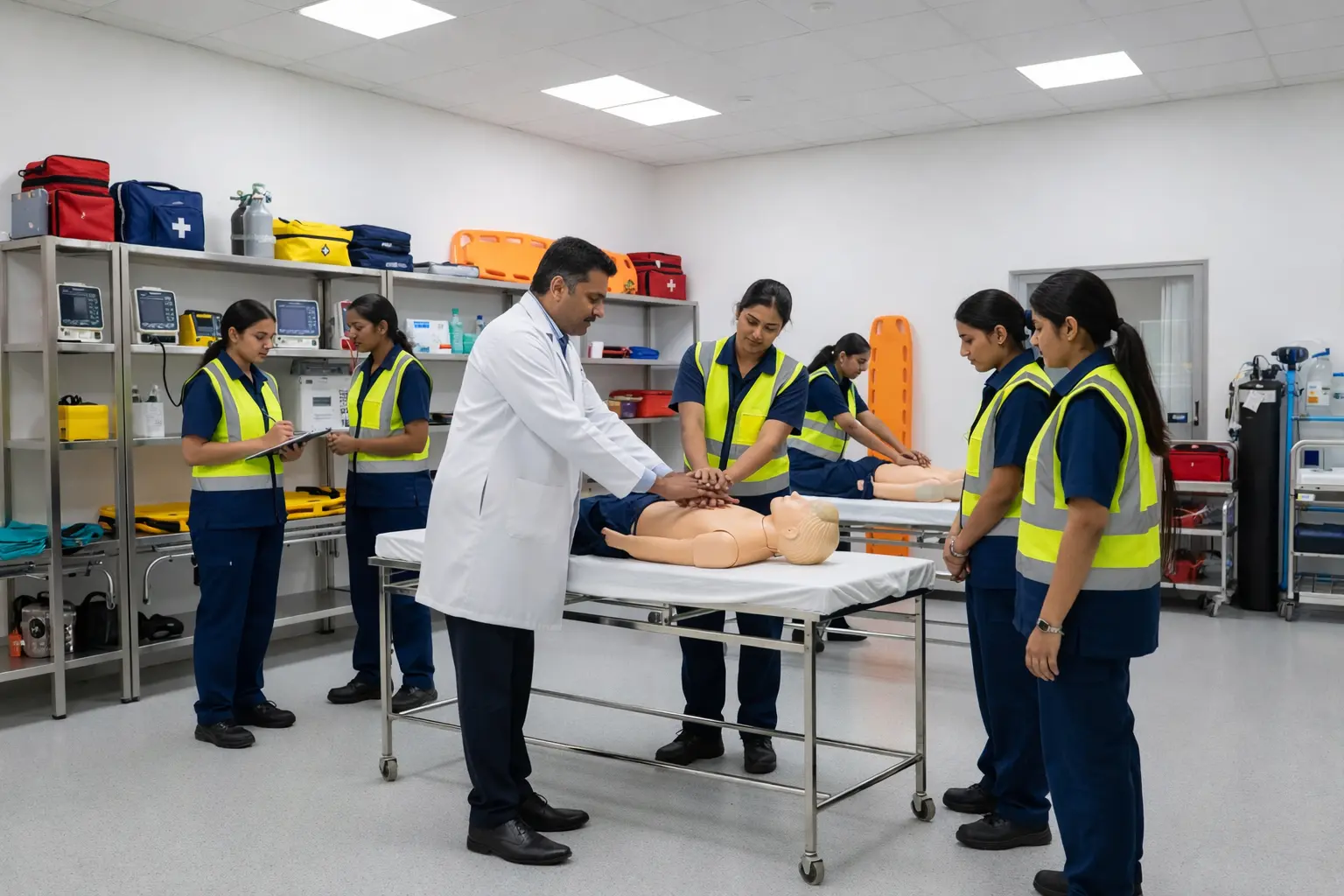
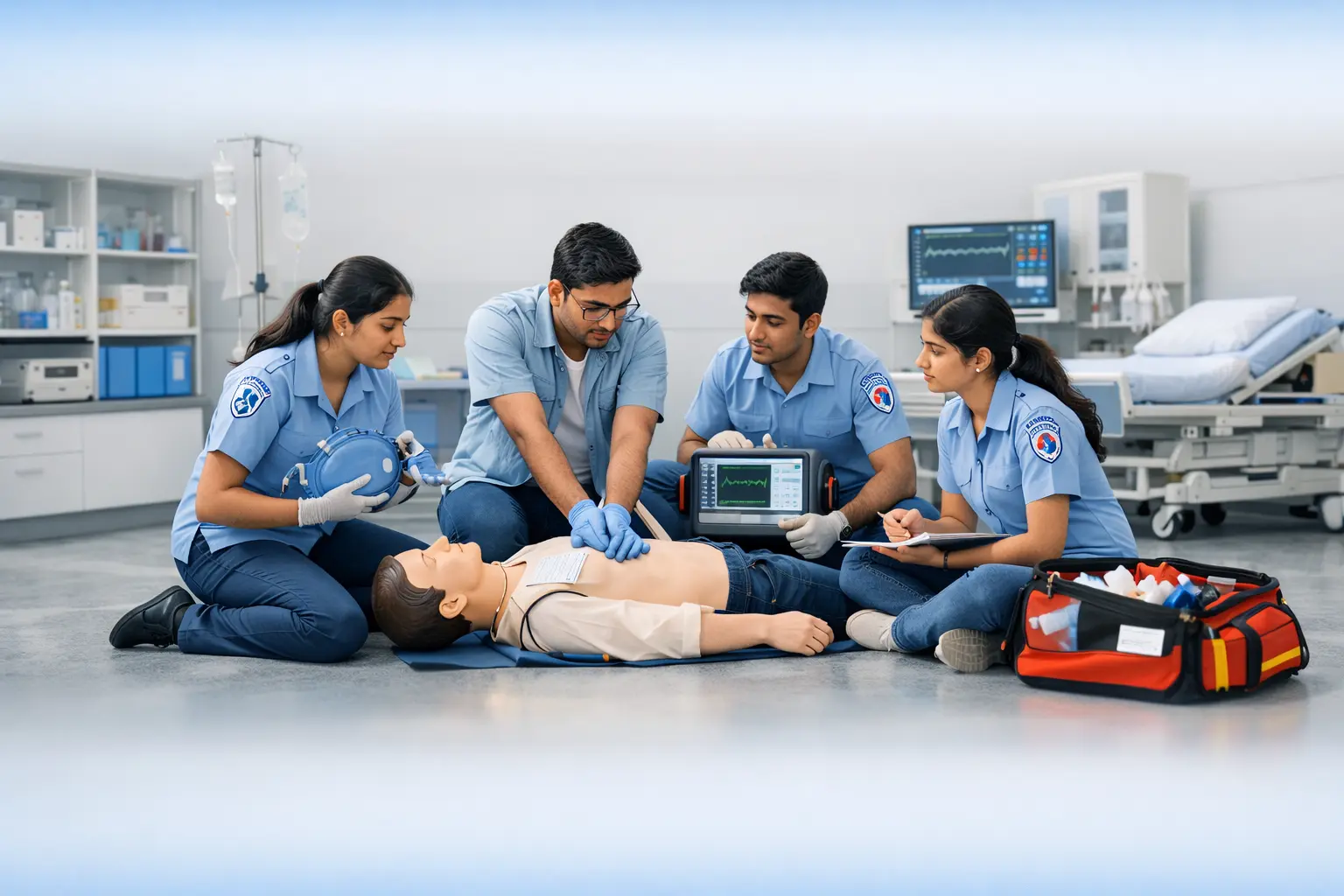
A major part of the emergency medical technician course syllabus involves hands-on learning through skills laboratories, simulation exercises, hospital postings, ambulance training, and internships. This practical exposure helps students apply their classroom knowledge in real-world emergency situations and develop the confidence required to work in high-pressure healthcare environments.
EMT Course Fees in India
The emergency medical technician course fees vary depending on the course level, institution type, location, infrastructure, and clinical training opportunities offered. Certificate and diploma programs generally have lower fees, while degree programs involve more extensive academic and practical training.
| Course Level | Approximate Fee Range |
|---|---|
| Certificate in Emergency Medical Technology | ₹20,000 – ₹1.5 Lakhs |
| Diploma in Emergency Medical Technology | ₹50,000 – ₹2 Lakhs |
| BSc in Emergency Medical Technology | ₹6.5 Lakhs – ₹8 Lakhs |
| Postgraduate Programs | ₹1 Lakh – ₹3 Lakhs |
Scholarships are available for SC/ST/OBC candidates in many institutions. Additionally, education loans are accessible through most nationalised banks for UG and PG programs.
Emergency Medical Technician Courses at Emversity: Why Choose Us?
Emversity offers university-partnered emergency medical technician courses in India designed to bridge the gap between classroom learning and practical healthcare training. The programs focus on helping students develop the knowledge, technical skills, and hands-on experience required to work confidently in emergency medical services and patient care.
Here is why students across India choose Emversity:
- University Partnered Programs: Courses are offered in collaboration with recognised universities, providing students with industry-relevant education and recognised qualifications.
- Industry Aligned Curriculum: The curriculum is designed to reflect current healthcare practices and emergency care requirements.
- Practical Clinical Training: Students gain hands-on experience through hospital postings, internships, and exposure to real healthcare environments.
- Experienced Faculty and Mentors: Learning is supported by healthcare professionals and academic experts with industry experience.
- Career Focused Learning: The programs emphasise practical skills and workplace readiness to help students prepare for healthcare careers.
- Placement Support: Students receive career guidance and support for employment opportunities within the healthcare sector.
If you are a Class 12 student looking to build foundational emergency care skills and begin your healthcare journey, the Certificate in Emergency Medical Technology can be a valuable starting point. Students seeking comprehensive clinical training, advanced knowledge, and broader career opportunities can explore the BSc in Emergency Medical Technology program.
Partnered Universities Offering EMT Courses Through Emversity
Emversity collaborates with leading universities across India to deliver quality Emergency Medical Technology programs. Below are the partnered institutions, their locations, program fees, and eligibility requirements.
| University | Location | Program Fees | Eligibility |
|---|---|---|---|
| Yenepoya University | Bengaluru, Karnataka | ₹6.8 Lakhs | 10+2 with 55% in PCB or PCMB |
| HCG Hospitals Global Healthcare Academics | Bangalore, Karnataka | ₹8 Lakhs | 10+2 with 50% in PCB or PCMB |
| Medhavi Skill University | Sikkim | ₹7.2 Lakhs | 10+2 with 50% in PCB or PCMB |
| St. Mary's Rehabilitation University | Hyderabad, Telangana | ₹7.2 Lakhs | 10+2 with 50% in PCB or PCMB |
| KR Mangalam University | Gurugram, Haryana | ₹7.8 Lakhs | 10+2 with 50% in PCB or PCMB |
Each of these universities is recognised by the University Grants Commission (UGC) and offers programs designed to develop future healthcare professionals. Through Emversity's academic model, students benefit from structured learning, practical clinical exposure, industry mentorship, and training that aligns with the evolving needs of the healthcare sector.
Emversity Healthcare Partner for Internship & Placement














Start Your Medical Career with Bachelor’s Degree in EMT from Top Universities - 100% Placement Support - Admissions are Open for 2026 Batch
Final Thoughts
Emergencies do not wait. Neither should you.
Every day, trained EMTs across India step into situations where their skills can mean the difference between life and death. That kind of impact is rare in any career. If you are ready to be that person, an EMT course is where it all begins.
Start today. The lives you may save tomorrow depend on the training you choose now.
Start Your EMT Journey with Emversity
Emversity offers Certificate and BSc programs in Emergency Medical Technology. You get hands-on clinical training, a nationally recognised qualification, and dedicated placement support from day one.
Get Free Consultation
Talk to our experts today
Related Blogs
Frequently Asked Questions (FAQs)
Quick Answers to Common Questions About EMT Courses