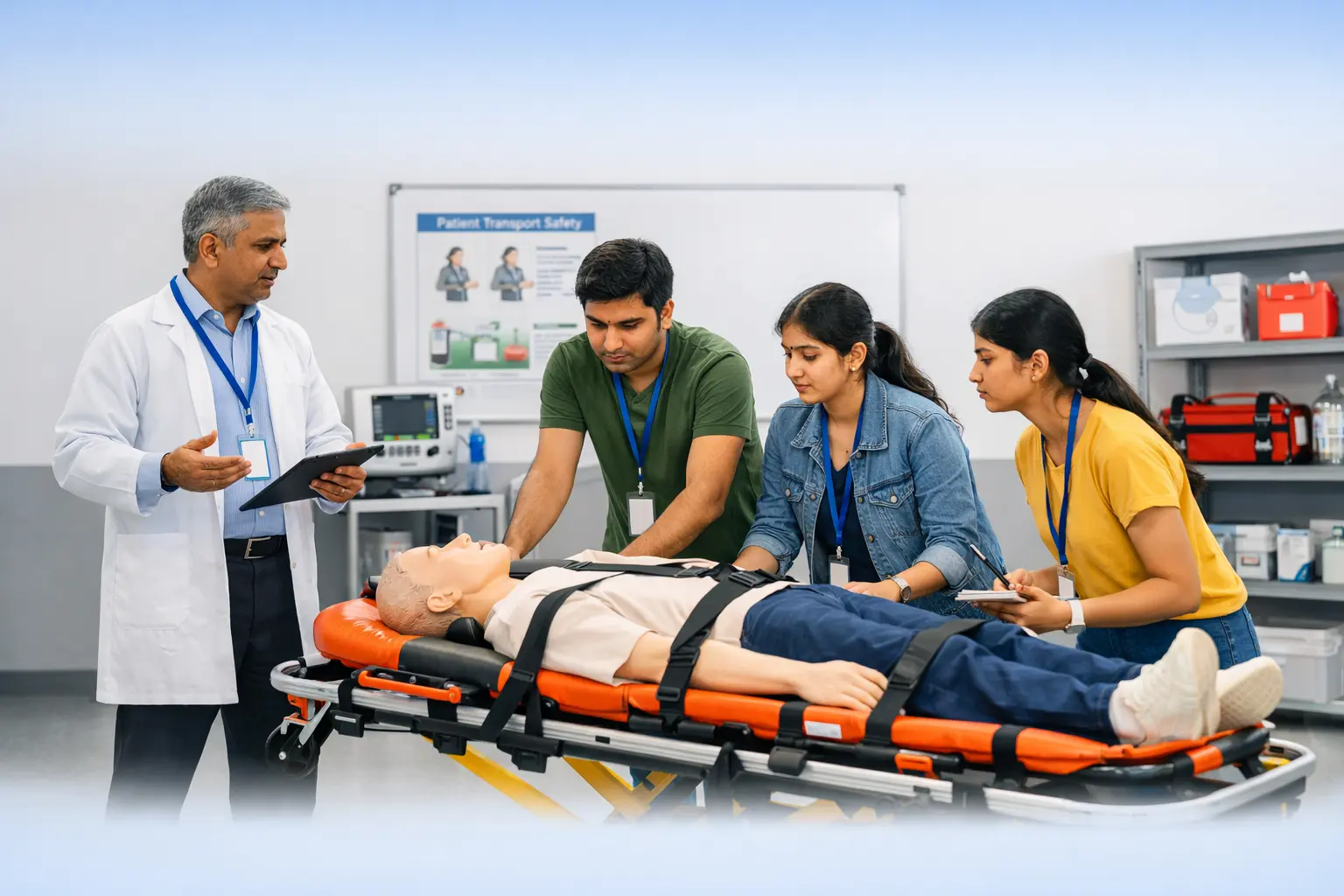
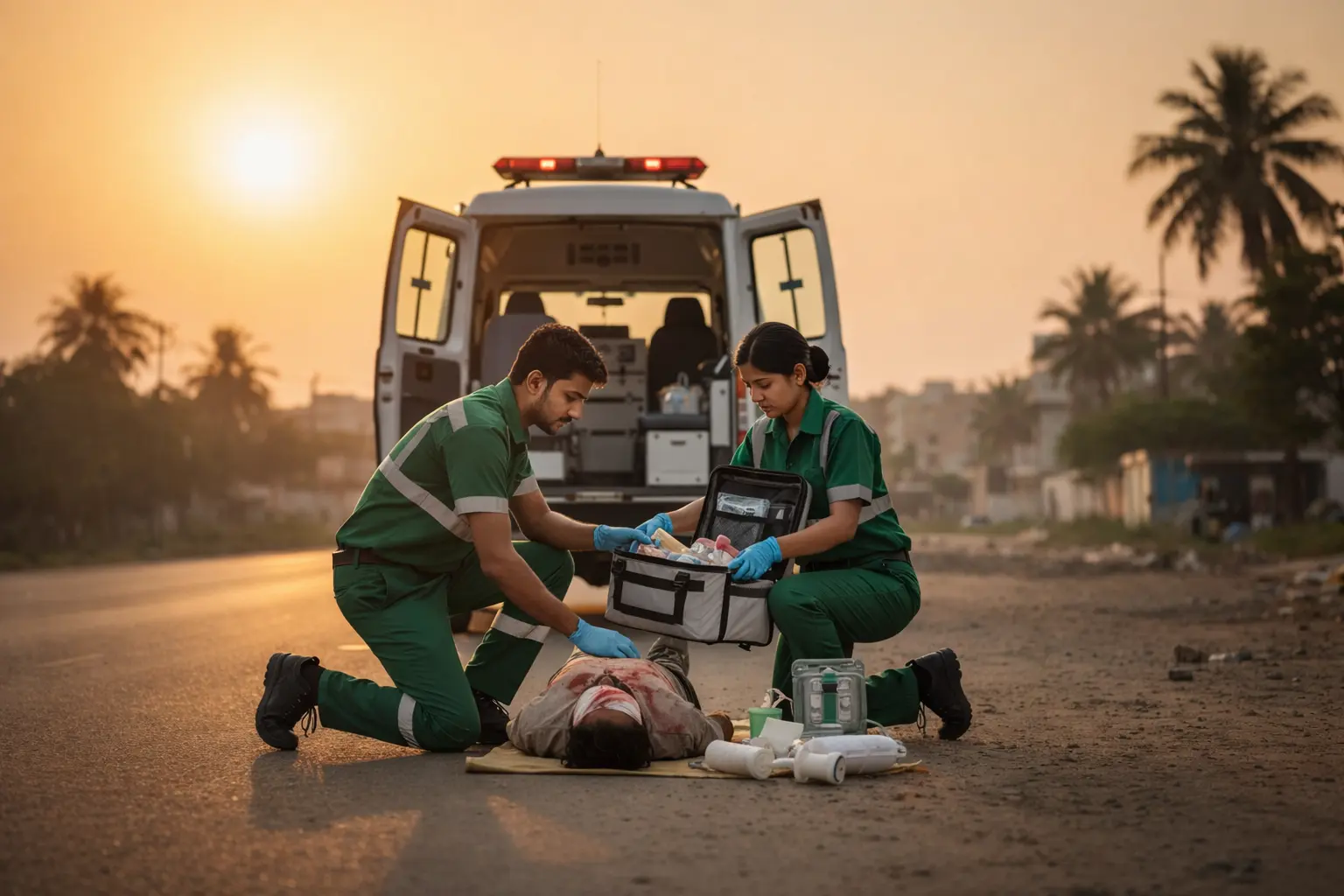
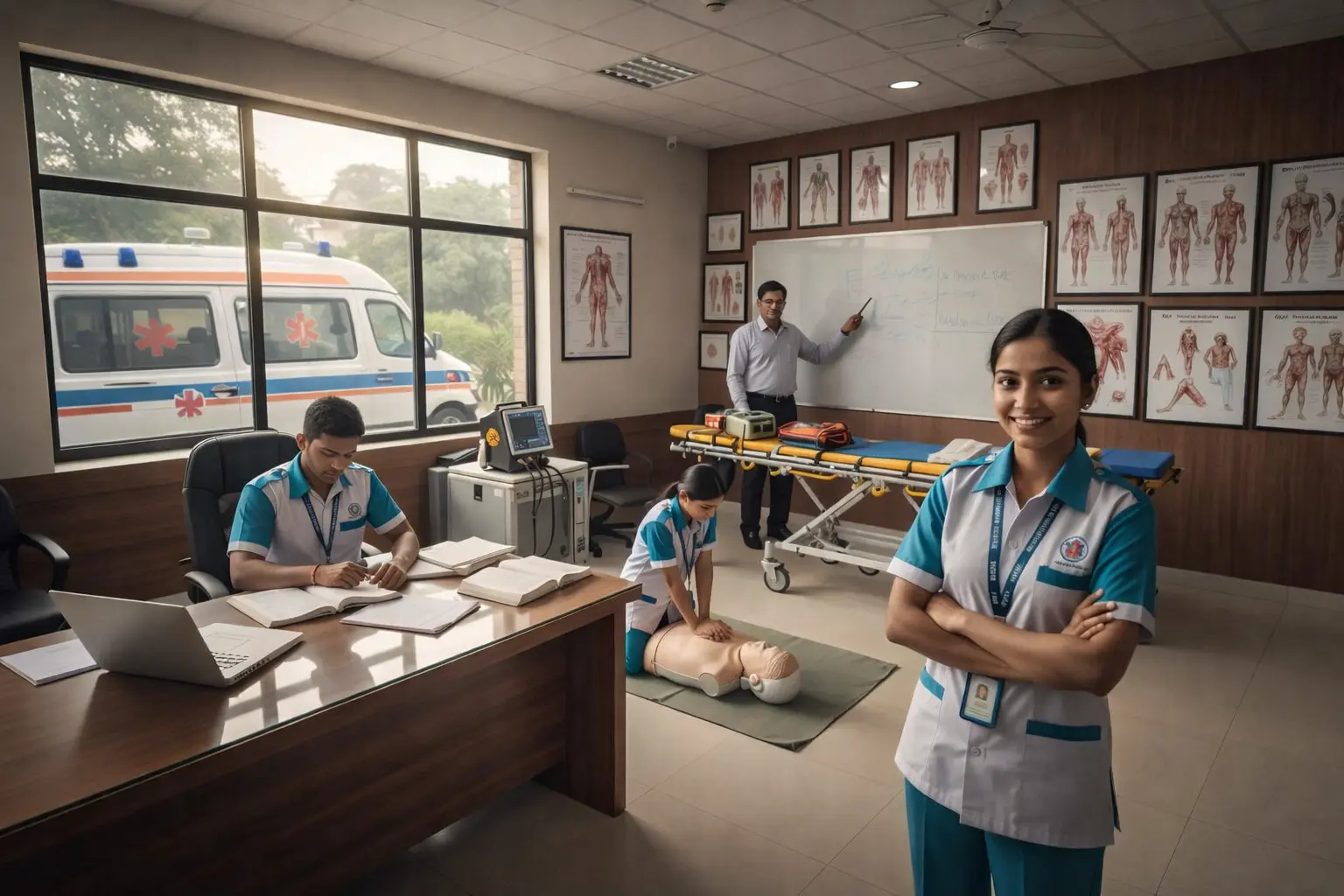
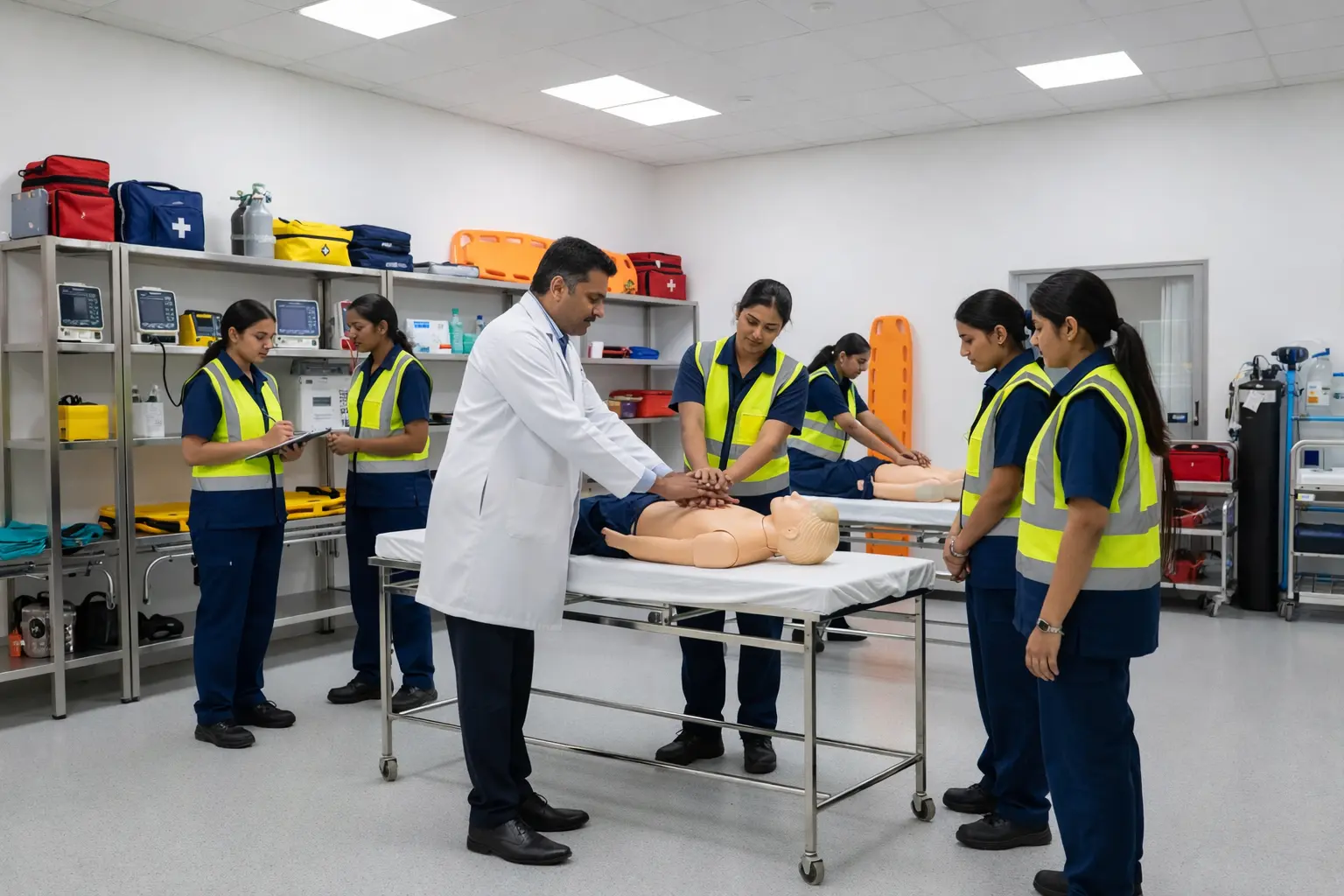
BSc in Emergency Medical Technology is a 4-year healthcare degree that trains students to handle medical emergencies, trauma cases, accidents, and critical care situations as first responders in hospitals and ambulance services.
Admissions Open for September 2026 Intake - Limited Seats
Paramedical
Bsc in Emergency Medical Technology After 12th: Scope, Salary, Jobs Opportunities
Apr 14th , 2026
If you want a healthcare career that is fast-paced, impactful, and does not require NEET, then pursuing a BSc in Emergency Medical Technology is one of the best options after 12th.
The healthcare industry in India is growing rapidly, and hospitals increasingly need trained professionals who can respond to emergencies, handle trauma cases, and support life-saving treatments. This is where programs focused on Emergency and Critical Care are becoming highly valuable.
What is BSc in Emergency Medical Technology?
BSc in Emergency Medical Technology is a healthcare 4-years degree program focused on training students to handle medical emergencies and critical situations such as accidents, trauma cases, heart attacks, and other life-threatening conditions.
Professionals trained through an BSc in Emergency Medical Technology course play a key role as first responders. They stabilize patients, manage critical conditions, and ensure safe transfer to hospitals for further treatment.
In many universities, this program is also structured under specialized formats like BSc Emergency and Trauma Care Technology, BSc Emergency & Critical Care Technology, or Emergency Medical Technician Course with a strong focus on real-time emergency handling.
A typical undergraduate program trains students in:
- Emergency response and patient stabilization
- Trauma and accident care
- Pre-hospital and ambulance support
- Use of emergency medical equipment
- Life-saving techniques like CPR and oxygen support
Start Your Medical Career with Bachelor’s Degree in EMT from Top Universities - 100% Placement Support - Admissions are Open for 2026 Batch


Scope of Emergency Medical Technology in India
The scope of emergency medical technology in India is growing rapidly due to the increasing demand for skilled professionals in emergency and trauma care. With the expansion of healthcare infrastructure, trained EMT professionals are becoming an essential part of modern medical systems.
Why the Demand is Increasing:
- Rising number of accidents and trauma cases – India sees a high number of road accidents and emergency cases, creating a constant need for trained responders.
- Expansion of hospitals and emergency units – Both government and private hospitals are strengthening their emergency departments.
- Growing demand for skilled paramedical professionals – Hospitals now require trained staff who can handle critical situations efficiently.
- Development of organized ambulance and emergency services – Emergency response systems are improving across cities and highways.
Future Opportunities
With continuous growth in healthcare services, professionals trained in emergency care can find opportunities in hospitals, trauma centers, ambulance services, and disaster management teams. The field is expected to grow further as awareness and healthcare access increase across India.
Emergency care is a critical part of the healthcare system, and the need for trained professionals will always remain high. This makes it a stable, in-demand, and future-ready career option for students entering the medical field.
Salary for EMT in India
The salary for EMT in India depends on experience, skills, and the type of healthcare organization. With the growing demand for emergency care professionals, salary growth in this field is stable and improves with hands-on experience.
Salary Range:
-
Freshers: ₹2.5 – 4.5 LPA
Entry-level professionals usually start in hospitals, ambulance services, or emergency departments where they gain practical experience.
-
Mid-level (2–5 years): ₹4.5 – 8 LPA
With experience, professionals handle more critical cases and take on greater responsibilities in emergency care.
-
Experienced (5+ years): ₹8 – 15+ LPA
Skilled professionals working in advanced hospitals, trauma centers, or specialized emergency units can earn higher salaries.
As you gain experience and improve your practical skills, your salary increases along with your role and responsibilities. Professionals with strong emergency handling skills and hospital exposure often see faster career growth.
Career Opportunities After Graduation
- Emergency Medical Technician: Handle emergency calls, provide first aid, and stabilize patients
- Ambulance Care Provider: Manage patient care during transport and operate emergency equipment
- Trauma Care Assistant: Support doctors in treating accident and injury cases
- ICU / Critical Care Technician: Assist in managing critically ill patients
- Emergency Ward Technician: Support hospital emergency departments
- Disaster Response Professional: Work in large-scale emergency and rescue
Career Growth in This Field
- Senior Emergency Technician
- Trauma Care Coordinator
- Emergency Department Supervisor
- Ambulance Operations Manager
- Disaster Response Specialist
You can also specialize in areas like critical care or advanced emergency response.
Why Choose Emversity for This Course?
Emversity focuses on preparing students for real healthcare environments by combining academic learning with practical exposure. Students are trained to handle real emergency scenarios with confidence.
Top Universities Partnered with Emversity
| College / University | State | Fees (Approx.) |
|---|---|---|
| St. Mary's Rehabilitation University | Hyderabad, Telangana | ₹7.2 Lakhs |
| KR Mangalam University | Gurugram, Haryana | ₹7.8 Lakhs |
| Yenepoya University | Bengaluru, Karnataka | ₹6.8 Lakhs |
| Medhavi Skill University | Sikkim | ₹7.2 Lakhs |
| HCG College of Allied Science and Academic | Bengaluru, Karnataka | ₹8 Lakhs |
What Makes Emversity Different?
- Learning connected to real hospital environments
- Exposure to emergency departments and patient care systems
- Strong focus on practical, skill-based training
- Internship opportunities in healthcare settings
- Career support for job readiness
Emversity Healthcare Partner for Internship & Placement


















Start Your Medical Career with Bachelor’s Degree in EMT from Top Universities - 100% Placement Support - Admissions are Open for 2026 Batch
Final Thoughts
Choosing this field after 12th is a smart option for students who want a meaningful and stable healthcare career without NEET. With growing demand, strong salary potential, and diverse job roles, it offers both professional growth and the opportunity to make a real difference in people’s lives.
Find the Right Path in Emergency Healthcare
Talk to our experts and discover the best EMT course suits your goals. Book a free consultation and plan your future with clarity.
Get Free Consultation
Talk to our experts today
Related Blogs
Frequently Asked Questions (FAQs)
Quick answer of Emergency Medical Technology Scope & Salary