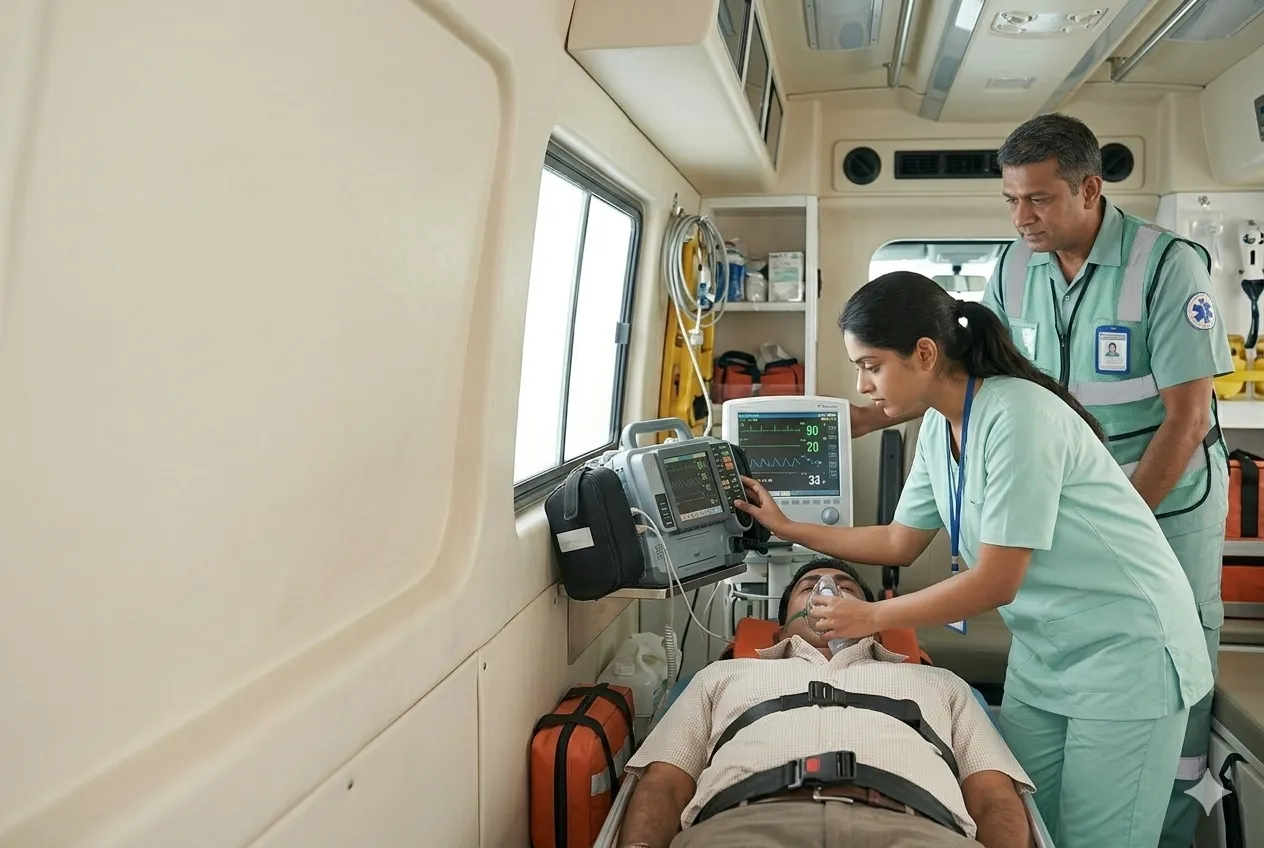
What is BSc in Emergency Medical Technology?
The BSc in Emergency Medical Technology program is a specialised healthcare degree designed to train students in providing immediate medical care during emergencies, accidents, trauma cases, and critical medical situations.
Bachelor of Science in Emergency Medical Technology
This program prepares students to work alongside emergency physicians, trauma specialists, and critical care teams in ambulances, emergency departments, and disaster response units across private and government hospitals.
"This program blends theoretical knowledge with practical clinical exposure, helping students understand emergency patient assessment, life-saving procedures, trauma management, and rapid response techniques required during medical emergencies."
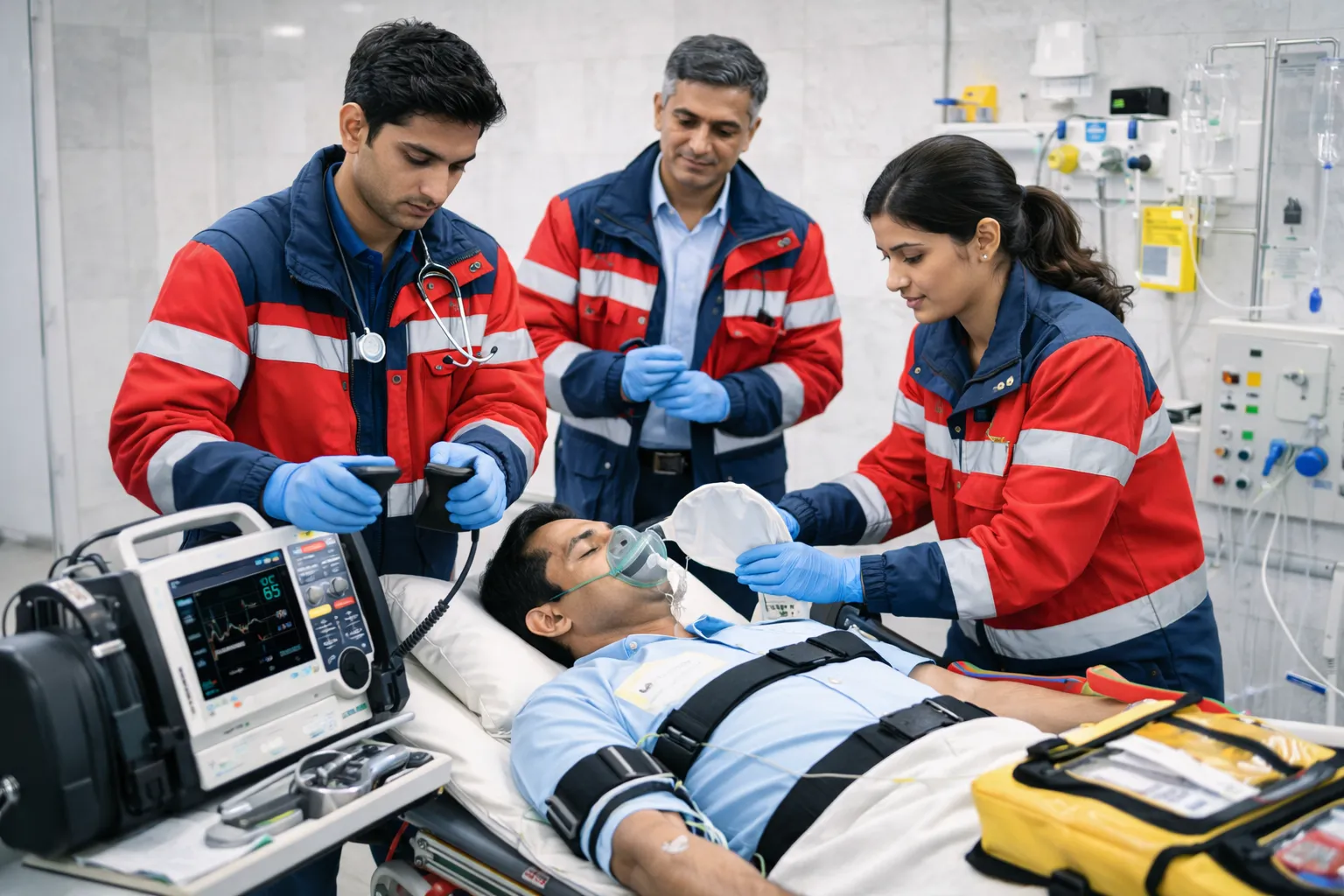
Program Focus
Diagnosing and managing emergency medical conditions using advanced life-support systems, trauma care equipment, and critical emergency response technologies.
Curriculum Highlights
The program combines medical theory with hands-on hospital and field training. Students usually learn:
Human Anatomy & Physiology
Understanding the structure and functions of vital organs and body systems involved in emergency care.
Dialysis Technology & Equipment
Use of medical equipment such as defibrillators, ventilators, patient monitoring systems, and ambulance emergency tools.
Trauma & Emergency Pathology
Study of injuries, trauma conditions, poisoning, shock, and medical emergencies affecting patients.
Pharmacology in Emergency Care
Study of emergency medicines used during trauma care, cardiac arrest, and life-threatening situations.
Patient Stabilisation & Monitoring
Assisting doctors in stabilising patients and monitoring vital signs during emergencies.
Pre-Hospital & Disaster Management
Training in ambulance care, accident response, and disaster emergency handling techniques.
Scope and Salary of BSc Emergency Medical Technology
The Emergency Medical Technology course is ideal for students who want to build a career in emergency and trauma healthcare without pursuing MBBS. With increasing road accidents, medical emergencies, and disaster incidents in India, the Emergency Medical Technology scope is growing rapidly.
Growing Demand in Healthcare Industry
Emergency and trauma cases are increasing due to urbanisation, accidents, lifestyle diseases, and natural disasters.
Every hospital with an emergency department requires trained emergency medical technologists.
Expansion of trauma centres, ambulance services, and disaster response units is increasing job opportunities.
This creates career opportunities in multi-speciality hospitals, emergency departments, ambulance services, trauma care units, and disaster management teams, making it a promising and stable healthcare career. The scope of Emergency Medical Technology continues to expand with advancements in emergency response systems and critical care infrastructure.
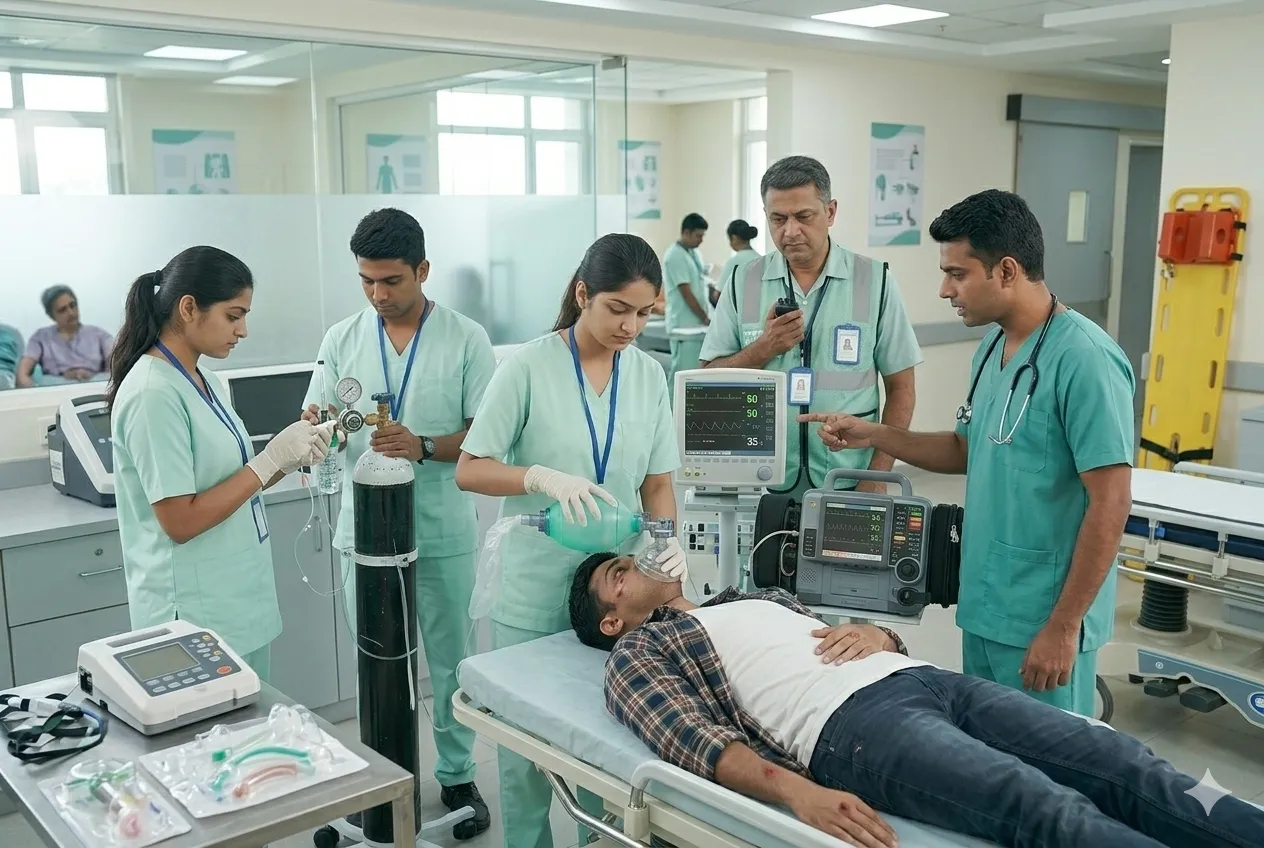
BSc Emergency Medical Technology Salary in India
The BSc Emergency Medical Technology salary depends on experience, healthcare organisation, and location.
Entry Level Salary
(0-2 Years)
₹2.5 – 4.5 LPA
Freshers usually begin as ambulance technicians, emergency care assistants, or trauma care technicians.
Salary growth at this stage depends on clinical training quality and emergency response exposure.
Mid-Level Experience
(3-7 Years)
₹4.5 – 8 LPA
Professionals gain expertise in trauma management, critical care support, and advanced emergency response.
Demand increases significantly with practical field and hospital emergency experience.
Senior & Specialized Roles
(8+ Years)
₹8 – 14+ LPA
Senior emergency technologists, trauma coordinators, and disaster management specialists earn higher packages.
Leadership roles and emergency department supervision increase salary growth.
BSc in Emergency Medical Technology Jobs
After completing BSc in Emergency Medical Technology, graduates can work in specialised roles such as:

Emergency Medical Technologist
Provides immediate medical care and assists doctors during trauma and emergency situations using advanced emergency equipment.
Ambulance & Pre-Hospital Care Technician
Manages patient stabilisation and emergency treatment during ambulance transport.
Trauma Care Technician
Assists trauma teams in handling accident and injury cases in emergency departments.
Critical Care Support Technician
Supports doctors in monitoring and stabilising patients in emergency and intensive care units.
Disaster Response Technician
Participates in emergency response during natural disasters, mass casualty incidents, and crisis management.
Emergency Department Technician
Assists emergency physicians, monitoring, documentation, and rapid medical interventions in hospital emergency units.
Course Details & Requirements
What is the Duration of BSc in Emergency Medical Technology?
Duration: 4 Years
Includes academic learning, simulation lab training, and clinical internships
Designed as an industry-integrated bachelor degree in Emergency Medical Technology
Who is Eligible for BSc Emergency Medical Technology?
To apply for BSc Emergency Medical Technology, candidates must:
Have completed 10+2 (Science – PCB / PCMB / PCM)
Studied Physics, Chemistry & Biology / Mathematics
Meet university-specific minimum marks criteria
Is There Any Entrance Exam for BSc Emergency Medical Technology?
Some universities offer merit-based admission
Others conduct an entrance exam for BSc Emergency Medical Technology
Admission rules depend on the partnered university
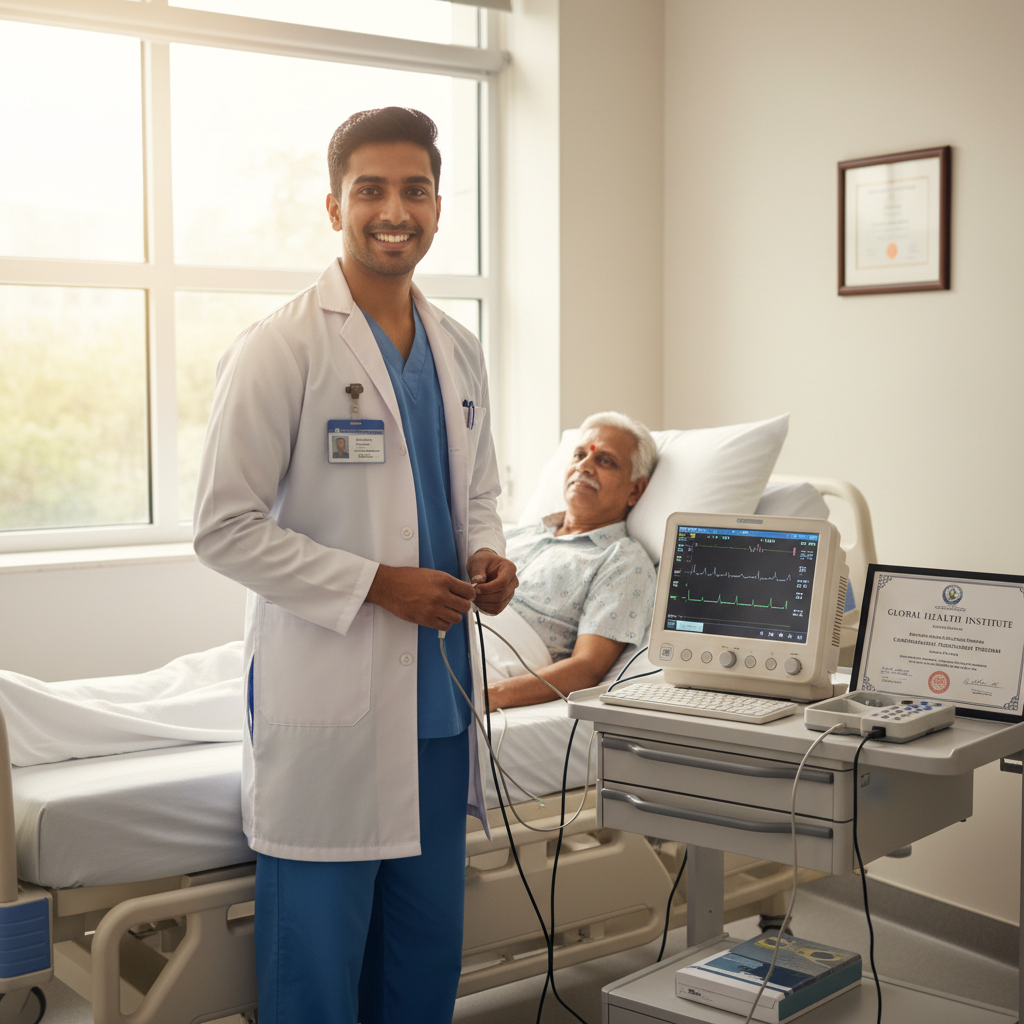
Hands-on Training
Experience practical-world medical environments alongside your academic studies.
How Emversity Support Your Career in BSc Emergency Medical Technology
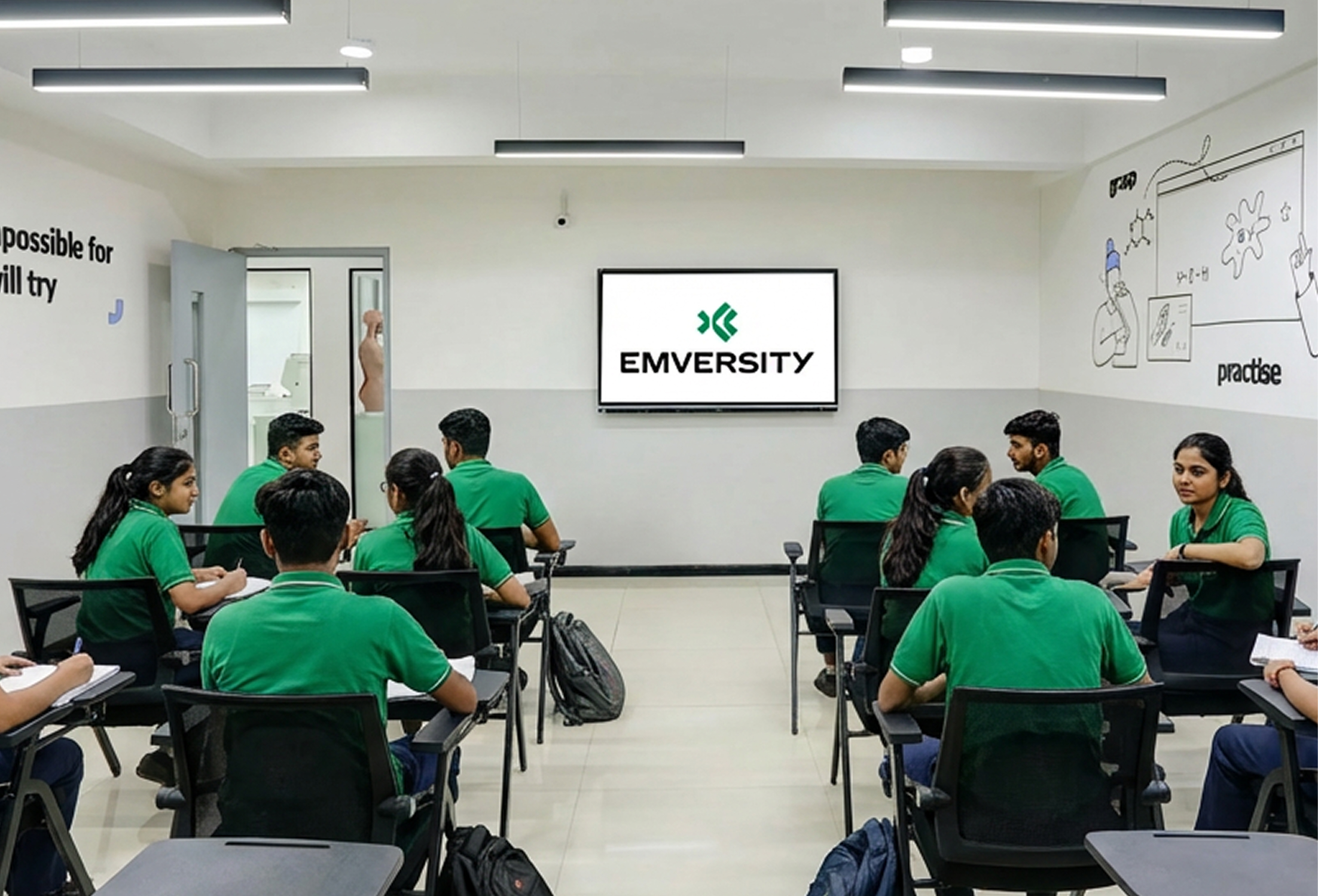
Emversity, as a placement partner, collaborates with top universities across India to provide placement assistance, internship opportunities, and industry connections, helping institutes deliver practical, hospital-based learning for BSc in Emergency Medical Technology students.
Emversity acts as a placement partner, ensuring students receive real-world healthcare experience alongside their academic degree.
The Emversity Advantage:
This approach improves employability and long-term career growth in BSc emergency medical technology jobs.

Beyond Academics
Most institutes focus only on classroom learning. With Emversity, they are enabled to go beyond academics by offering:
Industry-integrated emergency medical technology course
Practical training at reputed hospitals
Exposure to real emergency departments, trauma centres, and hospital emergency care
Career-focused skill development for emergency response and trauma care
How Emversity Provide Job Opportunities for BSc in Emergency Medical Technology
Emversity actively works toward career placement and job readiness for graduates of the BSc emergency medical technology program. Through strong industry partnerships, Emversity bridges the gap between education and employment in the emergency medical technology healthcare sector.
Prepared for Clinical Roles
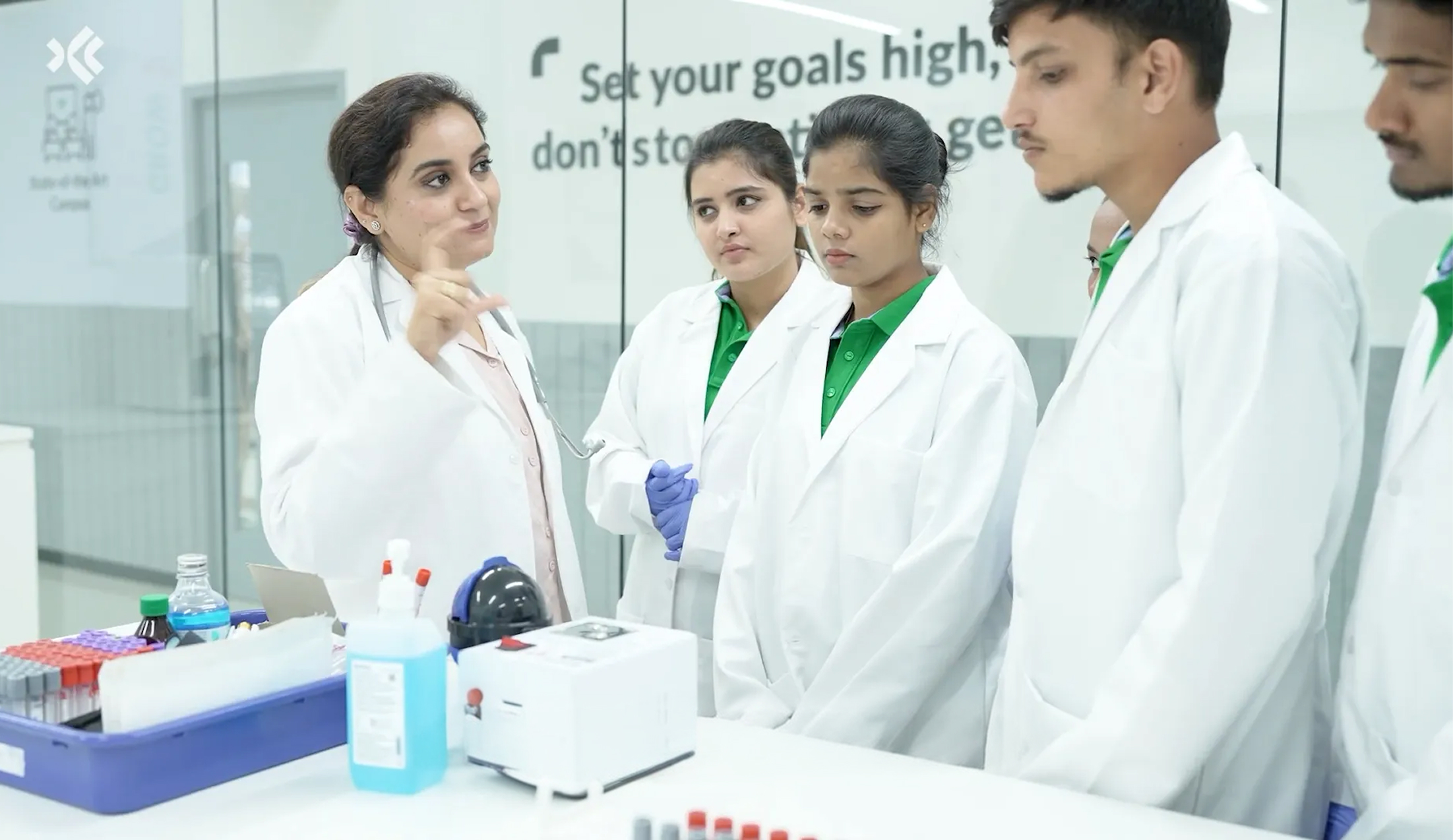
Graduates of the Bachelor of Science in Emergency Medical Technology program are better prepared for roles in emergency departments, trauma centres, ambulance services, and critical care units.
Industry Partnerships
Emversity has established tie-ups with many top hospitals and healthcare institutions across India. These partnerships help students:
Gain clinical training during the course
Access hospital-based internships
Receive placement assistance after graduation
Hiring Partners
Trusted by leading healthcare institutions
Emversity collaborates with leading hospitals to support training.
















Career Outcomes
Students receive hands-on hospital exposure and job-oriented training, they enter the workforce with practical experience. This often leads to:
Faster job placements
Better entry-level roles
Improved BSc emergency medical technology salary outcomes
Strong career progression in emergency and trauma care

Why Choose Emversity Partnered Institutes for BSc in Emergency Medical Technology?
Training + job-oriented approach
Top University partnerships across India
Practical training at leading hospitals
Focus on employability, not just degrees
Support beyond graduation
"With Emversity, students don't just earn a degree in Emergency Medical — they build a sustainable career."
Top Colleges for BSc Emergency Medical Technology in India
Emversity has partnered with reputed universities and colleges across India to offer the BSc Emergency Medical Technology course.
Our Partner Colleges & Universities


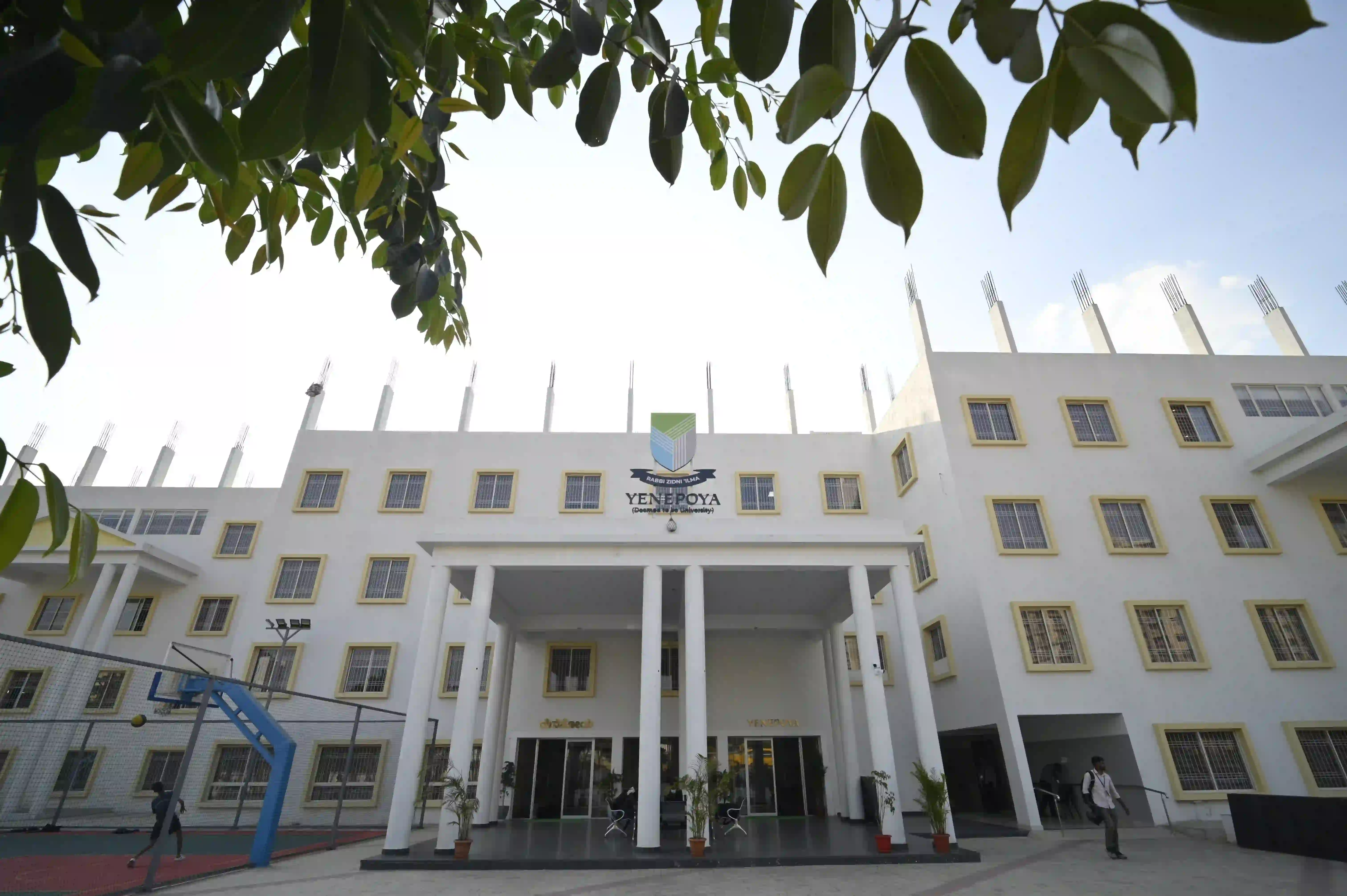
Yenepoya University
Bengaluru, Karnataka
Fees
₹6.62 Lakhs
Eligibility
10+2 with 55% in PCB / PCMB

K.R Mangalam University
Gurugram, Haryana
Fees
₹7.8 Lakhs
Eligibility
10+2 with 50% in PCB / PCMB
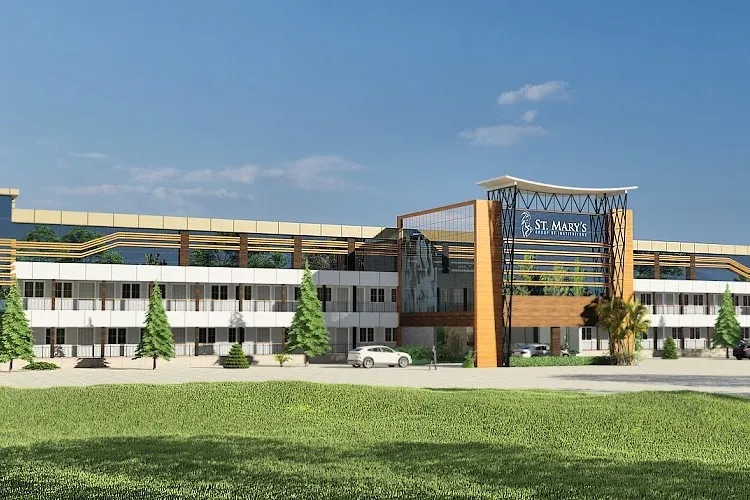
St. Mary's Rehabilitation University
Hyderabad, Telangana
Fees
₹7.2 Lakhs
Eligibility
10+2 with 50% in PCB / PCMB
Disclaimer: Emversity is a Bengaluru-based private company providing industry-skilling, technology enablement, internship facilitation, and placement support services to UGC-recognised universities and Higher Education Institutions. Emversity bridges the gap between academia and industry by setting up skill-labs, enabling internship pathways, and integrating employability training within university-led degree programs. Emversity is not a university or higher education institution and doesn't conduct admissions, examinations, or award degrees; all academic functions remain exclusively under the control of the respective universities. Emversity is an approved Training Partner of NSDC and a Recognised Institutional Associate of HSSC.

Apply for BSc Emergency Medical Technology
Start your journey toward a rewarding healthcare career with Emversity's BSc Emergency Medical Technology program.
Admissions Open for 2026 Batch
Emergency Medical Technology Course Syllabus
The BSc Emergency Medical Technology syllabus is designed to combine academic knowledge with hands-on emergency care training.
Anatomy & Physiology
Study of human body systems and their role in emergency medical care.
Emergency & Trauma Care
Understanding trauma assessment, patient stabilisation, and emergency medical procedures.
Basic & Advanced Life Support (BLS & ALS)
Training in CPR, cardiac emergency care, and resuscitation techniques.
Emergency Pharmacology
Study of emergency drugs used in trauma care, cardiac arrest, poisoning, and other critical medical situations and interventions.
Medical Equipment & Monitoring Systems
Learning to operate ventilators, defibrillators, cardiac monitors, and emergency medical devices.
Pre-Hospital Care & Ambulance Operations
Training in ambulance emergency care, patient transportation, and field emergency management.
Disaster Management & Mass Casualty Care
Study of emergency planning, disaster response and crisis management.
Medical Ethics & Patient Safety
Learning ethical healthcare practices, patient rights, and emergency safety standards.
Clinical Training & Internship
Hands-on hospital and field emergency training to gain real-world experience in trauma and emergency care.
Frequently Asked Questions
Does Emversity offer placement support after course completion?
Does Emversity provide career counselling before admission?
Is NEET required for admission in BSc Dialysis Therapy?
Can I join BSc Dialysis Therapy Technology after 12th PCB?