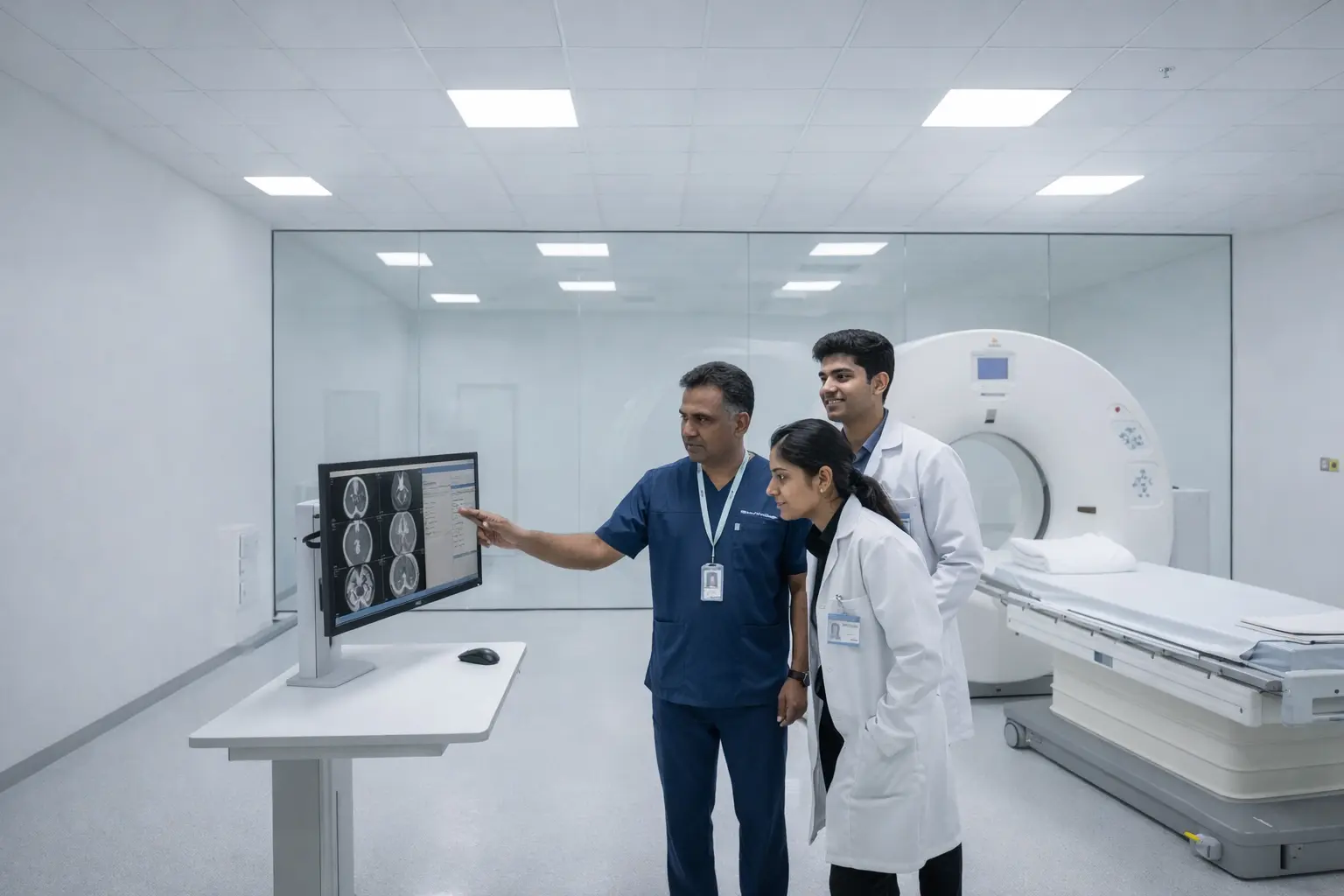
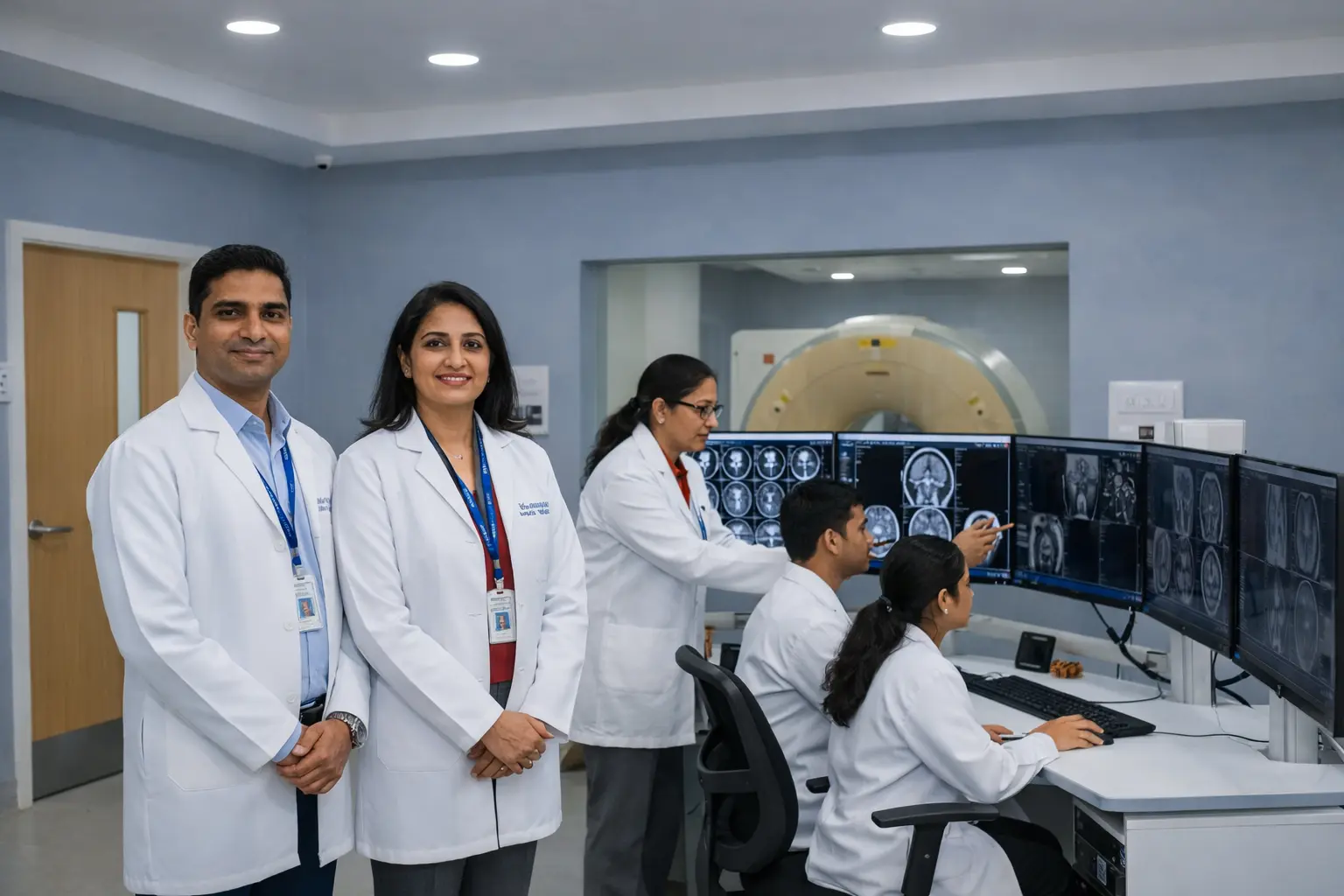
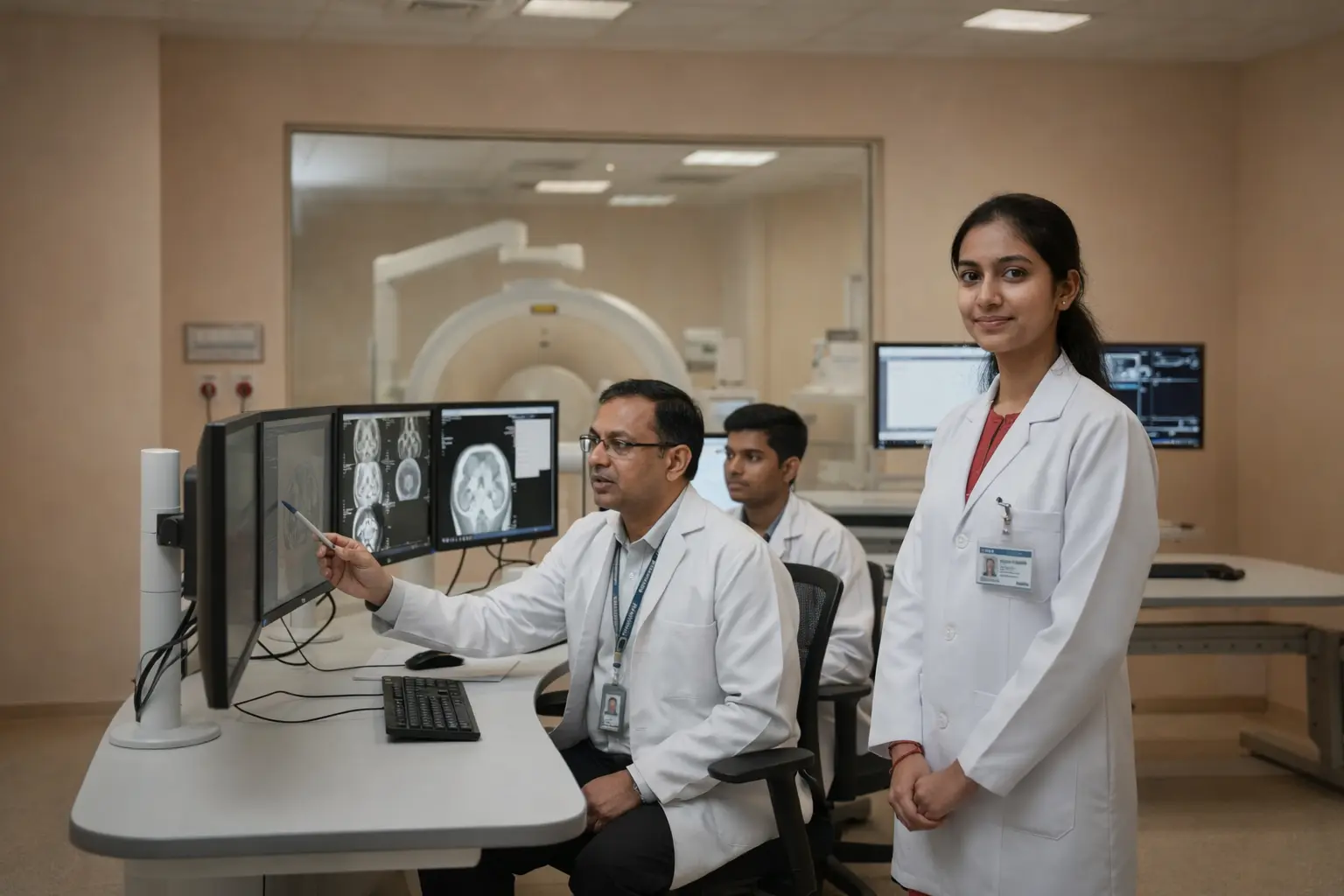
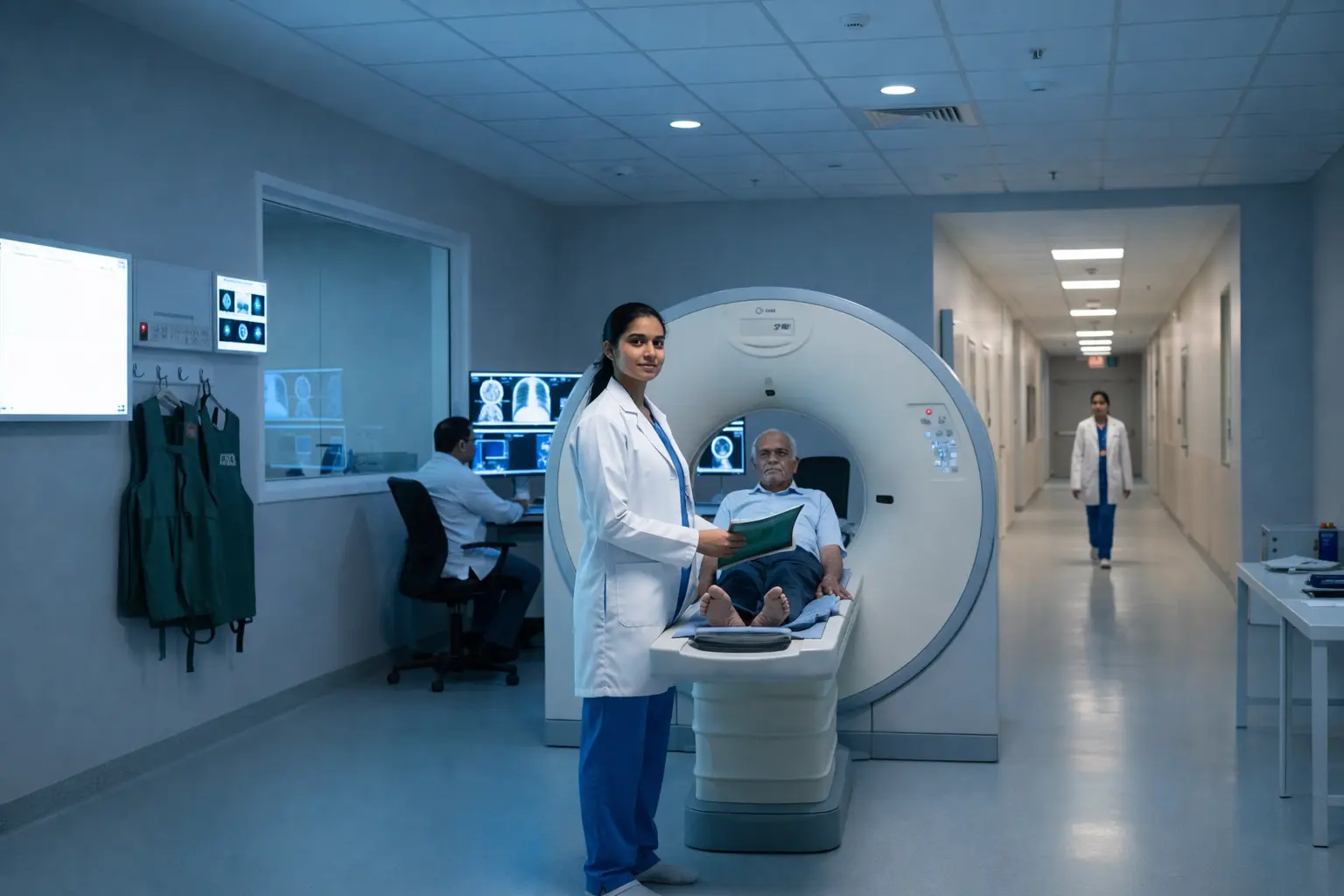
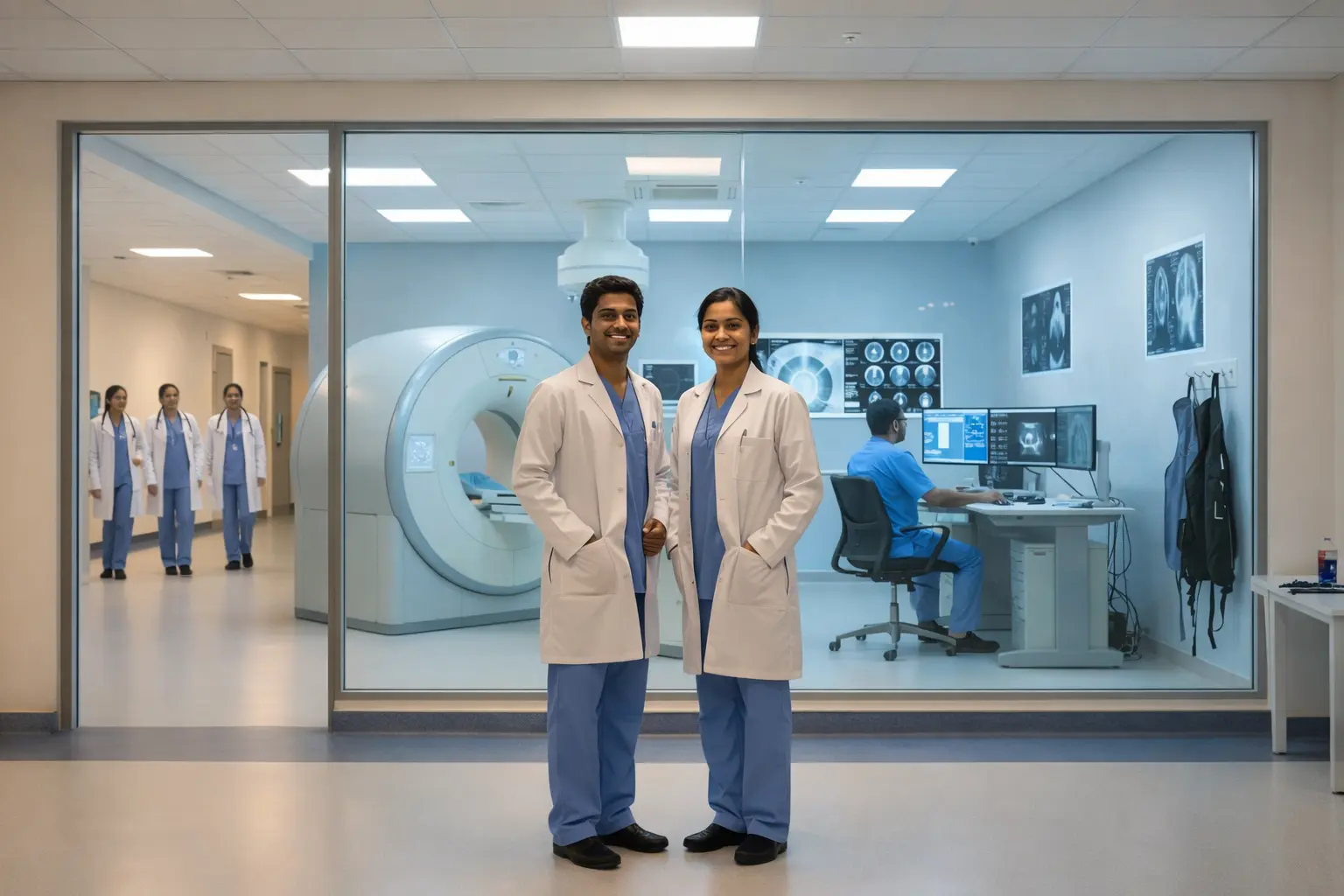
BSc Radiology is a 4-year undergraduate Allied Health Science program that focuses on diagnostic imaging technologies such as X-ray, CT, MRI, and ultrasound. The course combines classroom instruction with clinical training to prepare students for careers in radiology and diagnostic imaging.
Admissions Open for September 2026 Intake - Limited Seats
Paramedical
BSc in Radiology Course Details: Eligibility, Fees and Syllabus
Jun 30th , 2026
Modern healthcare relies heavily on medical imaging. Whether it is diagnosing a fracture, detecting a tumour, or monitoring an internal condition, doctors depend on X-ray, CT, MRI, and ultrasound scans to make informed clinical decisions.
Behind these diagnostic procedures are skilled radiology professionals trained to operate advanced imaging technologies and support accurate patient diagnosis. A BSc Radiology course equips students with the medical knowledge, technical expertise, and hands-on clinical experience required for this role.
If you are considering this field, understanding the BSc Radiology course details is the first step. This guide covers the BSc Radiology course duration, eligibility, entrance exams, admission process, subjects, syllabus, and fees to help you determine whether a career in radiology is the right choice for you.
What is BSc Radiology?
BSc Radiology is a 4-year undergraduate Allied Health Science programme that prepares students for careers in medical imaging and diagnostic healthcare. The programme provides comprehensive training in imaging modalities such as X-ray, CT, MRI, and ultrasound, enabling students to operate advanced diagnostic equipment, produce accurate medical images, and follow patient safety and radiation protection protocols.
In addition to classroom instruction, students undergo clinical training in hospitals and diagnostic centres, gaining hands-on experience and developing the technical and professional competencies required in modern radiology departments.
If you're also curious about what this degree leads to in terms of career paths and salary, our detailed guide on BSc in Radiology: Scope, Salary and Job Opportunities covers that in depth.
Start Your Medical Career with Bachelor’s Degree in MRIT from Top Universities - 100% Placement Support - Admissions are Open for 2026 Batch

BSc Radiology Course Details
Understanding the BSc Radiology course details can help you make an informed decision. Here is a quick snapshot of the BSc Radiology course details before we explore each section in detail.
| Particular | Details |
|---|---|
| Course Name | BSc in Radiology |
| Course Level | Undergraduate |
| Duration | 4 Years (including clinical training/internship) |
| Eligibility | 10+2 with Physics, Chemistry, Biology (PCB/PCMB) |
| Admission Process | Merit based or entrance exam, depending on the university |
| Course Type | Full Time |
| Career Focus | Diagnostic Imaging and Medical Radiology Technology |
BSc Radiology Course Duration
The BSc Radiology course duration is 4 years and is generally divided into 8 semesters. The program combines academic learning with practical training to help students develop the knowledge and skills required in diagnostic imaging.
- Years 1 to 3 (Semesters 1-6): Foundation and core subjects, laboratory sessions, practical training, and gradually increasing clinical exposure.
- Final Year (Semesters 7-8): Advanced clinical training, hospital postings, and internship components in radiology departments.
BSc Radiology duration may vary slightly from one university to another. Some institutions offer rotational postings across X-ray, CT, MRI, and ultrasound departments, allowing students to gain exposure to a range of imaging technologies. However, the overall BSc Radiology course duration at most recognized universities remains 4 years.
BSc Radiology Eligibility
The BSc Radiology eligibility criteria are generally straightforward for students with a science background. Most universities require:
- Completed Class 12 (10+2) from a recognised board of education.
- Physics, Chemistry, and Biology (PCB) or Physics, Chemistry, Mathematics, and Biology (PCMB) as core subjects.
- A minimum aggregate score, usually between 45% and 60%, depending on the university.
Some institutions may also accept students with a PCM combination, though this varies and should be confirmed directly with the university.
Most universities do not prescribe a strict upper age limit for admission. However, a few institutions may specify a minimum age requirement of 17 years at the time of admission, making it important to check the eligibility criteria of your shortlisted university before applying.
Start Your Medical Career with Bachelor’s Degree in MRIT from Top Universities - 100% Placement Support - Admissions are Open for 2026 Batch
BSc Radiology Fees
The fee structure for BSc Radiology programs varies across institutions based on factors such as location, infrastructure, and the availability of hospital-based clinical training opportunities.
| Institution Type | Approx. Fees (Full Course) |
|---|---|
| Government Colleges | ₹50,000 - ₹2 Lakhs |
| Private Universities | ₹6 Lakhs - ₹10 Lakhs |
When comparing the BSc Radiology fee structure, look beyond the fees and consider factors such as clinical exposure, hospital partnerships, faculty expertise, and placement support, as these can significantly influence your learning experience and career prospects after graduation.
Entrance Exam for BSc Radiology
The entrance exam for BSc Radiology varies across universities, as no single admission test is used by all institutions. Depending on the university, students may secure BSc Radiology admission through Class 12 merit, a university-specific entrance examination, or CUET scores.
| Institution Type | Common Entrance Requirement |
|---|---|
| Government Colleges | Merit based on Class 12 marks or a state-level entrance examination |
| Private Universities | Merit based on Class 12 marks, a university-specific entrance test, or CUET scores |
Is NEET Required for BSc Radiology?
No, NEET is generally not required for admission to a BSc Radiology program. Since BSc Radiology is an Allied Health Science program and not an MBBS equivalent degree, most universities offer admission based on Class 12 marks, university-specific entrance tests, or CUET scores.
However, a few institutions may have their own selection criteria or entrance requirements. Therefore, it is always advisable to check the latest BSc Radiology admission guidelines and accepted entrance examinations directly with your chosen university before submitting an application.
BSc Radiology Admission Process
The BSc Radiology admission process is generally straightforward and follows a similar pattern across most universities. While specific requirements may vary by institution, the admission process typically involves the following steps:
- Check Eligibility: Confirm that your Class 12 marks and subject combination meet the university's admission requirements.
- Fill the Application Form: Apply through the university's official admission portal or an authorized admission partner.
- Submit Required Documents: Upload or submit documents such as Class 10 and 12 mark sheets, transfer certificate, identity proof, and passport-size photographs, as required by the institution.
- Entrance Exam or Merit-Based Selection: Appear for the university-specific entrance examination, if applicable, or wait for the merit list based on your Class 12 scores.
- Counseling and Seat Confirmation: Participate in counseling or seat allocation procedures, if required by the university.
- Fee Payment and Document Verification: Complete the admission process by paying the course fee and verifying the necessary documents.
- Orientation and Commencement of Classes: Attend the orientation program and begin your academic sessions.
The BSc Radiology admission process usually begins between March and August each year, although timelines may vary across universities. Since seats in reputed, hospital-affiliated programs can fill up quickly, it is advisable to start researching and applying early.
BSc Radiology Subjects: Year-Wise Breakdown
The BSc radiology subjects are designed to build a strong foundation in medical sciences before introducing advanced diagnostic imaging technologies and clinical training. While the BSc radiology syllabus may vary slightly across universities, most programs follow a similar year-wise structure.
Year 1: Foundations of Medical Sciences and Radiology
The first year focuses on basic medical sciences and introduces students to the fundamentals of radiology and patient care.
| Subject | What You Will Study |
| Human Anatomy and Physiology | Structure and functions of the human body and major organ systems |
| Biochemistry | Basic biochemical processes and their role in human health |
| Pathology and Microbiology | Diseases, microorganisms, infections, and disease mechanisms |
| Applied Physics | Fundamental physics concepts relevant to medical imaging |
| Introduction to Radiology | Basics of diagnostic imaging and the role of radiology professionals |
Year 2: Imaging Principles and Radiation Sciences
The second year introduces students to imaging equipment, radiation science, and radiographic techniques.
| Subject | What You Will Study |
| Radiation Physics | Principles of radiation and its applications in medical imaging |
| Radiographic Positioning and Techniques | Patient positioning and image acquisition methods |
| Radiological Equipment and Instrumentation | Working principles of imaging equipment and radiology systems |
| Radiation Protection and Safety | Radiation hazards and safety protocols |
| Patient Care and Communication | Patient handling, communication skills, and professional conduct |
Year 3: Advanced Imaging Technologies and Diagnostics
The third year focuses on specialized imaging modalities and digital imaging systems.
| Subject | What You Will Study |
| CT Imaging Technology | Principles and applications of Computed Tomography imaging |
| MRI Technology and Physics | Magnetic Resonance Imaging principles and scanning procedures |
| Principles and Applications of Ultrasonography | Fundamentals and applications of ultrasound imaging |
| Image Processing and PACS | Digital imaging, image storage, and communication systems |
| Quality Assurance in Radiology | Equipment quality control and imaging standards |
Year 4: Clinical Training and Professional Practice
The final year focuses primarily on hospital based training and professional development.
| Training Area | What You Will Learn |
| Clinical Postings in Radiology Departments | Hands on training in X ray, CT, MRI, and other imaging units |
| Hospital Internship | Practical experience in imaging procedures and equipment handling under supervision |
| Professional Ethics and Healthcare Management | Ethical practices, teamwork, and healthcare administration |
The BSc radiology syllabus are designed to gradually build your knowledge and practical skills, preparing you for clinical training and careers in diagnostic imaging and radiology services.
Why Choose Emversity for Your BSc Radiology Program?
Choosing the right university is just as important as choosing the right course, especially in a practical field like radiology, where hands-on learning plays a major role in career success. With several BSc in radiology colleges now offering this program across India, it's important to look beyond classroom teaching and choose an institution that provides early clinical exposure, access to modern imaging technologies, and opportunities to learn in real healthcare environments.
As a placement and industry skilling partner, Emversity collaborates with leading BSc in Radiology colleges and healthcare institutions across India to help students gain industry-relevant skills and practical experience throughout their academic journey.
What Does Emversity Offer?
- Industry integrated curriculum: Learn through a curriculum designed to match the skills and practices used in modern radiology departments.
- Hands-on clinical training: Gain practical experience through training in hospitals and diagnostic centers.
- Real-world learning experience: Build technical and patient-care skills in real healthcare environments.
- Placement focused support: Receive guidance to prepare for careers in radiology and diagnostic imaging.
- Admission and career guidance: Get support with university selection, admissions, and career planning.
Emversity Partner Universities for BSc Radiology
Emversity partners with well-established universities offering BSc Radiology programs across India, providing students with access to quality education and clinical learning opportunities.
| University | Location | Eligibility | Duration | Approx. Fees |
|---|---|---|---|---|
| MediCaps University | Indore, Madhya Pradesh | 10+2 with 50% in PCB / PCMB | 4 Years | ₹7.8 Lakhs |
| Arka Jain University | Jamshedpur, Jharkhand | 10+2 with 50% in PCB / PCMB | 4 Years | ₹7.2 Lakhs |
| Sanjivani University | Kopargaon, Maharashtra | 10+2 with 50% in PCB / PCMB | 4 Years | ₹8 Lakhs |
| Universal SkillTech University | Mumbai, Maharashtra | 10+2 with 50% in PCB / PCMB | 4 Years | ₹8 Lakhs |
| HCG Hospitals Global Healthcare Academy | Bengaluru, Karnataka | 10+2 with 50% in PCB / PCMB | 4 Years | ₹7.2 Lakhs |
| Medhavi Skill University | Sikkim | 10+2 with 50% in PCB / PCMB | 4 Years | ₹7.2 Lakhs |
| Maya Devi University | Dehradun, Uttarakhand | 10+2 with 45% in PCB / PCMB | 4 Years | ₹7.2 Lakhs |
| Saraswati Group of Colleges | Mohali, Punjab | 10+2 with 50% in PCB / PCMB | 4 Years | ₹6.6 Lakhs |
All partner universities offer structured clinical training opportunities and industry exposure to help students build practical skills and prepare for careers in diagnostic imaging and radiology services.
Emversity Healthcare Partner for Internship & Placement












Start Your Medical Career with Bachelor’s Degree in MRIT from Top Universities - 100% Placement Support - Admissions are Open for 2026 Batch
Conclusion
BSc Radiology is a practical and rewarding option for science students who want to build a career in healthcare without following the long academic pathway of MBBS. With a structured four-year curriculum and increasing demand for skilled imaging professionals, the course offers strong career opportunities in hospitals and diagnostic centres.
Choosing the right university can make a significant difference to your learning experience and career readiness. Prioritize programs that offer quality clinical training and real hospital exposure, as these experiences play a key role in preparing you for professional practice.
Ready to Take the Next Step?
Book a free counseling session with an Emversity expert and get personalized guidance on choosing the right university, understanding fees and eligibility, and planning your BSc Radiology journey with confidence.
A career in medical radiology and imaging technology places you at the centre of modern healthcare, where most diagnoses begin with medical imaging. As hospitals and diagnostic centres increasingly rely on X-ray, CT, MRI, and ultrasound, trained imaging professionals have become an essential part of patient care.
Get Free Consultation
Talk to our experts today
Related Blogs
Frequently Asked Questions (FAQs)
Find quick answers to some of the most commonly asked questions about BSc Radiology.