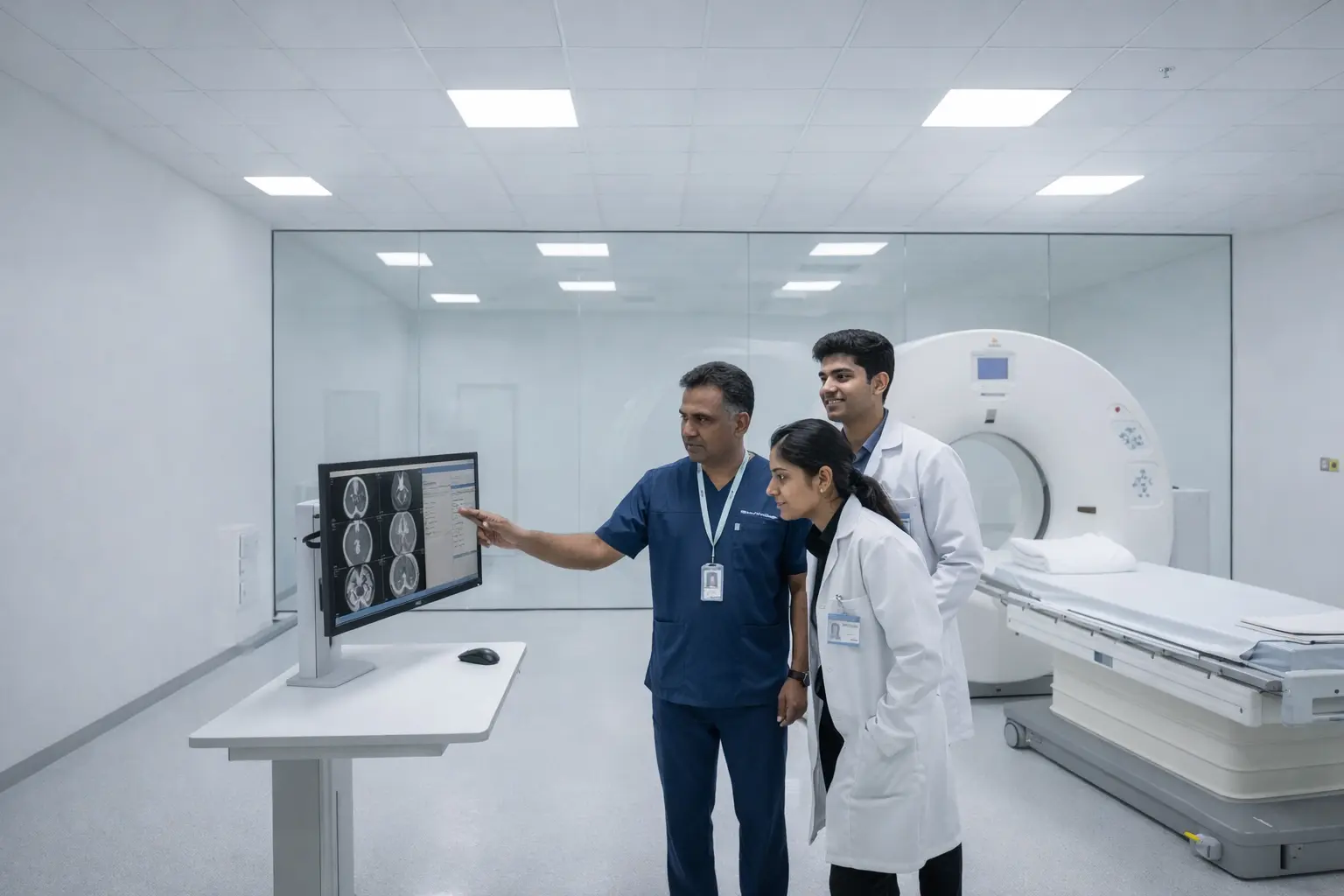
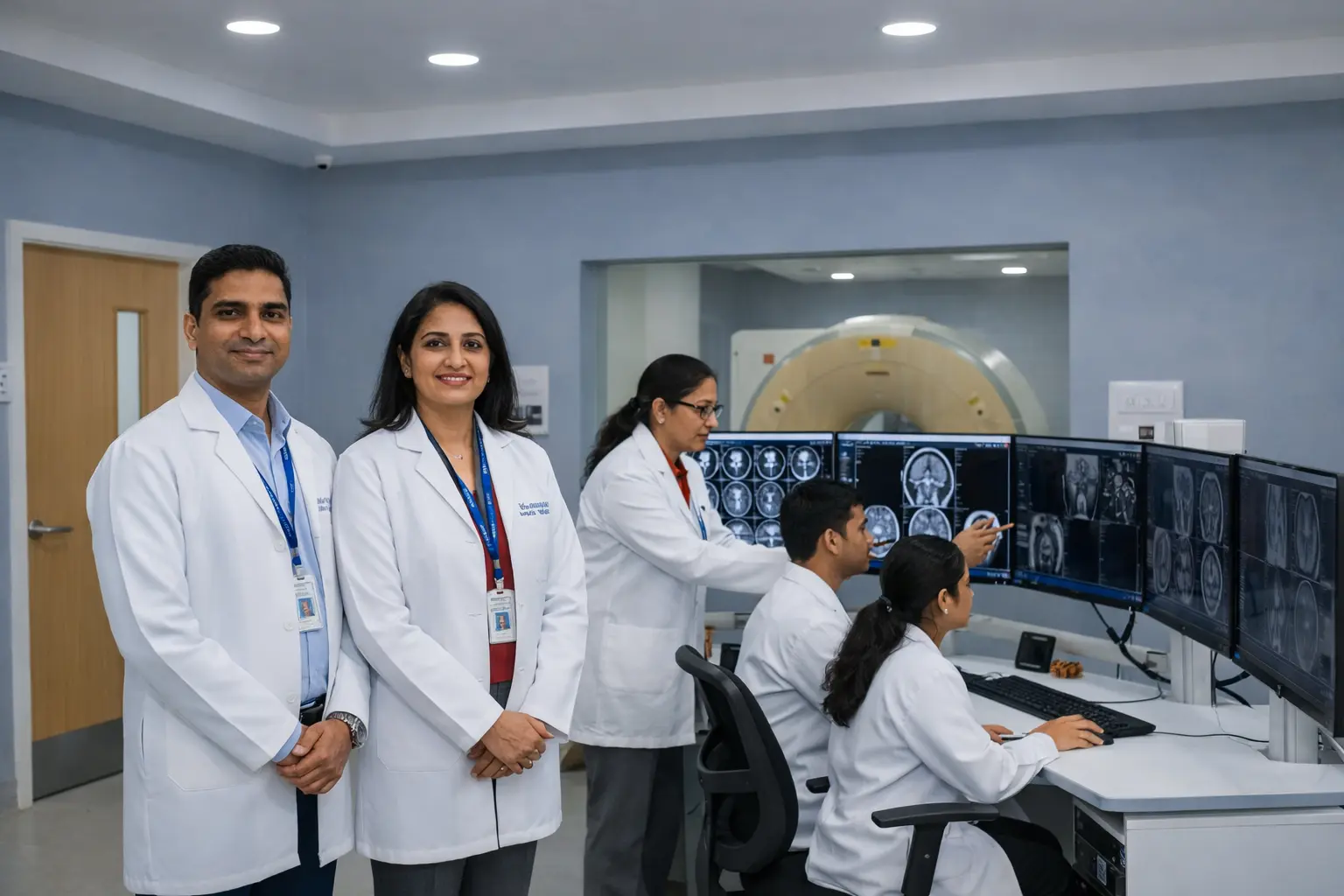
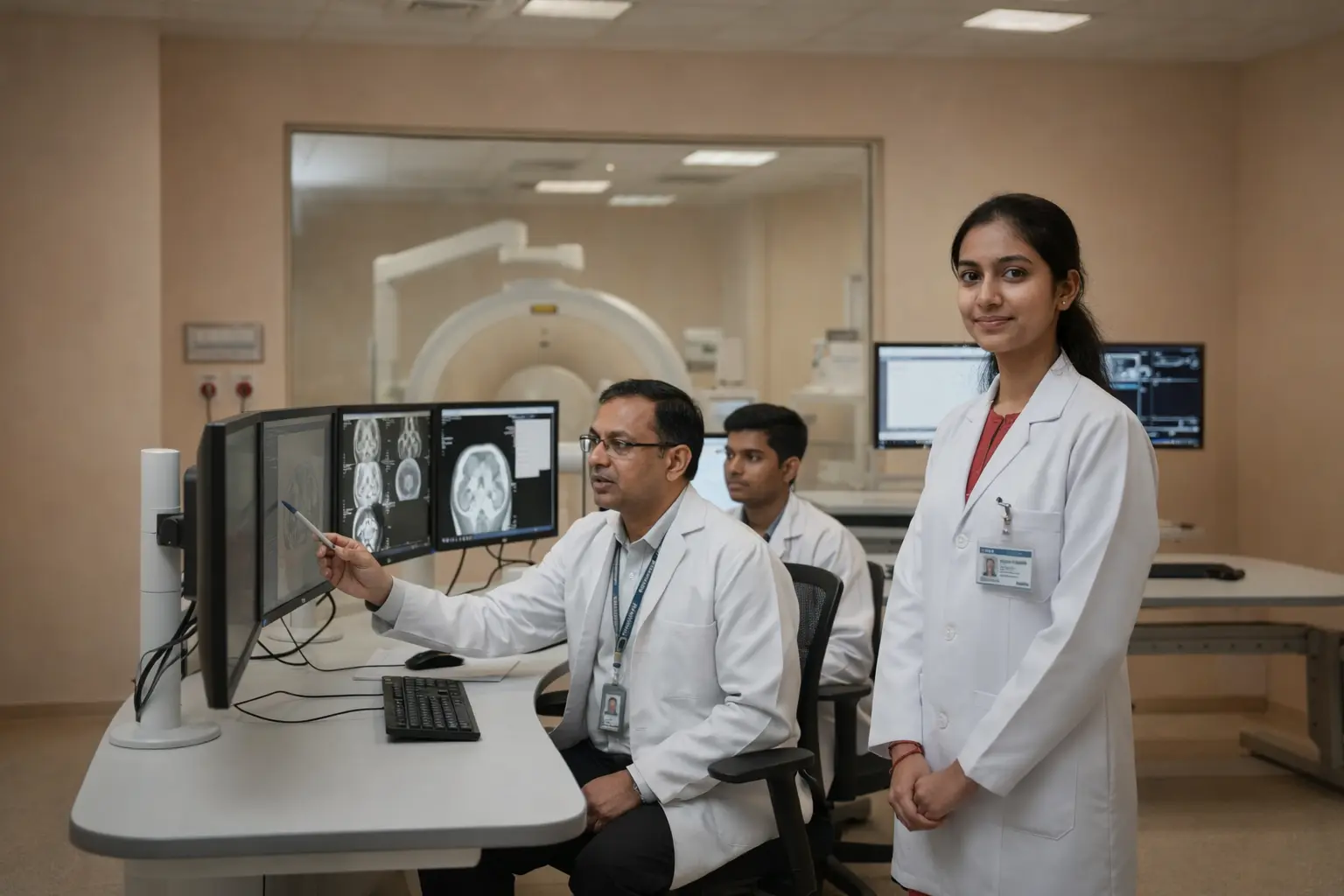
BSc Medical Radiology and Imaging Technology is a 4 year Allied Health Science program focused on diagnostic imaging procedures used in modern healthcare. Students learn to operate imaging equipment such as X-ray, CT scan, MRI, and ultrasound machines.
Admissions Open for September 2026 Intake - Limited Seats
Paramedical
BSc in Medical Radiology and Imaging Technology: Scope, Salary and Job Opportunities
May 14th , 2026
India's healthcare sector is growing faster than ever before. New hospitals, diagnostic centers, and imaging labs are opening across every city and town. In the middle of this growth, one career stands out: BSc in Medical Radiology and Imaging Technology.
If you want to build a strong healthcare career without pursuing MBBS, the BSc Radiology and Imaging Technology program is one of the best choices available today. This course trains you to operate advanced imaging equipment, support doctors in diagnosis, and become an important part of the medical team.
The BSc in Radiology and Imaging Technology is a 4-year undergraduate program that covers X-ray, CT scan, MRI, ultrasound, and more. Every year, thousands of students across India choose this field not just because it pays well, but because it truly makes a difference in people's lives.
In this guide, you will find everything you need to know about the course, its scope in India, salary expectations, job roles, top colleges, and how you can get started.
What is a BSc in Medical Radiology and Imaging Technology?
BSc in Medical Radiology and Imaging Technology is a 4-year undergraduate Allied Health Science program that focuses on diagnostic imaging and radiological procedures used in modern healthcare. The course trains students to operate imaging equipment, such as X-ray, CT, MRI, and ultrasound machines, to assist doctors in diagnosing and monitoring medical conditions.
The program combines theoretical knowledge with practical clinical training in radiographic techniques, human anatomy, radiation physics, patient care, imaging technology, and radiation safety. Students also gain hands-on experience through hospital-based clinical exposure and internships.
In India, the course prepares graduates for careers in hospitals, diagnostic centers, imaging labs, cancer care centers, and other healthcare institutions.
What Do You Learn in This Course?
The BSc Medical Imaging Technology program prepares students to work in radiology departments, diagnostic imaging centers, and hospital imaging units. Here is what the course covers:
- Human anatomy and physiology for imaging interpretation
- Radiation physics and safety protocols
- Radiographic positioning and imaging techniques
- CT scan (Computed Tomography) and MRI (Magnetic Resonance Imaging) technology
- Ultrasound and sonography procedures
- Patient care and communication in a clinical setting
- Image processing and Picture Archiving Communication Systems (PACS)
Start Your Medical Career with Bachelor’s Degree in MRIT from Top Universities - 100% Placement Support - Admissions are Open for 2026 Batch

BSc Radiology and Imaging Technology Scope in India
BSc Radiology and Imaging Technology scope in India is expanding rapidly. Here is why this field has such a strong future:
Why the Scope is Strong Right Now
- India’s diagnostic imaging sector is expanding rapidly, with thousands of imaging centers operating across the country.
- The National Health Mission (NHM) is expanding diagnostic imaging services in rural and semi-urban hospitals across India.
- Rising cases of cancer, cardiovascular disease, orthopedic injuries, and neurological conditions are increasing the need for diagnostic imaging.
- Private hospital chains such as Apollo, Fortis, Manipal, and Max Healthcare are expanding across India, creating strong demand for imaging professionals.
- Government healthcare schemes like Ayushman Bharat are improving access to diagnostic services for millions of patients.
Scope of BSc Radiology and Imaging Technology: Where Can You Work?
The scope of BSc Radiology and Imaging Technology is not limited to hospitals alone. Graduates can work across multiple healthcare and diagnostic centers in India.
- Government hospitals: AIIMS, PGIMER, NIMHANS, district hospitals, and defence healthcare institutions.
- Private multi-speciality hospitals: Apollo Hospitals, Fortis Healthcare, Manipal Hospitals, Medanta, Max Healthcare, and Narayana Health.
- Diagnostic chains: Dr Lal PathLabs, SRL Diagnostics, Metropolis Healthcare, and independent imaging centres.
- Medical colleges and training institutions: Opportunities after gaining clinical experience or higher qualifications.
- Medical equipment companies: GE Healthcare, Siemens Healthineers, Philips Healthcare, and Mindray as application specialists or technical support professionals.
- Teleradiology companies: Remote diagnostic imaging and reporting services for hospitals in India and abroad.
- Defence services: Indian Army, Navy, and Air Force healthcare divisions recruit imaging and radiology professionals.
Future Scope of Radiology and Imaging Technology
The future scope of radiology and imaging technology in India is closely connected to advancements in healthcare technology and the growing demand for diagnostic services.
- AI Assisted Imaging: Artificial intelligence is increasingly being integrated into radiology workflows for image analysis and disease detection. Professionals familiar with advanced imaging software and AI-assisted technologies may have better career opportunities in the future.
- Growth of Teleradiology: Remote diagnostic imaging and reporting services are growing rapidly in India. Teleradiology allows imaging professionals and radiologists to support multiple hospitals from centralised locations.
- Advanced Imaging Technologies: Specialisations such as PET-CT, 3T MRI, Cone Beam CT, and interventional radiology are becoming high-demand areas within diagnostic healthcare.
- Medical Tourism in India: India continues to attract international patients for affordable healthcare services. Diagnostic imaging plays a major role in treatment planning and patient management, creating additional career opportunities.
- Expansion of Healthcare in Tier 2 and Tier 3 Cities: Government and private healthcare investments in smaller cities and semi-urban regions are increasing the demand for trained radiology and imaging professionals outside metro cities.
The demand for skilled radiology professionals in India is expected to remain strong in the coming years as healthcare infrastructure and diagnostic services continue to grow.
BSc Radiology and Imaging Technology Salary in India
The BSc Radiology and Imaging Technology salary in India depends on several factors, including experience, technical expertise, employer type, specialisation, and city. Professionals trained in advanced imaging technologies like CT scans and MRI generally receive higher salary packages and faster career growth opportunities.
BSc Radiology and Imaging Technology Salary: Experience-Wise
| Experience Level | Role | Average Salary (Per Annum) |
|---|---|---|
| Entry Level (0–2 Years) | Radiology Technologist / X-ray Technologist | ₹2.5 – ₹4.5 LPA |
| Mid Level (3–7 Years) | CT / MRI Technologist | ₹4.5 – ₹8 LPA |
| Senior Level (8+ Years) | Imaging Supervisor / Senior MRI or CT Specialist | ₹8 – ₹15+ LPA |
Medical Imaging Technology Salary in India: Sector-wise
The BSc Medical Imaging Technology salary varies across different healthcare sectors in India.
- Government hospitals and medical colleges: Entry-level professionals generally earn between ₹25,000 and ₹45,000 per month, depending on the state, institution, and recruitment process. These roles also offer better job stability and government benefits.
- Private corporate hospitals: Healthcare groups such as Apollo Hospitals, Fortis Healthcare, Manipal Hospitals, and similar organisations usually offer ₹20,000 to ₹35,000 per month for freshers, along with good long-term growth opportunities.
- Diagnostic chains: Imaging and diagnostic companies like SRL Diagnostics, Metropolis Healthcare, and Dr Lal PathLabs generally offer salaries of ₹18,000 to ₹30,000 per month, depending on the role, city, and experience level.
- Medical equipment companies: Technical and application support roles in companies such as GE Healthcare, Siemens Healthineers, and Philips Healthcare often begin around ₹4–₹6 LPA and can grow significantly with experience and specialised skills.
Which Cities Pay More?
Metro cities such as Mumbai, Delhi NCR, Bengaluru, Chennai, and Hyderabad generally offer higher salary packages because of the concentration of large hospitals and advanced diagnostic centres. However, Tier 2 cities often provide faster career growth and lower competition for skilled imaging professionals.
How to Grow Your BSc Medical Radiology and Imaging Technology Salary Faster
- Specialise in high-demand imaging modalities such as MRI and CT scans.
- Pursue postgraduate studies like MSc Medical Imaging Technology for senior and academic roles.
- Gain certifications in advanced imaging technologies and interventional radiology.
- Work in advanced hospitals or diagnostic centres to build stronger clinical exposure and technical expertise.
- Continuously upgrade skills in digital imaging systems and modern radiology technologies.
Start Your Medical Career with Bachelor’s Degree in MRIT from Top Universities - 100% Placement Support - Admissions are Open for 2026 Batch
BSc Radiology and Imaging Technology Jobs in India
The demand for skilled imaging professionals is increasing across India as hospitals, diagnostic centres, and specialty healthcare institutions continue to expand. Today, BSc Radiology and Imaging Technology graduates can explore opportunities in clinical imaging, healthcare technology, diagnostics, research, and hospital operations.
Jobs After BSc Radiology and Imaging Technology
After completing the program, graduates can work in a wide range of healthcare and diagnostic roles based on their skills, training, and area of specialisation.
- Radiology Imaging Technologist: Handles imaging equipment such as X-ray, CT scan, and MRI machines in hospitals and diagnostic centres.
- X-ray Technologist / Radiographer: Performs routine radiographic imaging procedures in clinics, trauma centres, and hospitals.
- CT Scan Technologist: Conducts CT imaging procedures and supports radiologists during advanced diagnostic evaluations.
- MRI Technologist: Performs MRI scans used in neurological, orthopaedic, and specialty diagnostic procedures.
- Ultrasound / Sonography Assistant: Assists radiologists and sonologists during ultrasound imaging procedures and patient preparation.
- Mammography Technologist: Works in breast imaging and cancer screening departments using specialised mammography systems.
- Interventional Radiology Technologist: Supports minimally invasive imaging procedures in cath labs and interventional radiology units.
- PACS / Imaging Informatics Executive: Manages digital imaging systems, radiology software, and imaging data workflows in hospitals and diagnostic centres.
- Radiation Safety Executive: Supports radiation protection practices and imaging safety compliance within radiology departments.
- Application Specialist: Works with medical equipment companies to provide technical training and operational support for imaging systems.
- Teleradiology Technologist: Assists with digital imaging workflows and remote reporting services for healthcare networks.
- Research Assistant: Supports clinical research and imaging-related studies in healthcare institutions and medical colleges.
- Teaching Faculty or Clinical Instructor: Academic opportunities are available after gaining experience or pursuing postgraduate studies in imaging technology.
Government Jobs in Radiology and Imaging Technology
Government healthcare institutions across India regularly recruit radiology and imaging professionals for diagnostic and patient care services.
- AIIMS and Central Government Hospitals: Recruit radiology technologists and imaging staff for diagnostic departments.
- ESIC and CGHS Hospitals: Offer opportunities in government healthcare centres and employee health schemes.
- State Government Hospitals: Recruit imaging professionals through health departments and public service commission examinations.
- Railway Hospitals: Indian Railways hires radiology staff for its healthcare network across the country.
- Defence Medical Services: Army, Navy, and Air Force hospitals recruit imaging professionals for military healthcare facilities.
- National Health Mission (NHM): Imaging professionals are recruited for district hospitals, community health centres, and rural healthcare programs across multiple states.
With experience and advanced certifications, professionals can also move into senior imaging roles, hospital administration, healthcare technology companies, and specialised diagnostic departments.
Why Choose Emversity for BSc Medical Radiology and Imaging Technology?
If you are looking for a program that blends academic quality with real-world clinical readiness, Emversity's BSc Medical Radiology & Imaging Technology program is worth serious consideration.
Here is what makes it different from the rest:
- Industry-integrated curriculum: The program is designed with inputs from practising radiologists and imaging professionals, so you learn what hospitals actually need.
- Hands-on hospital training: Emversity has tie-ups with top hospitals across India, giving students real clinical exposure from early in the program.
- Placement support: Emversity actively works toward career placement through strong industry partnerships that bridge the gap between education and employment.
- Affordable and structured: The fee structure is transparent and designed to make this level of education accessible to more students.
BSc Radiology and Imaging Technology Colleges in India
Finding the right college is as important as choosing the right course. Through Emversity, students can enrol in NAAC-accredited and UGC-recognised BSc Radiology and Imaging Technology colleges across India. These institutions offer hospital tie-ups, structured clinical training, and placement support as part of the program.
Below is the current list of partner institutions available through Emversity.
| University | Location | Eligibility | Duration | Approx. Fees |
|---|---|---|---|---|
| MediCaps University | Indore, Madhya Pradesh | 10+2 with 50% in PCB / PCMB | 4 Years | ₹7.8 Lakhs |
| Arka Jain University | Jamshedpur, Jharkhand | 10+2 with 50% in PCB / PCMB | 4 Years | ₹7.2 Lakhs |
| Universal SkillTech University | Mumbai, Maharashtra | 10+2 with 50% in PCB / PCMB | 4 Years | ₹8 Lakhs |
| HCG Hospitals Global Healthcare Academy | Bengaluru, Karnataka | 10+2 with 50% in PCB / PCMB | 4 Years | ₹7.2 Lakhs |
| Medhavi Skill University | Sikkim | 10+2 with 50% in PCB / PCMB | 4 Years | ₹7.2 Lakhs |
| Maya Devi University | Dehradun, Uttarakhand | 10+2 with 45% in PCB / PCMB | 4 Years | ₹7.2 Lakhs |
| Saraswati Group of Colleges | Mohali, Punjab | 10+2 with 50% in PCB / PCMB | 4 Years | ₹6.6 Lakhs |
Emversity Healthcare Partner for Internship & Placement












Start Your Medical Career with Bachelor’s Degree in MRIT from Top Universities - 100% Placement Support - Admissions are Open for 2026 Batch
Final Thoughts
The future of healthcare in India is technology-driven, and radiology is at the centre of it. The scope, salary, and job opportunities in BSc Radiology and Imaging Technology are growing every year across government hospitals, private hospital chains, diagnostic labs, and specialty healthcare centres. This is a career where the right training from the beginning can make a major difference in long-term growth and opportunities.
If you have studied PCB and want a healthcare career that is stable, rewarding, and future-ready, this is the right time to begin your journey in radiology and medical imaging.
Ready to Begin?
Get free career guidance from Emversity and explore a BSc Medical Radiology and Imaging Technology program designed with hospital training, clinical exposure, internship support, and placement assistance.
Get Free Consultation
Talk to our experts today
Related Blogs
Frequently Asked Questions (FAQs)
Quick answers to the most common questions about BSc Medical Radiology and Imaging Technology