
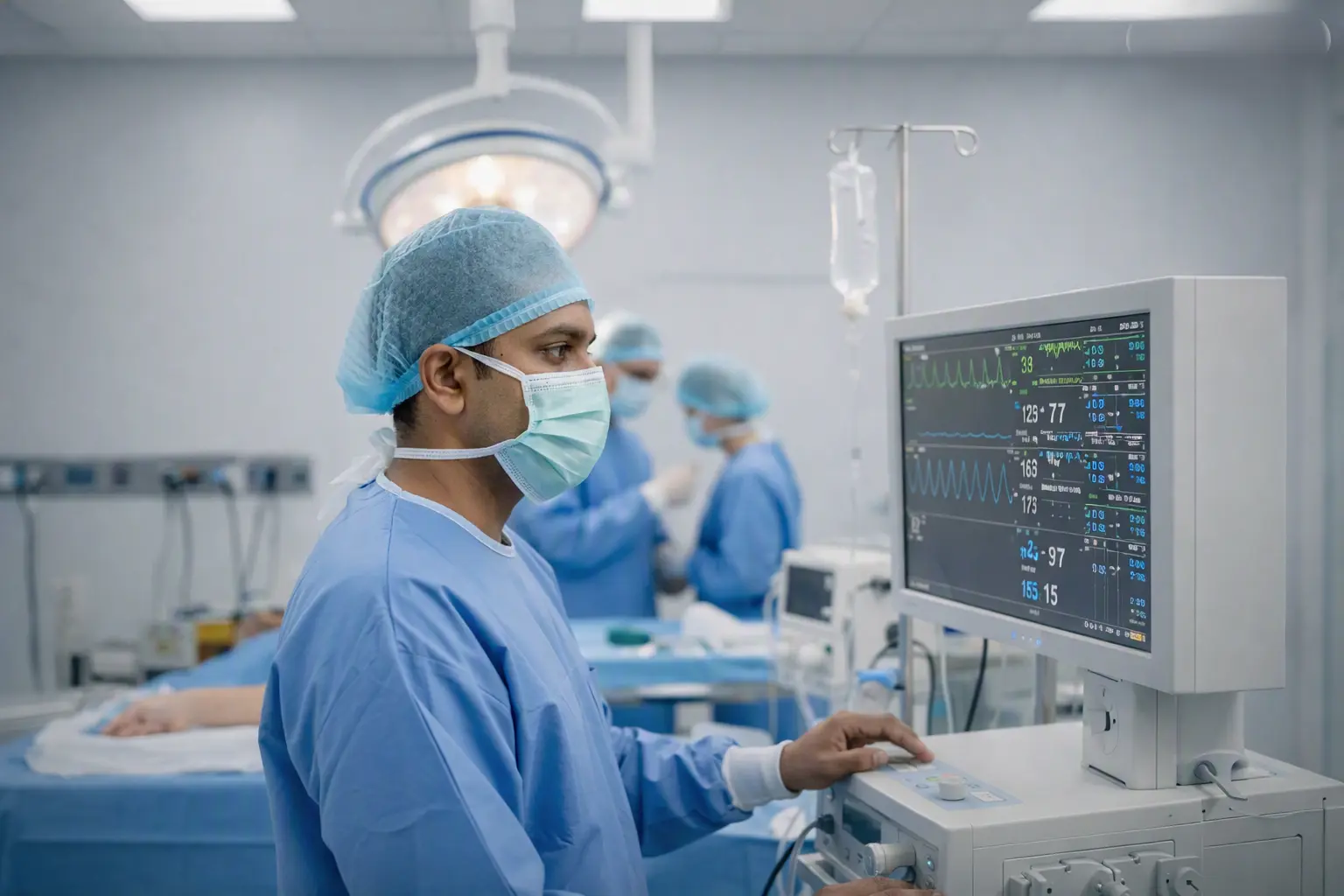



Anesthesia is a medical technique used to prevent or reduce pain and discomfort during surgeries and medical procedures. Depending on the type, anesthesia may numb a specific area, reduce awareness, or temporarily cause unconsciousness.
Admissions Open for September 2026 Intake - Limited Seats
Paramedical
What Is Anesthesia? Types, Uses & Local vs General Anesthesia
Aug 27th , 2026
An anesthesia tech is a healthcare professional who supports the anesthesia team before, during, and after surgical procedures. Their work includes preparing anesthesia equipment, organising supplies, checking machines, maintaining infection-control practices, and helping ensure the operation theatre is ready for anesthesia and surgery.
For students interested in learning how to become an anesthesia tech, the pathway may include a relevant anesthesia tech course, practical or clinical training, and any certification or other requirements specified by the institution or employer.
This guide covers what an anesthesia tech is, what an anesthesia tech does, anesthesia tech salary, jobs, courses, requirements, qualifications, and career scope.
What Is Anesthesia?
Anesthesia is a medical technique used to control pain, sensation, and awareness during a medical procedure. Depending on the type used, anesthesia may numb a specific part of the body, reduce awareness, or produce a temporary state of unconsciousness.
Anesthesia is administered and monitored by trained healthcare professionals, including anesthesiologists and other members of the anesthesia care team. Explore more about anesthesiologists in India, including their roles, specializations, qualifications, and fees.
Start Your Medical Career with Bachelor’s Degree in A&OTT from Top Universities - 100% Placement Support - Admissions are Open for 2026 Batch


What Are the Types of Anesthesia?
There are several types of anesthesia, and the appropriate type depends on the procedure, the area being treated, and the level of pain control or sedation required.
- Local Anesthesia: Numbs a specific area of the body while the patient usually remains awake.
- Regional Anesthesia: Blocks sensation in a larger area, such as an arm, leg, or lower part of the body.
- General Anesthesia: Produces a controlled state of unconsciousness during surgery.
- Sedation: Helps the patient relax and may cause drowsiness or reduced awareness, depending on the level used.
Local and general anesthesia are often compared because they have different effects on consciousness and pain sensation. Students interested in anesthesia-related healthcare roles can also explore Anesthesia Technician courses to understand course duration, fees, eligibility, and syllabus.
What Is Local Anesthesia?
Local anesthesia temporarily numbs a specific part of the body to prevent or reduce pain during a procedure. It generally does not cause unconsciousness, so the patient remains awake. The medicine may be applied to the skin or administered by injection near the treatment area to temporarily block pain signals.
Local anesthesia is commonly used for:
- Dental procedures
- Minor skin procedures
- Wound stitching
- Biopsies
- Other minor surgical procedures
What Is General Anesthesia?
General anesthesia uses medicines to produce a controlled state of unconsciousness during surgery. It prevents awareness of the procedure and helps the patient remain still. It is commonly used for major, complex, or lengthy surgeries.
General anesthesia may be used for procedures such as:
- Major abdominal surgeries
- Certain orthopedic surgeries
- Major chest or cardiac procedures
- Some neurological surgeries
- Certain cancer surgeries
- Long or complex surgical procedures
What Is Regional Anesthesia?
Regional anesthesia temporarily numbs a larger area of the body by blocking pain signals from a group of nerves. The patient usually remains awake, while sensation in the treated area is reduced or blocked.
Regional anesthesia is commonly used for:
- Lower-body surgeries
- Joint replacement surgeries
- C-sections
- Arm or leg procedures
- Pain relief during and after surgery
What Is Sedation?
Sedation uses medicines to help a patient relax and reduce anxiety or discomfort during a medical procedure. Depending on the level of sedation, the patient may remain awake, become drowsy, or sleep lightly while still being able to respond.
Sedation is commonly used for:
- Dental procedures
- Endoscopy
- Minor medical procedures
- Diagnostic tests
- Procedures that may cause anxiety or discomfort
What Is the Difference Between Local and General Anesthesia?
The key difference between local and general anesthesia is how they affect consciousness and the area of the body involved. Local anesthesia blocks pain in a specific area while the patient generally remains awake, whereas general anesthesia produces a controlled state of unconsciousness during surgery.
| Feature | Local Anesthesia | General Anesthesia |
|---|---|---|
| Consciousness | Patient usually remains awake | Patient is unconscious |
| Area Affected | A specific part of the body | Produces effects throughout the body |
| Pain Sensation | Blocks pain signals in the treated area | Prevents awareness and pain during surgery |
| Common Use | Dental work and minor procedures | Major, complex, or lengthy surgeries |
| Administration | Usually applied or injected near the treatment area | Usually given through an IV, inhalation, or both |
| Breathing | Usually maintained without assistance | Breathing may need support during surgery |
| Duration | Effects can last from about 30 minutes to several hours, depending on the medicine and procedure | Effects are maintained for the duration of surgery and adjusted as needed |
| Recovery Time | Numbness usually wears off within a few hours | Patients may become alert within minutes, but drowsiness and other effects can last for several hours |
| Recovery | Usually faster | Recovery from unconsciousness can take longer |
| Awareness | Patient may remain aware of their surroundings | Patient is unaware of the procedure |
| Hospital Stay | Often used for outpatient procedures | Depends on the type of surgery and recovery |
Which Is Better, Local or General Anesthesia?
There is no single option that is best for every procedure. Local anesthesia is commonly suitable for procedures where only a specific area needs to be numbed, while general anesthesia may be used for major or lengthy surgeries when the patient needs to remain unconscious. The appropriate choice depends on the procedure, the patient's health, and the assessment of the medical and anesthesia team.
Local Anesthesia vs General Anesthesia: How Do They Work?
Local and general anesthesia work differently depending on the procedure, the area being treated, and the level of pain control and unconsciousness required.
- Local anesthesia: Temporarily blocks nerve signals in a specific area of the body, reducing or preventing pain while the patient generally remains awake.
- General anesthesia: Uses medicines to produce a controlled state of unconsciousness, so the patient is unaware of the procedure. The anesthesia team continuously monitors vital functions throughout surgery.
Related Blogs
- Anesthesia Technologist Salary in India – Explore the role, skills, courses, salary, and career scope of an anesthesia technologist in India.
- Anesthesia Assistant – Learn about anesthesia assistant courses, eligibility, job roles, salary, and career opportunities.
- Anesthesia Tech – Discover anesthesia tech courses, requirements, job roles, salary, and career scope in India.
How Does Emversity Prepare Students for Anesthesia Careers?
Emversity offers the BSc Anaesthesia & Operation Theatre Technology program in collaboration with partner universities. The 4-year program combines 3 years of academic learning with 1 year of internship, giving students practical exposure to anesthesia and operation theatre environments.
Emversity also serves as a placement partner, supporting students with internship opportunities and helping them explore relevant roles in healthcare institutions.
What Makes Emversity Different?
- Training aligned with real-world healthcare practices
- Practical exposure to anesthesia and operation theatre procedures
- Industry-relevant technical and workplace skills
- Clinical internship opportunities
- Placement assistance for relevant healthcare roles
Explore Emversity Partner Universities for BSc Anaesthesia & Operation Theatre Technology
| University Name | State | Fees |
|---|---|---|
| MediCaps University | Indore, MP | ₹7.8 Lakhs |
| Arka Jain University | Jamshedpur, Jharkhand | ₹7.2 Lakhs |
| Techno India University | Kolkata, West Bengal | ₹8.2 Lakhs |
| Ajeenkya DY Patil University | Pune, Maharashtra | ₹8 Lakhs |
| St. Mary's Rehabilitation University | Hyderabad, Telangana | ₹7.2 Lakhs |
| Universal SkillTech University | Mumbai, Maharashtra | ₹8 Lakhs |
| HCG Hospitals Global Healthcare Academics | Bangalore, Karnataka | ₹8 Lakhs |
| Medhavi Skill University | Sikkim | ₹7.2 Lakhs |
| St. Peter's - Chennai | Chennai, Tamil Nadu | ₹7.2 Lakhs |
| St. Peter's - Bangalore | Bangalore, Karnataka | ₹7.2 Lakhs |
| AMET University | Chennai, Tamil Nadu | ₹7.2 Lakhs |
| Maya Devi University | Dehradun, Uttarakhand | ₹7.2 Lakhs |
| Saraswati Group of Colleges | Mohali, Punjab | ₹6.6 Lakhs |
Explore More About the Course
- Discover the BSc Anaesthesia & Operation Theatre Technology scope and salary, including career opportunities, salary prospects, and future scope after completing the program.
- Learn about BSc Anaesthesia & Operation Theatre Technology course details, including eligibility, course duration, fees, and syllabus.
Emversity Healthcare Partner for Internship & Placement























Start Your Medical Career with Bachelor’s Degree in A&OTT from Top Universities - 100% Placement Support - Admissions are Open for 2026 Batch
Conclusion
Local and general anesthesia are both used to provide comfort and manage pain during medical procedures, but they differ in their effects on consciousness and the area of the body involved.
Local anesthesia numbs a specific area while the patient generally remains awake, whereas general anesthesia produces a controlled state of unconsciousness and is commonly used for major or complex surgeries.
The choice between local and general anesthesia depends on the type and duration of the procedure, the patient's health condition, and other clinical factors. The healthcare and anesthesia team determines the most appropriate option based on the individual patient's needs.
Want to explore a career in anesthesia and surgical care?
Connect with Emversity for a free counselling session to understand course options, eligibility criteria, hospital-based learning, internship opportunities, and placement support in allied healthcare.
Get Free Consultation
Talk to our experts today
Related Blogs
Frequently Asked Questions (FAQs)
Your Questions About Anesthesia & Its Types, Answered