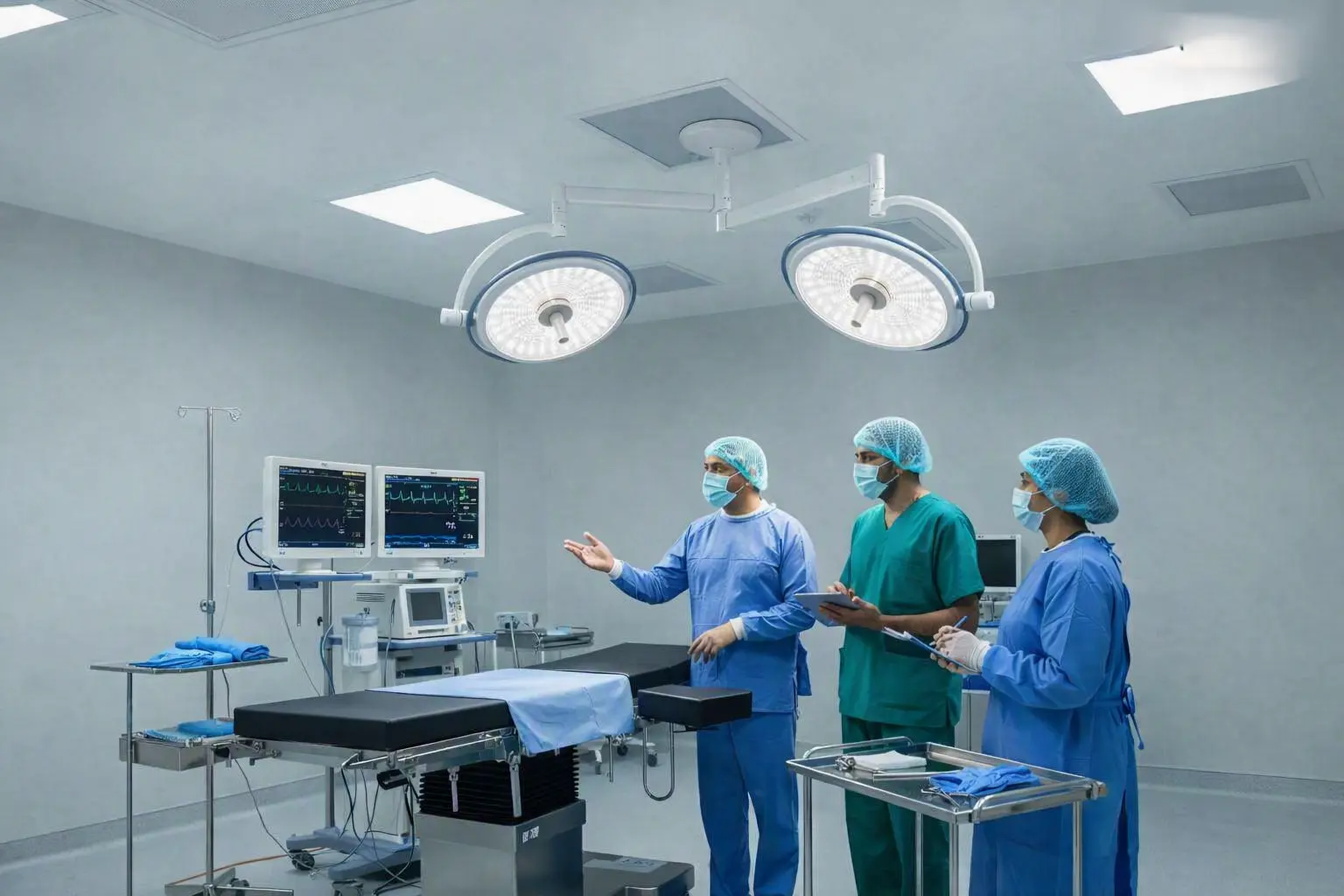
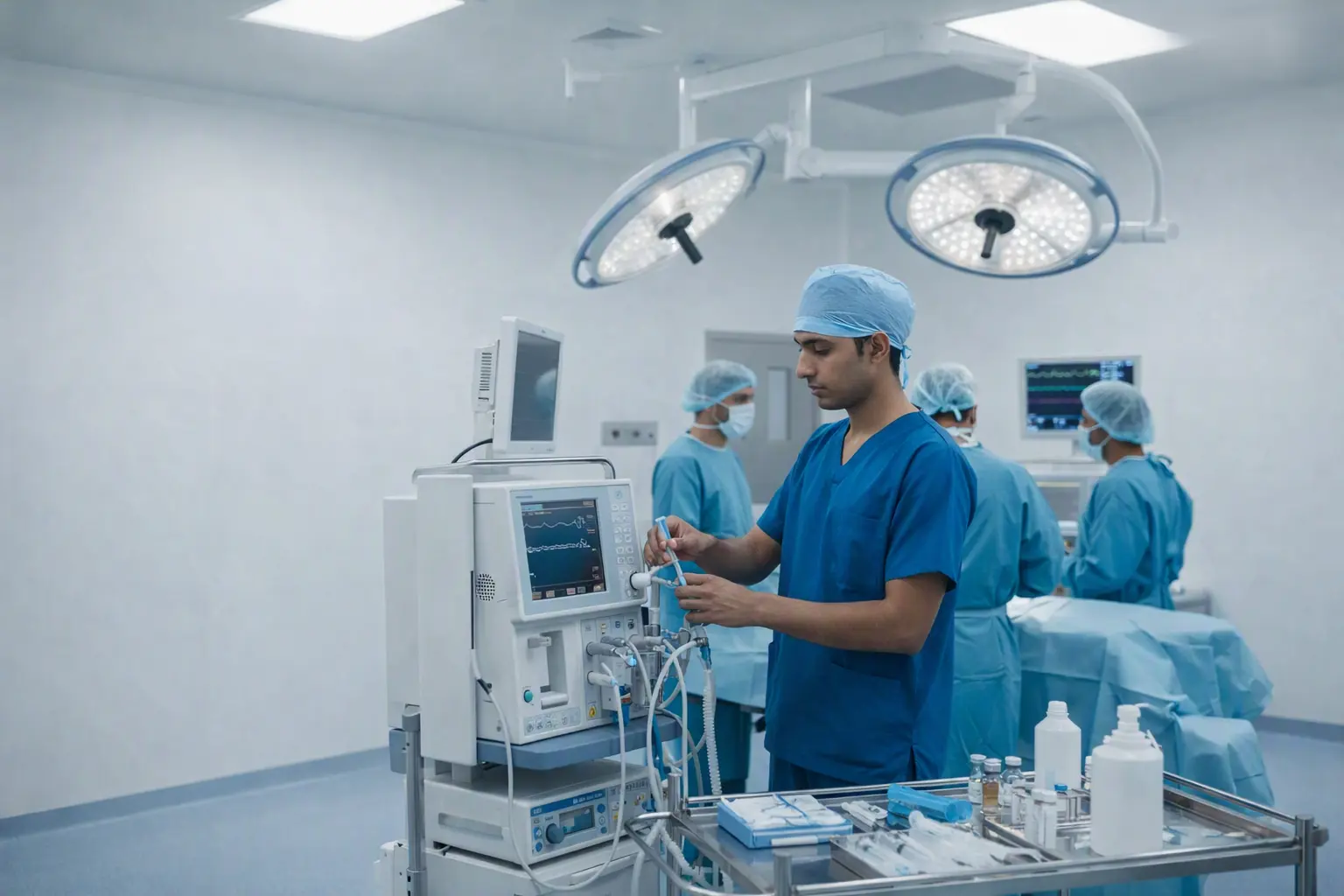
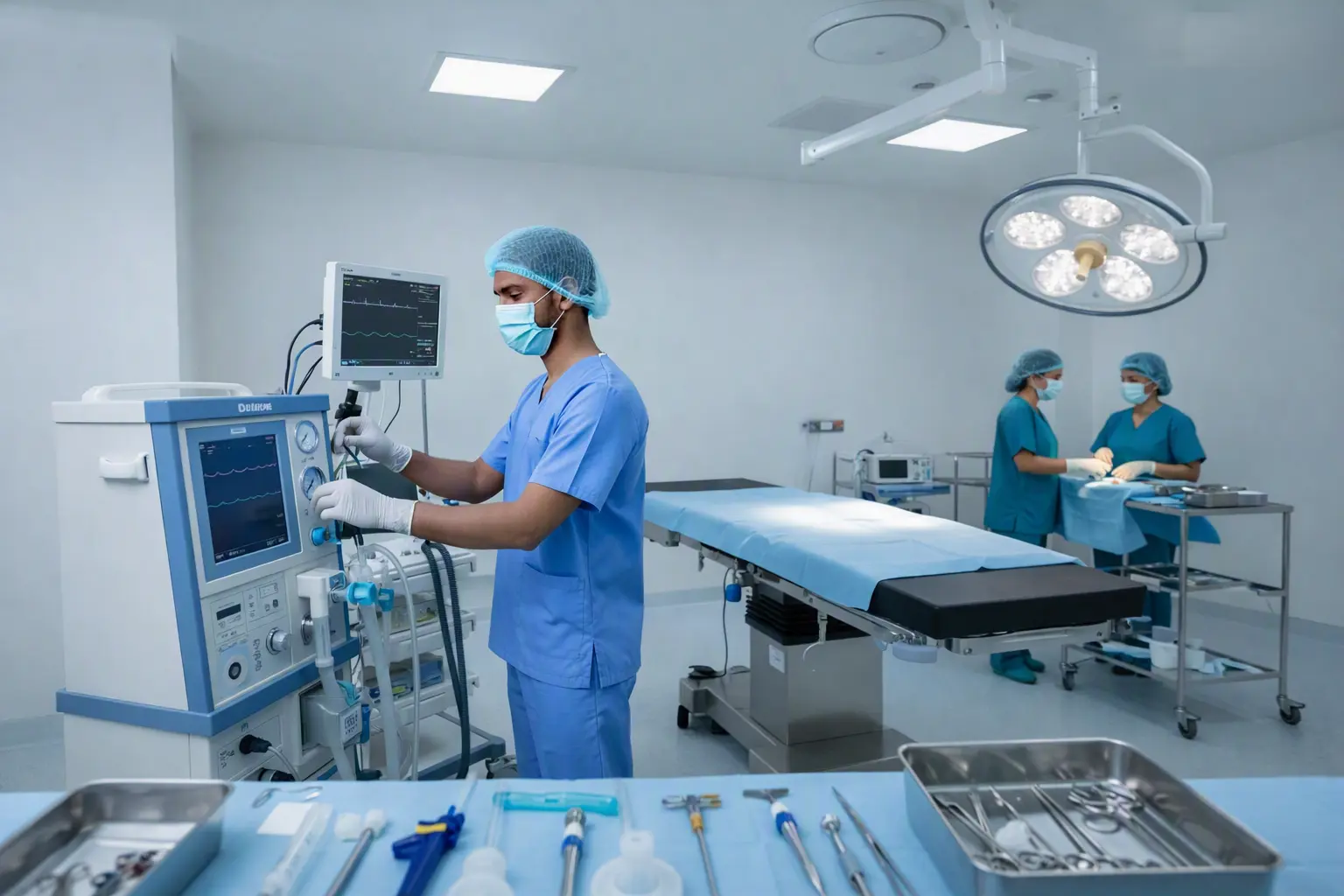


An anesthesia technologist is a healthcare professional who supports anesthesiologists and surgical teams by preparing anesthesia equipment, arranging supplies, assisting during procedures, and maintaining operating-room equipment.
Admissions Open for September 2026 Intake - Limited Seats
Paramedical
Anesthesia Technologist Salary in India: Job Role, Skills, Courses & Scope
Aug 31st , 2026
An anesthesia technologist is a healthcare professional who supports anesthesiologists and surgical teams before, during, and after medical procedures. Their responsibilities include preparing anesthesia equipment, checking supplies, assisting with anesthesia procedures, and ensuring the operating room is properly equipped for surgery.
The anesthesia technologist salary in India depends on factors such as qualification, experience, job role, location, hospital type, and skills. Students interested in this field can pursue anesthesia technology courses and gain practical clinical experience to work in hospitals, surgical centres, and other healthcare settings.
This guide covers the anesthesia technologist job description, anesthesia technologist salary, anesthesia technologist jobs, courses, required skills, certification options, and anesthesia technician vs technologist differences.
What is an Anesthesia Technologist?
An anesthesia technologist is a healthcare professional who assists anesthesiologists and surgical teams before, during, and after medical procedures. They prepare and check anesthesia equipment, breathing systems, monitoring devices, medications, and other supplies required for anesthesia procedures.
Anesthesia technologists also assist during procedures, maintain anesthesia equipment, follow infection control protocols, and ensure the operating room is properly prepared. They work as part of the surgical team and support the safe and efficient delivery of anesthesia care.
Start Your Medical Career with Bachelor’s Degree in Anesthesia Technologist from Top Universities - 100% Placement Support - Admissions are Open for 2026 Batch


Anesthesia Technologist Roles and Responsibility
The anesthesia technologist job description involves supporting anesthesiologists and surgical teams before, during, and after procedures. They prepare anesthesia equipment, arrange supplies, assist during anesthesia procedures, and ensure the operating room is ready.
Key Roles and Responsibilities of Anesthesia Technologist
| Prepare and check anesthesia equipment | Arrange anesthesia supplies and airway equipment |
| Assist anesthesiologists during procedures | Support patient monitoring |
| Maintain and clean anesthesia equipment | Follow safety and infection-control protocols |
| Prepare the operating room for surgery | Maintain equipment and supply records |
The specific responsibilities may vary depending on the hospital, department, qualification, experience, and job role.
Anesthesia Technologist Salary in India
The anesthesia technologist salary in India generally increases with experience, skills, and job responsibilities.
| Experience Level | Monthly Salary | Average Annual Salary |
|---|---|---|
| Entry Level (0 - 2 years) | ₹21,000 - ₹33,000 | ₹2.5 - ₹4 LPA |
| Mid Career (2 - 5 years) | ₹38,000 - ₹63,000 | ₹4.5 - ₹7.5 LPA |
| Senior/Lead (5+ years) | ₹67,000 - ₹1 Lakh+ | ₹8 - ₹12+ LPA |
Freshers may start with entry-level roles in hospitals and clinics, while experienced professionals can earn higher salaries in multispecialty hospitals, advanced surgical units, and supervisory roles.
Salary expectations can vary based on qualification and experience, and you can also explore BSc Anaesthesia & Operation Theatre Technology salary, scope, and job opportunities in India to understand the earning potential after completing a bachelor's degree.
Anesthesia Technologist Career Growth & Future Scope
The anesthesia technologist career scope is growing with the need for skilled professionals in hospitals, surgical centres, and operating rooms. With relevant qualifications and practical experience, professionals can work in:
- Government and private hospitals
- Multispeciality hospitals
- Surgical and day care centres
- Trauma and emergency care facilities
- Medical colleges and teaching hospitals
- Specialised surgical units
Anesthesia Technologist Career Growth
With experience and additional qualifications, an anesthesia technologist can progress from entry-level technical roles to senior and supervisory positions. Career growth may include roles such as:
Anesthesia Technician → Anesthesia Technologist → Senior Anesthesia Technologist → Supervisor/Technical Lead
Future Scope of Anesthesia Technology
The future scope of anesthesia technology includes opportunities in hospitals, surgical facilities, emergency care, and specialised healthcare centres. Professionals with strong technical skills, clinical experience, and knowledge of modern anesthesia equipment may have better opportunities for growth.
Start Your Medical Career with Bachelor’s Degree in Anesthesia Technologist from Top Universities - 100% Placement Support - Admissions are Open for 2026 Batch
Anesthesia Technologist Courses
Students can choose from certificate, diploma, bachelor's, and master's courses in anesthesia technology based on their educational qualifications and career goals.
| Course | Duration | Eligibility |
|---|---|---|
| Certificate in Anesthesia Technology | 6 Months - 1 Year | Class 10th or 12th, depending on institute |
| Diploma in Anesthesia Technology | 1 - 2 Years | Class 10th or 12th, depending on institute |
| BSc Anesthesia Technology | 3 - 4 Years | Class 12th with relevant science subjects |
| MSc Anesthesia Technology | 2 Years | Relevant bachelor's degree |
Course duration and eligibility may vary by institution and university. For students planning to work as anesthesia technologists, choosing a recognised program with practical hospital training can help develop relevant clinical and technical skills.
Students planning to pursue a bachelor's degree can explore BSc Anaesthesia & Operation Theatre Technology course details, including eligibility, fees, duration, and syllabus before choosing a program.
Anesthesia Technologist Certification Online
Students may come across anesthesia technologist certification online programs that focus mainly on theoretical knowledge. These can help learners understand basic concepts and develop additional knowledge.
However, online certification alone may not provide the practical clinical training required for hospital-based anesthesia technology roles.
Is an anesthesia technologist a doctor?
No. An anesthesia technologist is a healthcare professional, not a doctor. They support anesthesiologists, who are medical doctors responsible for administering anesthesia and monitoring patients during surgery.
An anesthesia technologist prepares anesthesia equipment, assists during procedures, and maintains the required equipment and supplies. They do not diagnose patients or independently administer anesthesia; their role focuses mainly on technical and clinical support during anesthesia and surgical procedures.
Learn More About Anesthesiologists
- Learn more about Anesthesiologist roles, specializations, qualifications, and fees in India, and understand the educational pathway and responsibilities of this medical profession.
- Explore Anesthesiologist salary in India, including average monthly earnings, job opportunities, factors affecting salary, and long-term career scope.
Skills Required to Become an Anesthesia Technologist
An anesthesia technologist needs technical knowledge, practical skills, attention to detail, and teamwork abilities to support anesthesia and surgical procedures.
Key Skills
- Anesthesia Equipment Knowledge: Ability to prepare, operate, and maintain anesthesia machines and related equipment.
- Patient Monitoring: Understanding of basic monitoring procedures and support during surgical procedures.
- Operating Room Skills: Knowledge of equipment preparation, sterilisation, infection control, and operating-room protocols.
- Attention to Detail: Ability to accurately check equipment, supplies, and safety requirements.
- Communication Skills: Ability to coordinate effectively with anesthesiologists, surgeons, nurses, and other healthcare staff.
- Emergency Response: Ability to remain calm and follow procedures during emergencies and high-pressure situations.
What is the difference between an anesthesia technician and an anesthesia technologist in everyday work?
In Anesthesia Technologist vs Technician, both roles support anesthesia and surgical teams, but their day-to-day responsibilities may differ.
| Everyday Work | Anesthesia Technologist | Anesthesia Technician |
|---|---|---|
| Equipment | Prepares, manages, and supports the use of anesthesia equipment | Prepares and checks anesthesia equipment |
| Supplies | Manages equipment and supplies for procedures | Arranges and maintains required supplies |
| Procedures | Provides broader technical and clinical support | Provides technical assistance |
| Operating Room | Supports anesthesia and operating room activities | Helps prepare the operating room |
| Team Support | Works closely with anesthesiologists and surgical teams | Assists the anesthesia team |
| Responsibilities | Broader responsibilities depending on qualification and role | Mainly equipment and technical support |
In simple terms: Anesthesia technologists handle broader technical and clinical support, while an anesthesia technician mainly focuses on equipment and technical assistance. Exact duties can vary by hospital and employer.
Related Blogs:
- If you are comparing different study pathways, our guide to Anesthesia Technician Courses: Eligibility, Duration, Fees & Syllabus explains the available course options in more detail.
- For a broader look at salaries across different experience levels and job roles, read our guide to Anesthesia Technician Salary in India: Jobs, Duties, & Career Scope.
Is Anesthesia Technologist a Good Career Option?
Yes, anesthesia technology can be a good career option for students interested in healthcare, operating-room procedures, medical equipment, and supporting surgical teams.
The field offers opportunities in hospitals, surgical centres, and specialised healthcare facilities. With relevant qualifications, practical experience, and technical skills, professionals can take on higher responsibilities and improve their earning potential.
When choosing an anesthesia technology course, consider course recognition, practical training, clinical exposure, curriculum, and placement support.
How Does Emversity Help Students Become Anesthesia Technologists?
Emversity helps students who aspire to become anesthesia technologists through its BSc Anaesthesia & Operation Theatre Technology program, offered in partnership with universities across India.
The 4 Year program combines academic learning with practical healthcare exposure to help students develop the skills required for anesthesia and operation theatre roles. The program includes 3 Years of academic learning and 1 Year of internship, providing students with hands-on experience in real hospital and healthcare settings.
Emversity acts as a placement partner, working with hospitals and healthcare institutions to support students with internship opportunities and relevant job placements.
Key Benefits of Choosing Emversity
- Industry-aligned curriculum
- Real hospital and healthcare exposure
- 1 Year internship as part of the 4 Year program
- Practical and skill-based learning
- Exposure to healthcare institutions
- Placement support for relevant healthcare roles
- Better job readiness for anesthesia and operation theatre roles
This combination of academic learning, practical training, internship, and placement support helps aspiring anesthesia technologists build job-ready skills and prepare for roles in hospitals and healthcare institutions.
Explore Emversity Partner Universities for BSc Anaesthesia & Operation Theatre Technology
| University Name | State | Fees |
|---|---|---|
| MediCaps University | Indore, MP | ₹7.8 Lakhs |
| Arka Jain University | Jamshedpur, Jharkhand | ₹7.2 Lakhs |
| Techno India University | Kolkata, West Bengal | ₹8.2 Lakhs |
| Ajeenkya DY Patil University | Pune, Maharashtra | ₹8 Lakhs |
| St. Mary's Rehabilitation University | Hyderabad, Telangana | ₹7.2 Lakhs |
| Universal SkillTech University | Mumbai, Maharashtra | ₹8 Lakhs |
| HCG Hospitals Global Healthcare Academics | Bangalore, Karnataka | ₹8 Lakhs |
| Medhavi Skill University | Sikkim | ₹7.2 Lakhs |
| St. Peter's - Chennai | Chennai, Tamil Nadu | ₹7.2 Lakhs |
| St. Peter's - Bangalore | Bangalore, Karnataka | ₹7.2 Lakhs |
| AMET University | Chennai, Tamil Nadu | ₹7.2 Lakhs |
| Maya Devi University | Dehradun, Uttarakhand | ₹7.2 Lakhs |
| Saraswati Group of Colleges | Mohali, Punjab | ₹6.6 Lakhs |
Emversity Healthcare Partner for Internship & Placement



















Start Your Medical Career with Bachelor’s Degree in Anesthesia Technologist from Top Universities - 100% Placement Support - Admissions are Open for 2026 Batch
Conclusion
Anesthesia technology offers a practical healthcare pathway for students interested in operating-room procedures, anesthesia equipment, and supporting surgical teams. The anesthesia technologist salary in India can increase with experience, qualifications, technical skills, and job responsibilities.
Students can choose from certificate, diploma, and degree-level anesthesia technologist courses and gain practical clinical experience through hospital-based training. A recognised program with hands-on exposure can help build the skills required for anesthesia technology roles.
Interested in becoming an Anesthesia Technologist?
Connect with Emversity for a free counselling session to explore course options, admission requirements, practical training, and opportunities in anesthesia and operation theatre technology.
Get Free Consultation
Talk to our experts today
Related Blogs
Frequently Asked Questions (FAQs)
Key Details about Anesthesia Technologist Courses, Salary and Career Growth