

The BSc OT Technician is a 3 to 4-year undergraduate degree that trains students in operation theatre procedures, anaesthesia technology, surgical assistance, and critical care support. It is a university recognised degree with strong career opportunities in hospitals across India and abroad. No NEET required.
Admissions Open for September 2026 Intake - Limited Seats
Paramedical
BSc OT Technician: Course Details, Scope, Salary and Job Opportunities
May 20th , 2026
Most students after 12th face the same question. MBBS requires NEET, nursing feels too long, and general science courses often feel uncertain. But there is one healthcare career many students never think about, even though hospitals across India cannot function without it.
The BSc OT Technician is a degree level paramedical programme that trains students to work inside the operation theatre, one of the most critical areas in any hospital. No NEET required. University recognised degree. Strong career growth. Real international opportunities.
If you are serious about building a healthcare career after 12th, this guide will help you understand everything about the BSc OT Technician course, including salary in India, career scope, eligibility, syllabus, fees, and job opportunities, explained in simple language so you can make the right decision with confidence.
What is BSc OT Technician Course?
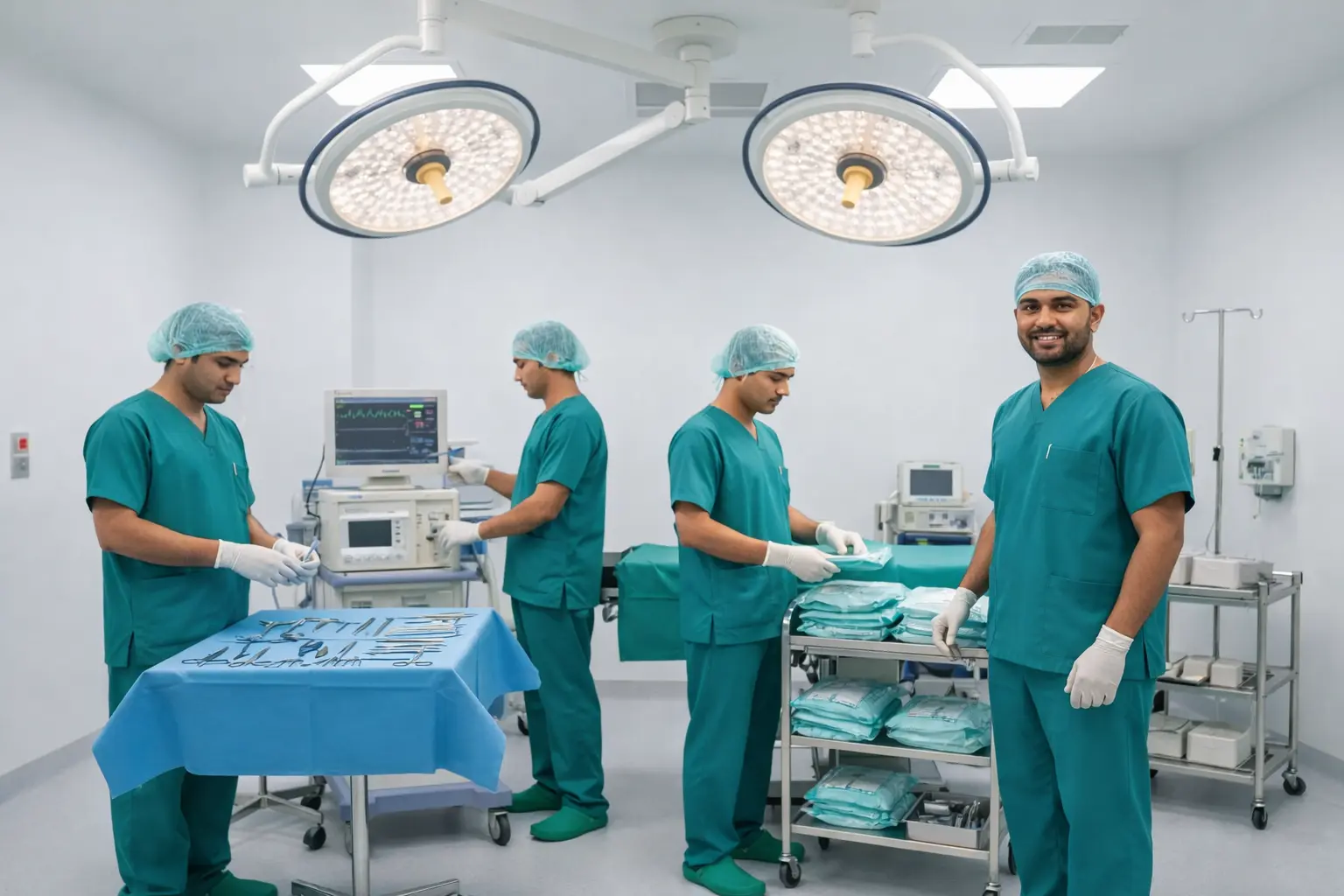
The BSc OT Technician course is a 3 to 4 year undergraduate degree that trains students to work professionally inside hospital operation theatres. It is not just a theoretical course. From the first year itself, students start building the technical knowledge and hands on skills needed to support surgeons, anaesthetists, and the entire surgical team during procedures.
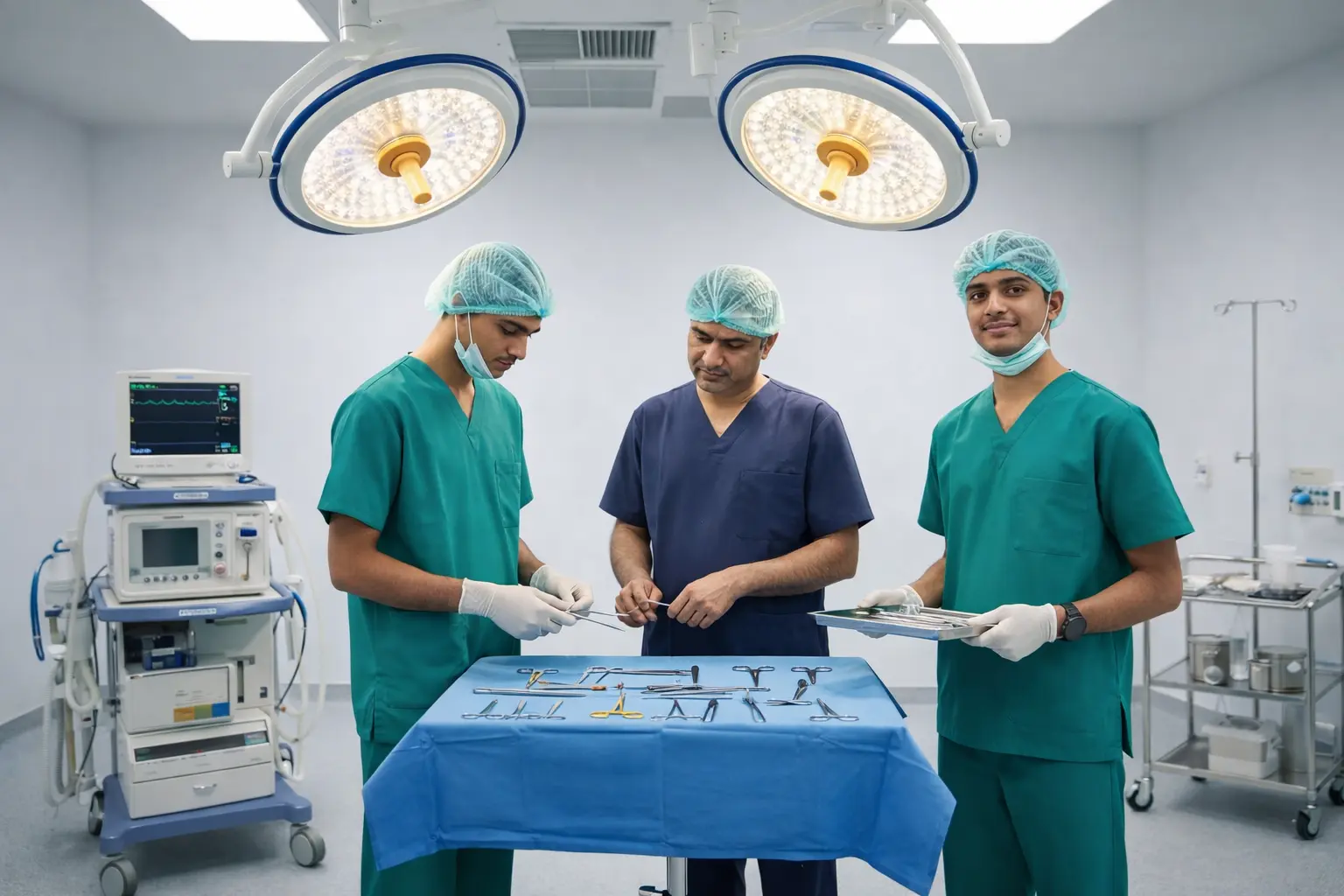
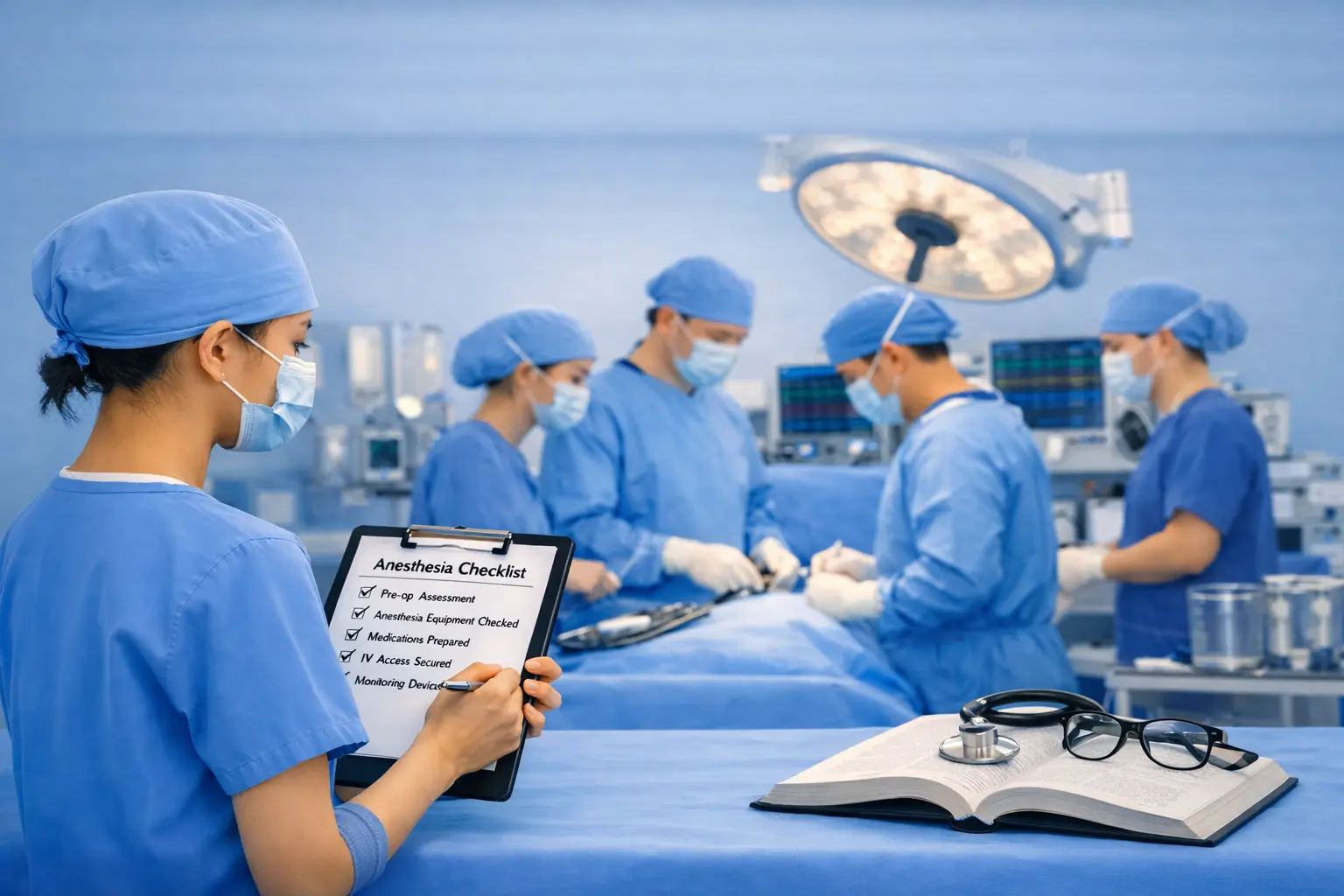
Throughout the programme, students learn how to set up and manage an operation theatre, assist during surgeries, handle anaesthesia equipment, apply sterilisation protocols, monitor patients, and operate OT instruments. The program also helps students understand the complete roles and responsibilities of an OT Technician in a real hospital environment, which is something most students are not fully aware of before joining.
What makes this course stand out is the depth of practical training it offers. Students do not just study from textbooks. They spend time inside real operation theatres, learning how things actually work alongside experienced doctors and surgical teams. By the time they graduate, they are ready to step into a hospital and contribute from day one.
The course is offered under different names at different universities such as BSc in Operation Theatre Technology, BSc in Anaesthesia and Operation Theatre Technology , and Diploma in OT Technician . The name may differ but the core training, clinical exposure, and career opportunities remain largely the same across institutions.
Start Your Medical Career with Bachelor’s Degree in A&OTT from Top Universities - 100% Placement Support - Admissions are Open for 2026 Batch

BSc OT Technician Scope in India
The BSc OT Technician scope in India is expanding steadily as hospitals, surgical centres, and healthcare services continue to grow across the country.
Here are some major reasons why this field has strong long term career opportunities:
- Growing Hospital Infrastructure: India is continuously expanding its healthcare network with new hospitals, medical colleges, trauma centres, and speciality surgical units. Every hospital with an operation theatre requires trained OT professionals to support surgical procedures and patient care.
- Increase in Surgical Procedures: The number of surgeries in India is increasing due to lifestyle related diseases, accidents, orthopaedic conditions, cardiac problems, and emergency medical cases. This creates continuous demand for skilled OT professionals in surgical departments.
- Advanced Surgical Technology: Modern hospitals are adopting advanced surgical systems, minimally invasive procedures, and improved anaesthesia technologies. These developments are increasing the importance of professionally trained OT graduates who understand both surgical support and operation theatre management.
- Government Healthcare Expansion: Government healthcare projects and the expansion of public hospitals are creating more opportunities in operation theatre departments. Many hospitals and healthcare institutions prefer qualified allied healthcare graduates for technical and clinical support roles.
Career Sectors for BSc OT Technician Graduates
The scope of this degree is not limited to operation theatres alone. Graduates can work across different healthcare sectors.
| Sector | Career Opportunities |
|---|---|
| Multi speciality Hospitals | OT assistance and surgical support roles |
| Day Care Surgical Centres | Operation theatre and patient care support |
| Medical Equipment Companies | Product training, technical support, and clinical assistance |
| Government and Defence Hospitals | OT and emergency care departments |
| Medical Simulation Centres | Surgical training and healthcare education support |
| Healthcare Administration | OT coordination and management roles |
| Medical Colleges | Teaching and clinical training opportunities after higher studies |
International Career Opportunities
After gaining experience and completing required licensing or eligibility processes, OT professionals can also explore healthcare opportunities in Gulf countries and other international healthcare sectors. International roles may provide broader exposure, advanced clinical environments, and better salary opportunities.
Higher Education Opportunities
After completing a BSc OT programme, students can continue higher education in specialised healthcare fields such as:
- MSc in Operation Theatre Technology
- MSc in Allied Health Sciences
- PG Diploma in Critical Care or Anaesthesia Technology
- Master of Hospital Administration (MHA)
- MBA in Healthcare Management
These higher qualifications can help students move into advanced clinical, teaching, research, administrative, and leadership roles in healthcare.
Start Your Medical Career with Bachelor’s Degree in A&OTT from Top Universities - 100% Placement Support - Admissions are Open for 2026 Batch
BSc OT Technician Salary in India
The demand for trained operation theatre professionals is increasing steadily across India as hospitals and surgical departments continue to grow. Students completing this degree can find opportunities in both government and private healthcare sectors with good long term career stability.
The BSc OT Technician salary in India depends on several factors, including experience, hospital type, technical expertise, location, and surgical specialisation.
| Experience Level | Government Hospital Salary (per month) | Private Hospital Salary (per month) |
|---|---|---|
| Fresher (0-2 Years) | ₹18,000 - ₹30,000 | ₹15,000 - ₹25,000 |
| Mid Level (3-5 Years) | ₹30,000 - ₹50,000 | ₹28,000 - ₹55,000 |
| Senior Level (5+ Years) | ₹50,000+ | ₹50,000 - ₹80,000+ |
Factors That Can Improve Salary Growth
- Experience in advanced surgical departments
- Specialisation in cardiac, neuro, or laparoscopic surgeries
- Strong practical operation theatre skills
- Supervisory or OT management responsibilities
- Additional certifications in anaesthesia or critical care
- International healthcare experience and exposure
With continuous learning and strong hospital experience, operation theatre professionals can achieve steady career growth and better salary opportunities in the healthcare industry.
BSc in OT Technician Eligibility
The BSc in OT Technician eligibility criteria are generally simple and student friendly. Most universities and allied healthcare institutions follow these common requirements:
- Completed Class 12 from a recognised board
- Science stream with Physics, Chemistry, and Biology is required
- Minimum qualifying marks as required by the college or university
- Minimum age of 17 years at the time of admission
- Some colleges may also conduct entrance tests or interviews as part of the admissions process
BSc OT Technician After Diploma
Students who have already completed a Diploma in OT Technician can also apply for BSc programmes in operation theatre technology or allied healthcare fields. Some universities may offer lateral entry admission, allowing diploma holders to join directly in the second year, depending on university rules and eligibility criteria.
This pathway is useful for students who want to upgrade their qualification, improve career opportunities, and access higher level roles in hospitals and healthcare organisations.
BSc OT Technician Course Duration
The BSc OT Technician course duration generally ranges from 3 to 4 years, depending on the university, internship structure, and programme format.
| Program | Typical Duration |
|---|---|
| BSc OT Technician | 3 to 4 Years |
| BSc Anaesthesia and Operation Theatre Technology (A&OTT) | 4 Years |
| BSc OT Technician After Diploma | Duration may vary based on university lateral entry policies |
Many universities include clinical internships and hospital training as part of the program, giving students practical exposure inside real operation theatre environments.
The longer duration compared to a diploma helps students gain deeper clinical knowledge, advanced surgical training, and stronger hospital experience. This often leads to better career opportunities, higher salary potential, and access to advanced healthcare roles after graduation.
BSc OT Technician Course Fees
The BSc OT Technician course fees depend on the type of college, location, hospital training facilities, and overall program structure. Government institutions usually have lower fees, while private colleges may charge more based on infrastructure, clinical exposure, and internship support.
BSc OT Technician Government College Fees vs Private College Fees
| Type of College | Approximate Annual Fees |
|---|---|
| Government Medical Colleges | ₹25,000 - ₹50,000 |
| State Allied Healthcare Institutes | ₹20,000 - ₹45,000 |
| Private Colleges | ₹1Lakh - ₹2Lakh |
| Premium Healthcare Institutions | ₹1.25Lakh - ₹2.5Lakh |
The BSc OT Technician government college fees are generally affordable for students looking for quality healthcare education at a lower cost. Private colleges may charge higher fees due to advanced laboratories, structured hospital training, simulation facilities, and placement support.
Before selecting a college, students should compare not only the fees but also the quality of hospital exposure, internship experience, faculty support, and career opportunities provided after graduation.
BSc OT Technician Syllabus
The BSc OT Technician syllabus is designed to provide both theoretical knowledge and practical hospital training. While subjects may vary slightly between universities, most programmes follow a similar structure that gradually builds medical knowledge, surgical skills, and clinical experience.
Year 1: Building the Medical Foundation
In the first year, students develop the core medical knowledge required before entering clinical and operation theatre environments. This stage helps students understand the human body, diseases, and the basics of hospital and operation theatre systems.
| Subject | What You Learn |
|---|---|
| Anatomy and Physiology | Study of body systems such as cardiovascular, respiratory, and musculoskeletal systems relevant to surgeries |
| Biochemistry | Basic chemical processes in the human body and their role in patient health |
| Pathology | Understanding diseases, infections, and surgical conditions |
| Medical Terminology | Clinical language, documentation, and hospital communication |
| Fundamentals of Operation Theatre | OT setup, equipment, safety practices, and theatre management basics |
| Basics of Computer Science | Digital hospital systems and healthcare documentation |
| Clinical Postings | Introduction to hospital departments, patient care, dressings, and OT observation |
Year 2: Clinical Knowledge and OT Practice
The second year focuses more on surgical procedures, anaesthesia support, infection control, and practical operation theatre skills. Students begin applying classroom knowledge in clinical settings.
| Subject | What You Learn |
|---|---|
| Applied Basic Sciences | Advanced anatomy and physiology related to surgeries and anaesthesia |
| Principles of Anaesthesia | Types of anaesthesia, patient preparation, and anaesthesia equipment |
| Surgical Procedures and Instrumentation | Identification and handling of surgical instruments used in different procedures |
| Sterilisation and Infection Control | Maintaining sterile surgical environments, CSSD workflows, and controlling hospital acquired infections |
| Pharmacology | Medicines commonly used in surgical and emergency care settings |
| Patient Monitoring | Monitoring vital signs and supporting patient care during procedures |
| Clinical Postings | Practical exposure in general surgery, orthopaedics, gynaecology, and ophthalmology operation theatres |
Year 3: Advanced Surgical and OT Training
In the third year, students move into more specialised clinical training with exposure to advanced surgeries, emergency care, and operation theatre administration.
| Subject | What You Learn |
|---|---|
| Advanced Surgical Procedures | Support techniques for cardiac, neuro, laparoscopic, paediatric, and urological surgeries |
| Advanced Anaesthesia Technology | Regional anaesthesia, emergency anaesthesia support, and advanced OT procedures |
| Critical Care and ICU Technology | ICU equipment handling, ventilator basics, and patient support |
| OT Management and Administration | Operation theatre coordination, scheduling, safety protocols, and team management |
| Research Methodology and Biostatistics | Basic healthcare research and medical data understanding |
| Healthcare Ethics and Law | Patient rights, informed consent, and professional responsibilities |
| Clinical Postings | Advanced rotations in cardiac OT, neuro OT, ICU, emergency OT, and laparoscopic surgery departments |
Internship and Practical Hospital Training
Most BSc OT Technician programmes include an internship or extensive clinical training in hospitals. During this period, students work under the guidance of surgeons, anaesthesia teams, and experienced OT professionals to gain real hospital experience.
| Department | Practical Exposure |
|---|---|
| General Surgery OT | Assistance during routine and emergency surgeries |
| Cardiac and Neuro OT | Exposure to specialised surgical procedures |
| Orthopaedic OT | Instrument handling and surgical preparation |
| Laparoscopic OT | Assistance in minimally invasive surgeries |
| CSSD | Sterilisation procedures and infection control management |
| ICU and Emergency Theatre | Emergency support and critical patient care assistance |
By the end of the programme, students graduate with practical hospital exposure, surgical assistance skills, and experience in the operating theatre, preparing them for professional healthcare careers.
BSc OT Technician Career Growth
The BSc OT Technician career growth pathway offers long term opportunities in surgical care, operation theatre management, and specialised healthcare roles. This is also one of the key reasons OT Technician is a good career in India . With experience, practical skills, and advanced knowledge, professionals can gradually move into higher responsibility positions within hospitals and healthcare organisations.
- Fresher Level (0 to 2 Years): Work as OT Technologists, OT Assistants, or Anaesthesia Technicians. Focus on learning hospital workflow, assisting surgeries, and building practical OT skills.
- Skilled Professional Level (3 to 5 Years): Develop expertise in specialised surgical areas such as cardiac, neuro, laparoscopic surgeries, or anaesthesia support. Responsibilities and career scope increase at this stage.
- Senior and Supervisory Level (5+ Years): Move into roles like OT Supervisor, OT Coordinator, OT Manager, or Clinical Trainer, handling OT management, staff supervision, and surgical coordination.
- Higher Education and International Opportunities: Pursue higher studies in allied health sciences, OT technology, or hospital administration. Also explore international job opportunities after meeting required eligibility and licensing criteria.
Job Opportunities After BSc OT Technician
The job opportunities after BSc OT Technician are available across hospitals, surgical centres, emergency departments, critical care units, and healthcare support services. Graduates can work in both clinical and technical roles depending on their skills, experience, and area of interest.
| Job Role | Work Environment |
|---|---|
| OT Technologist | Government and private hospitals |
| Anaesthesia Technician | Surgical departments and operation theatres |
| Scrub Technician | Operation theatre surgical teams |
| CSSD Technician | Sterilisation and infection control departments |
| ICU Technologist | Intensive care and critical care units |
| Emergency OT Technician | Trauma and emergency care departments |
| OT Supervisor | Operation theatre coordination and management |
| Clinical Trainer | Healthcare training institutes and hospitals |
| Medical Equipment Specialist | Surgical and medical equipment companies |
| OT Coordinator | Hospital surgical departments |
| Surgical Support Executive | Advanced healthcare and speciality centres |
Top Employers Hiring BSc OT Professionals
Major employers include Apollo Hospitals, Fortis Healthcare, Manipal Hospitals, Aster Hospitals, Narayana Health, AIIMS, Medanta, ESIC hospitals, and various government medical colleges.
Apart from hospitals, medical technology companies such as GE Healthcare, Siemens Healthineers, and Medtronic also hire OT graduates for roles related to clinical support, product training, and medical equipment management. With strong practical knowledge and hospital exposure, graduates can build stable and long term careers across different areas of the healthcare industry.
BSc OT Technician Course College: What to Look For
Choosing the right BSc OT Technician course college is important because practical training and hospital exposure strongly influence your learning and career opportunities.
Before taking admission, students should check:
- University recognition and valid degree certification
- Operation theatre labs and training facilities
- Experienced medical and allied healthcare faculty
- Hospital tie-ups for internships and clinical training
- Placement assistance and career support
- Practical hospital exposure during the programme
A college with strong clinical training and robust hospital exposure can help students build stronger skills and greater confidence for healthcare careers after graduation.
Emversity Healthcare Partner for Internship & Placement

















Start Your Medical Career with Bachelor’s Degree in A&OTT from Top Universities - 100% Placement Support - Admissions are Open for 2026 Batch
Final Thoughts
A good career does not happen by chance. It happens when you make the right decision at the right time. Not many courses give you this kind of clarity. You know what you will study, where you will work, and how your career will grow. That itself is rare.
The skills you build inside a real operation theatre, the experience you collect year after year, none of that goes away. It only gets better. Hospitals are growing. Surgeries are increasing. And if you have a BSc degree and solid hospital experience, you will always have a place in this field. So if you have been thinking about this, stop thinking and start moving.
Start With Emversity
Get free career guidance from our experts and take the first step towards your future as a skilled OT Technician with Emversity's BSc A&OTT program.
Get Free Consultation
Talk to our experts today
Related Blogs
Frequently Asked Questions (FAQs)
Common questions about BSc OT Technician