
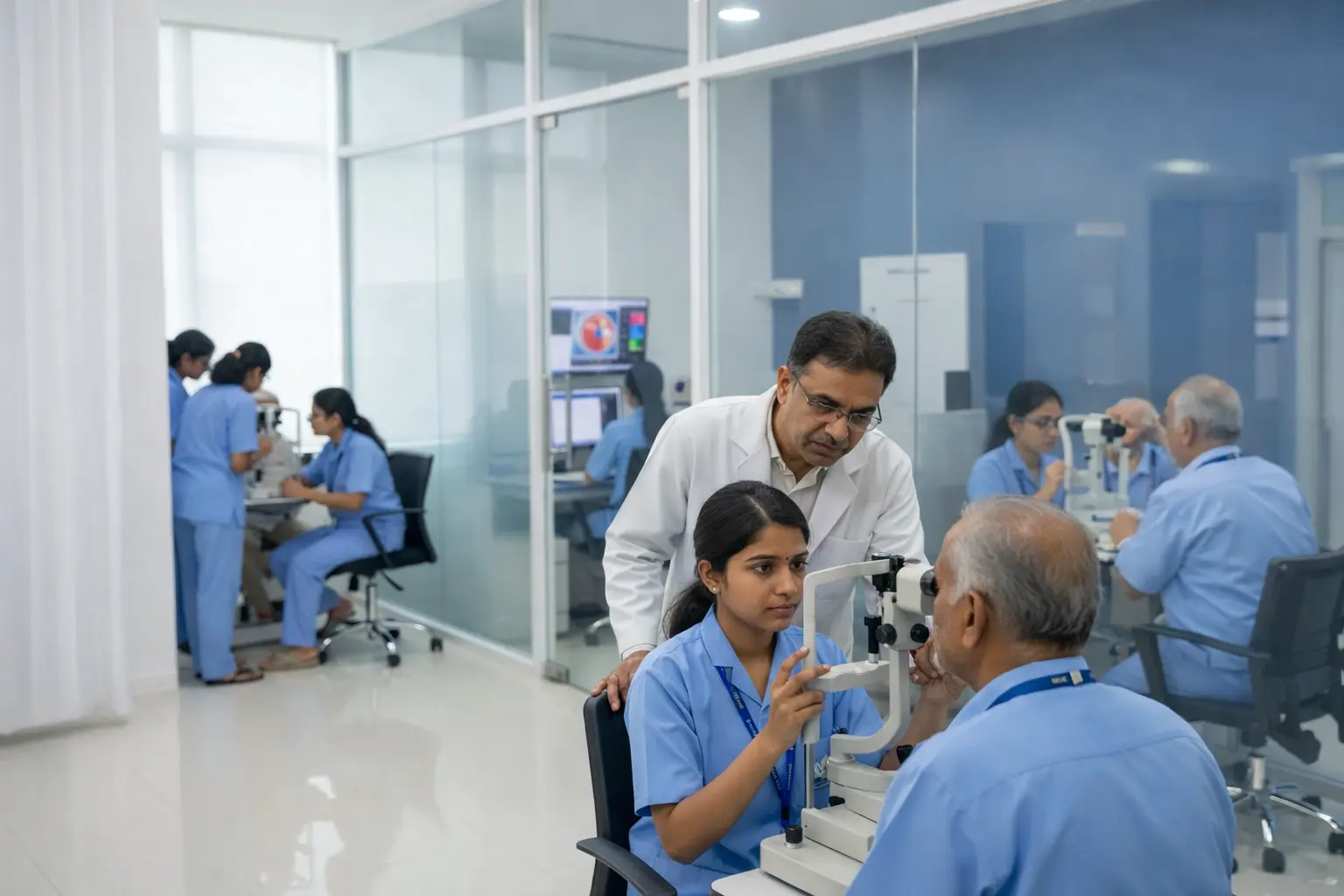
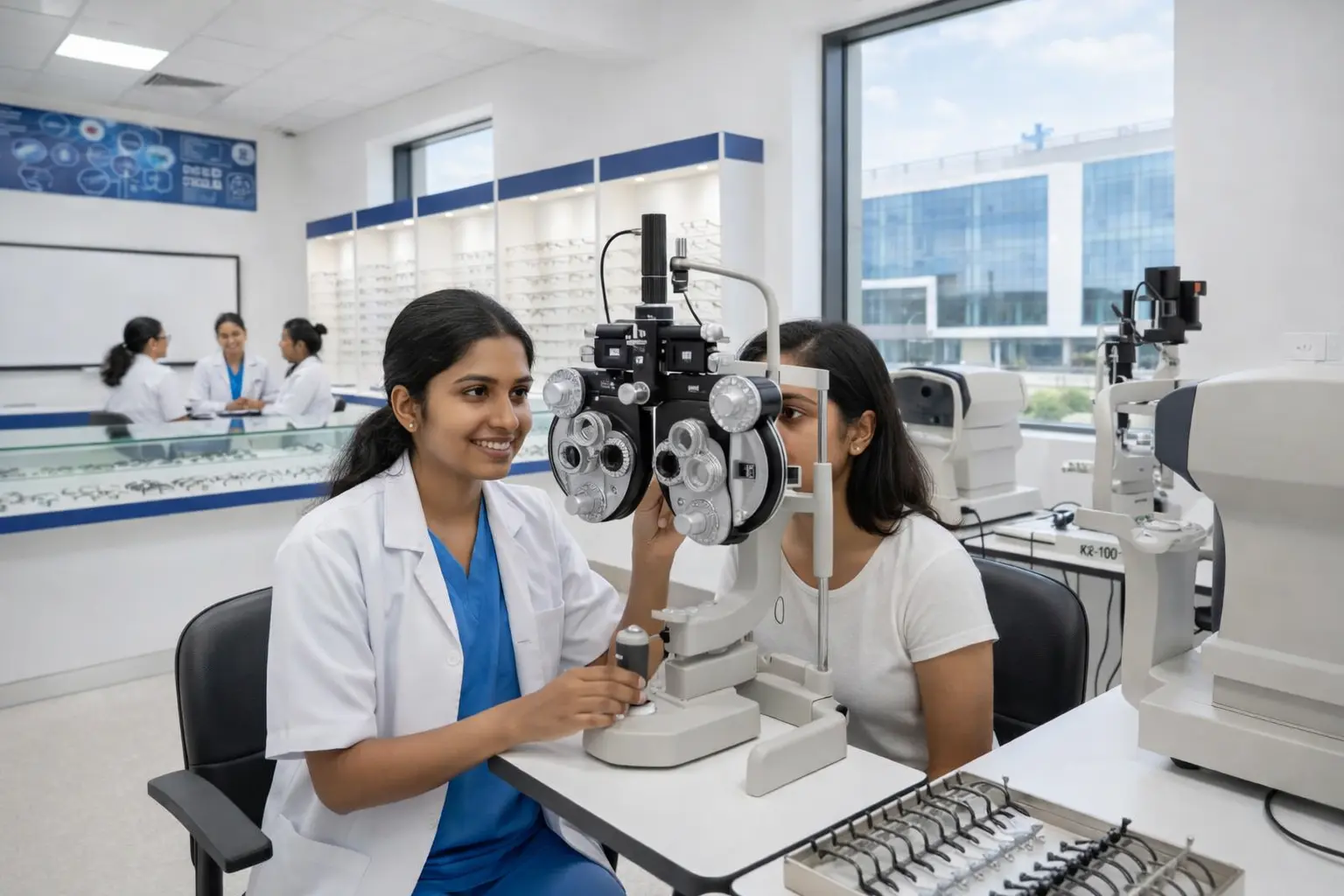

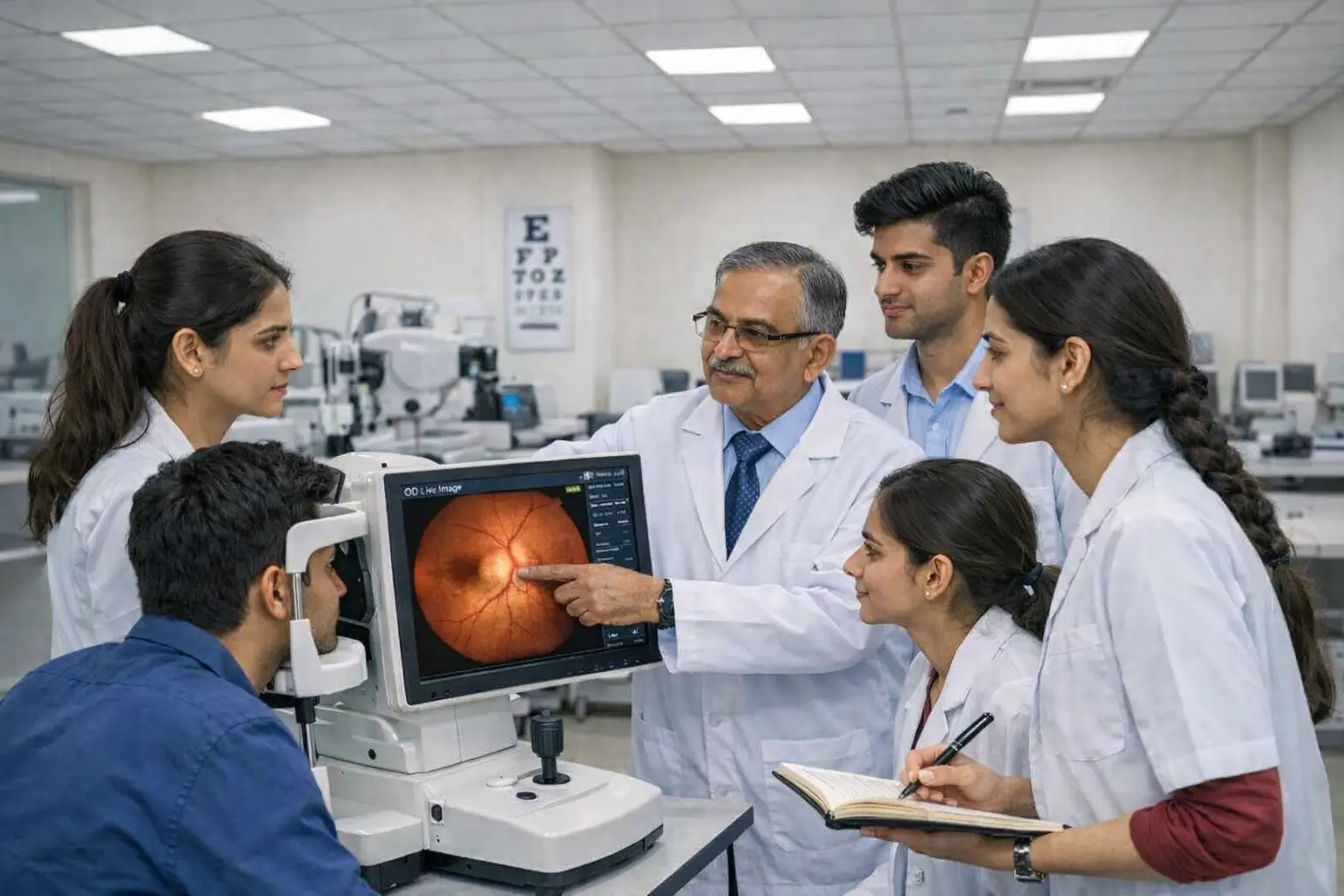
MSc Optometry is a two year postgraduate program that focuses on advanced clinical optometry, vision science, research, and specialised eye care practices.
Admissions Open for September 2026 Intake - Limited Seats
Allied Healthcare
MSc Optometry: Course Details, Eligibility, Career Scope, Salary
Jul 24th , 2026
As the demand for specialised eye care continues to grow, pursuing an MSc Optometry can open doors to advanced clinical, research, and academic career opportunities. A Master of Optometry equips students with in-depth knowledge of vision science, eye health, and patient care while enhancing professional growth and earning potential.
Whether you aspire to work in leading hospitals, eye care centres, research institutions, or educational organisations, an MSc Optometry provides the advanced training required to succeed in the field. Students interested in building a career in eye care can explore different optometry courses in India to understand available programs, eligibility criteria, and career opportunities.
With the increasing demand for skilled optometrists across India, graduates can explore diverse career pathways while contributing to improved vision care and eye health outcomes. This guide covers everything about MSc Optometry in India, including eligibility, syllabus, course details, career scope, salary, and job opportunities.
What is MSc Optometry?
MSc Optometry is a postgraduate program that provides advanced knowledge and clinical training in eye care, vision science, and optometric practice. The course focuses on diagnosing visual disorders, managing eye conditions, conducting comprehensive vision assessments, and developing research skills in optometry.
Designed for graduates with a Bachelor of Optometry (B.Optom), the program prepares students for specialised clinical, research, academic, and leadership roles in the eye care sector.
Key Objectives of MSc Optometry
- Develop advanced clinical optometry skills
- Gain expertise in vision assessment and eye disease management
- Learn specialised optometric procedures
- Build research and analytical skills
- Prepare for academic and leadership roles
- Enhance patient care through evidence-based practice
Start Your Medical Career with Bachelor’s Degree in Optometry from Top Universities - 100% Placement Support - Admissions are Open for 2026 Batch


MSc Optometry Course Details
Before applying, students should understand the key aspects of the MSc Optometry course, including its duration, eligibility, admission process, fees, and career opportunities.
| Particulars | Details |
|---|---|
| Course Name | MSc Optometry |
| Course Type | Postgraduate |
| Field | Allied Healthcare & Eye Care |
| Duration | 2 Years |
| Admission Mode | Merit-Based or Entrance Exam |
| Eligibility | Bachelor in Optometry or a related field |
| Mode of Study | Full Time |
| Average Fees | ₹50,000 – ₹3,00,000 per year |
| Average Salary | ₹4 LPA – ₹8 LPA |
| Career Areas | Clinical Optometrist, Researcher, Lecturer, Vision Consultant |
This postgraduate programme equips students with advanced clinical knowledge, research capabilities, and specialised eye care skills, preparing them for diverse career opportunities in the optometry and vision care sector.
MSc Optometry Eligibility
To pursue an MSc Optometry in India, candidates must satisfy the eligibility requirements specified by the respective college or university. Although the criteria may vary slightly across institutions, the following requirements are commonly applicable.
MSc Optometry Eligibility Criteria
- Bachelor's degree in Optometry (B.Optom) from a recognised institution.
- Minimum 50%–60% aggregate marks, depending on the admission criteria of the institution.
- Completion of the mandatory internship, if required by the college or university.
- Qualifying score in the entrance examination, where applicable.
- Relaxation in minimum qualifying marks for reserved category candidates as per institutional or government norms.
MSc Optometry is designed for students who have completed a Bachelor in Optometry. Before applying for this postgraduate programme, students can explore Bachelor of Optometry course details, including eligibility, fees, syllabus, and admission process.
MSc Optometry Admission Process
The MSc Optometry admission process varies across colleges and universities. Most institutions offer admission through either merit-based selection or entrance examinations, depending on their admission policies.
Admission Methods
- Merit-Based Admission: Many institutions offer admission based on the candidate's academic performance in a Bachelor's degree in Optometry or an equivalent qualification.
- Entrance-Based Admission: Some universities conduct entrance examinations followed by counselling, interviews, or document verification as part of the admission process.
Students should regularly check the admission notifications, eligibility requirements, important dates, and application deadlines of their preferred colleges or universities to complete the admission process on time.
Start Your Medical Career with Bachelor’s Degree in Optometry from Top Universities - 100% Placement Support - Admissions are Open for 2026 Batch
MSc Optometry Course Duration
The MSc Optometry course duration is typically 2 years, divided into four semesters. The program is designed to provide advanced knowledge and practical expertise in optometry, vision science, and specialised eye care.
Throughout the course, students gain valuable experience through:
- Advanced theoretical learning
- Clinical training
- Practical laboratory sessions
- Research projects
- Dissertation work
This combination of academic learning and hands-on clinical training helps students develop strong clinical, analytical, and research skills required for advanced roles in eye care and vision science.
MSc Optometry Specialisations
An MSc Optometry offers several specialisation options that allow students to develop expertise in specific areas of eye care and vision science. These specialisations prepare graduates for advanced clinical practice, research, teaching, and specialised healthcare roles.
- Paediatric Optometry: Focuses on eye care for infants, children, and adolescents. Specialists diagnose and manage vision problems that can affect learning, development, and overall eye health.
- Contact Lens Practice: Covers advanced contact lens fitting, management of complex vision conditions, and specialised lenses for patients with corneal disorders or unique visual needs.
- Low Vision Rehabilitation: Trains professionals to help individuals with permanent visual impairment maximise their remaining vision through assistive devices, rehabilitation techniques, and personalised care plans.
- Vision Therapy: Focuses on diagnosing and treating binocular vision disorders, eye coordination problems, and visual processing issues through customised therapy programmes.
- Clinical Optometry: Provides advanced training in comprehensive eye examinations, diagnosis of visual disorders, and management of various eye conditions in clinical environments.
- Ocular Disease Management: Specialises in the detection, monitoring, and co-management of eye diseases such as glaucoma, cataracts, diabetic retinopathy, and retinal disorders.
- Community Optometry: Emphasises preventive eye care and vision screening programmes aimed at improving eye health awareness and access to care within communities.
- Public Health Optometry: Focuses on population-based eye care initiatives, vision health policies, epidemiological studies, and programmes designed to reduce vision-related health challenges.
- Vision Science Research: Prepares students for research careers by exploring advanced topics in visual perception, eye health, diagnostic technologies, and innovations in optometric care.
These MSc Optometry specialisations help graduates build advanced expertise and enhance their career opportunities in hospitals, eye care centres, research institutions, and academic organisations.
MSc Optometry Scope in India
The scope of MSc Optometry in India is expanding steadily due to the growing awareness of eye health, preventive vision care, and the increasing demand for specialised optometric services. Graduates can find opportunities in hospitals, eye care centres, research institutions, academic organisations, and public healthcare programs.
Factors Driving the Demand for MSc Optometry Graduates
- Growing prevalence of vision disorders and eye diseases
- Increased screen time and digital eye strain
- Ageing population requiring regular eye care services
- Expansion of hospitals, eye clinics, and vision care centres
- Rising demand for specialised optometry professionals
- Advancements in diagnostic technology and vision science research
Students who complete their undergraduate degree in optometry can explore various professional pathways. Learn more about Bachelor of Optometry career scope, salary, and job opportunities to understand the career options available after graduation.
MSc Optometry Salary in India
The MSc Optometry salary in India varies based on factors such as experience, specialisation, location, employer, and professional expertise. As optometrists gain advanced clinical skills and practical experience, their earning potential generally increases.
MSc Optometry Salary in India by Experience
| Experience Level | Average Annual Salary |
|---|---|
| 0 - 2 Years (Freshers) | ₹4 LPA - ₹6 LPA |
| 2 - 5 Years of Experience | ₹6 LPA - ₹9 LPA |
| 5 - 10 Years of Experience | ₹9 LPA - ₹15 LPA |
| 10+ Years of Experience (Senior Professionals) | ₹15 LPA+ |
Professionals working in specialised clinical roles, research organisations, eye hospitals, academic institutions, and healthcare leadership positions may earn higher salaries depending on their qualifications, expertise, and responsibilities.
Start Your Medical Career with Bachelor’s Degree in Optometry from Top Universities - 100% Placement Support - Admissions are Open for 2026 Batch
MSc Optometry Job Opportunities
One of the biggest advantages of pursuing an MSc Optometry is the wide range of career opportunities available across clinical practice, research, education, and healthcare management. Graduates can choose specialised roles based on their interests and expertise in eye care and vision science.
- Clinical Optometrist: Conduct comprehensive eye examinations, diagnose vision problems, prescribe corrective lenses, and manage various eye health conditions.
- Specialist Optometrist: Work in specialised areas such as paediatric optometry, contact lens practice, low vision rehabilitation, or ocular disease management.
- Research Associate: Assist in clinical trials, vision science studies, and research projects focused on improving eye care technologies and treatment methods.
- Lecturer or Academician: Teach optometry students in colleges and universities while contributing to academic research and curriculum development.
- Vision Therapist: Design and implement vision therapy programs to help patients with binocular vision disorders, eye coordination issues, and visual processing challenges.
- Eye Care Consultant: Provide professional guidance to hospitals, eye clinics, optical companies, and healthcare organisations on vision care services and patient management.
- Public Health Optometrist: Develop and implement community eye care programs, vision screening initiatives, and preventive eye health campaigns.
- Clinical Coordinator: Oversee clinical operations, manage patient care services, coordinate healthcare teams, and ensure quality standards in eye care facilities.
These MSc Optometry job opportunities allow graduates to build rewarding careers in hospitals, eye care centres, research institutions, educational organisations, and public healthcare sectors.
MSc Optometry Fees in India
The MSc Optometry fees in India vary depending on the type of institution, infrastructure, facilities, and location. Government colleges generally offer more affordable fee structures, while private colleges and deemed universities may charge higher tuition fees.
MSc Optometry Fee Structure
| Institution Type | Fees Per Year | Total Course Fees (2 Years) |
|---|---|---|
| Government Colleges | ₹50,000 - ₹1 Lakh | ₹1 Lakh - ₹2 Lakhs |
| Private Colleges | ₹1 Lakh - ₹3 Lakhs | ₹2 Lakhs - ₹6 Lakhs |
| Deemed Universities | ₹1.5 Lakhs - ₹4 Lakhs | ₹3 Lakhs - ₹8 Lakhs |
Apart from tuition fees, students should also consider additional expenses such as accommodation, books, laboratory charges, clinical training, and examination fees, which may vary across institutions.
MSc Optometry Syllabus
The MSc Optometry syllabus varies across universities, but most programs include advanced subjects in vision science, clinical optometry, eye diseases, patient care, and research. The curriculum combines classroom learning with clinical training to prepare students for specialised roles in eye care.
| First Year Subjects | Second Year Subjects |
|---|---|
| Advanced Ocular Anatomy and Physiology | Paediatric Optometry |
| Visual Optics | Low Vision Rehabilitation |
| Clinical Refraction | Advanced Diagnostic Techniques |
| Ocular Diseases | Public Health Optometry |
| Contact Lens Practice | Geriatric Optometry |
| Binocular Vision | Evidence Based Optometry |
| Research Methodology | Clinical Internship |
| Biostatistics | Dissertation and Research Project |
Practical Components
- Clinical patient assessment
- Advanced diagnostic procedures
- Contact lens fitting
- Vision therapy techniques
- Low vision management
- Research-based projects
Why Pursue a Master of Optometry?
A Master of Optometry helps graduates develop advanced clinical knowledge, specialised skills, and professional expertise required for higher-level roles in eye care and vision science. It also opens doors to diverse career opportunities across clinical practice, research, academics, and healthcare management.
Benefits of Pursuing an MSc Optometry
- Advanced clinical expertise
- Better career opportunities
- Higher earning potential
- Research and academic pathways
- Specialisation options
- Leadership opportunities in healthcare
For graduates looking to move beyond entry-level clinical practice, an MSc Optometry is a valuable investment that supports long-term professional growth and career advancement.
How Does Emversity Support Students in Optometry Education?
Emversity offers a Bachelor in Optometry program designed to help students develop strong theoretical knowledge and practical clinical skills in eye care and vision sciences. The program combines classroom learning with real-world clinical exposure, preparing students for careers in hospitals, eye clinics, optical centres, and other healthcare settings.
Key Highlights of Emversity's Bachelor in Optometry Program
- Industry-relevant optometry curriculum
- Practical and clinical training exposure
- Hands-on learning in healthcare environments
- Internship opportunities for skill development
- Support for career growth in the optometry field
The program builds a strong academic and clinical foundation for students who plan to pursue higher education, including an MSc Optometry, while developing specialised knowledge and skills in advanced eye care.
Emversity Healthcare Partner for Internship & Placement























Start Your Medical Career with Bachelor’s Degree in Optometry from Top Universities - 100% Placement Support - Admissions are Open for 2026 Batch
Conclusion
An MSc Optometry is an excellent postgraduate program for students who want to advance their knowledge and skills in eye care and vision science. With strong demand for qualified professionals and growing opportunities in hospitals, research organisations, educational institutions, and specialised eye care centres, the future of MSc Optometry in India remains highly promising.
Whether your goal is clinical excellence, research innovation, teaching, or healthcare leadership, a Master of Optometry provides the expertise and credentials needed to build a rewarding career in the rapidly evolving field of vision care.
Need Help Choosing the Right Optometry Course?
Speak with Emversity's expert counsellors for free and receive personalised guidance based on your educational background, career aspirations, and areas of interest. We'll help you explore advanced optometry specialisations and make an informed decision about your future.
Get Free Consultation
Talk to our experts today
Related Blogs
Frequently Asked Questions (FAQs)
Before You Apply: Common Questions About MSc Optometry